
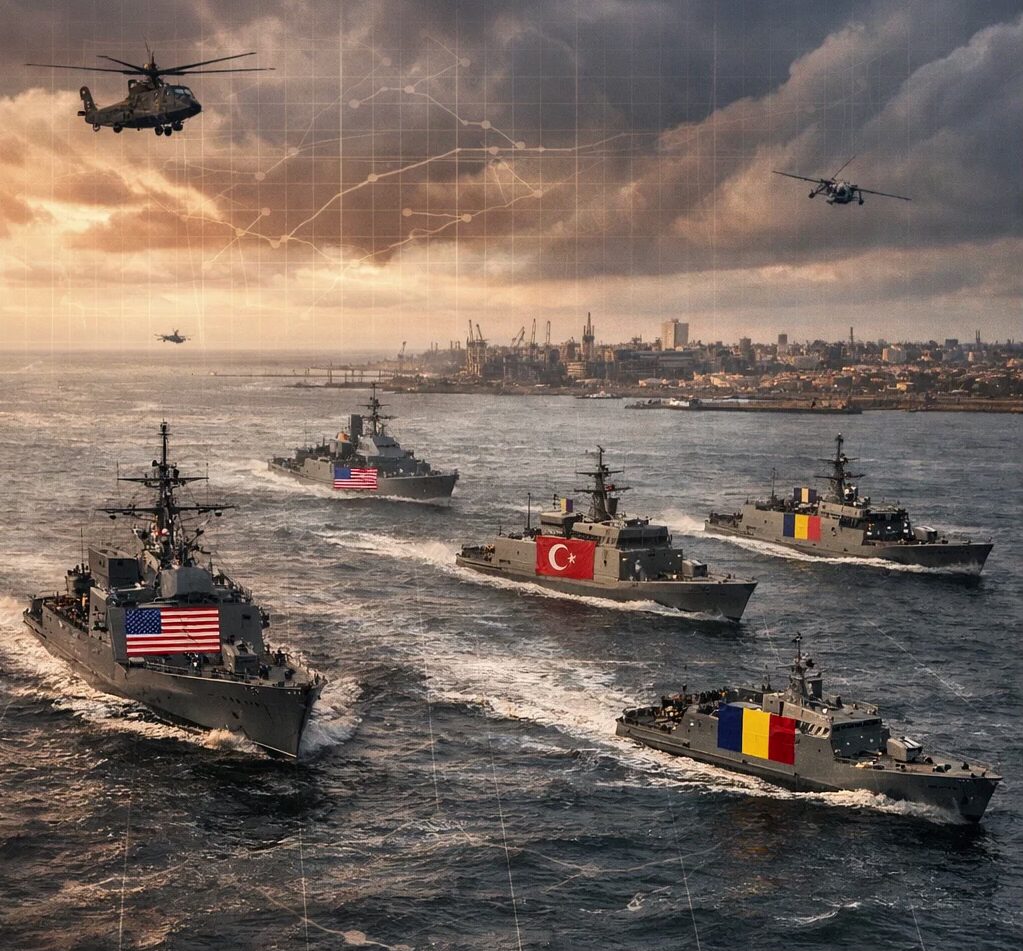
Constanța, Romania, NATO’s multinational naval exercise Sea Shield 2026 officially began this week in Romania’s Black Sea waters and inland waterways, bringing together more than 2,500 military personnel from 13 allied countries in one of the region’s largest maritime drills this year, Agerpres reports.
The opening ceremony took place on March 23 at the port of Constanța, where senior Romanian defense officials, including Defence Minister Radu Miruță, welcomed participants and outlined the scope of the training programme.
What Is Sea Shield 2026?
Sea Shield 2026 is a complex NATO‑aligned military exercise designed to enhance interoperability, readiness and collective defence among participating allied forces. It involves naval, air and land components working together through integrated scenarios that reflect contemporary security challenges in the Black Sea region.
This year’s iteration represents one of the most ambitious Sea Shield exercises in recent memory, involving:
- More than 2,500 troops from Romania and 12 partner states
- 48 ships and boats, including naval vessels from multiple navies
- 64 ground combat vehicles
- 10 aircraft and 10 autonomous unmanned systems operating in coordinated drills
Participating countries include Bulgaria, Canada, France, Germany, Greece, Italy, the Netherlands, Poland, Portugal, Spain, Turkey and the United States alongside Romania.
Where and When It’s Happening
The exercise is being conducted across multiple environments, from the open waters of the Black Sea to inland river systems and will run through April 3, 2026. Various scenarios test the ability of NATO forces to work jointly in maritime defence, amphibious operations, logistical coordination and rapid response missions.
Key operations take place off the Romanian coast as well as in the Danube Delta and other strategic waterways, reflecting the alliance’s focus on securing sea lines of communication and reinforcing deterrence along NATO’s eastern flank.
Why It Matters
Sea Shield exercises occur against the backdrop of increased geopolitical tension in Eastern Europe, particularly following Russia’s ongoing military actions in Ukraine and heightened activity in the Black Sea region. NATO officials view these drills as crucial to maintaining readiness and demonstrating alliance cohesion.
“Exercises like Sea Shield are essential for building trust and tactical coherence between allied forces in complex security environments,” said a NATO spokesperson, underscoring the importance of such multinational training. While Sea Shield itself focuses on defence posture and interoperability, its timing and scale send a clear signal about NATO’s commitment to collective security amid broader regional uncertainties.
For Romania, hosting the exercise reinforces its role as a frontline member of the alliance and a key contributor to Black Sea security. Romanian naval units are participating with approximately 1,500 personnel and a significant portion of the vessels involved in the exercise.
What Comes Next
Over the course of the drill, allied forces will conduct joint manoeuvres, tactical rehearsals, command post exercises and simulated response scenarios involving both manned and unmanned systems. These activities help refine communication protocols, improve logistics coordination and boost operational effectiveness under varied conditions.
Sea Shield 2026 also forms part of a series of NATO exercises in 2026 aimed at strengthening collective defence and deterrence across multiple domains, including land, air and maritime sectors.
Further Reading
- Americans Told to Stay Alert Worldwide: What Isn’t Being Said?
- Slovenia Elections 2026: Key Results, Political Shift, and What It Means for Europe

Ethan R. Brooks is a journalist with over 11 years of experience, specializing in finance, politics, and breaking news. He delivers timely, accurate reporting on market trends, economic developments, and major political events, helping readers stay informed on the stories that matter most.