
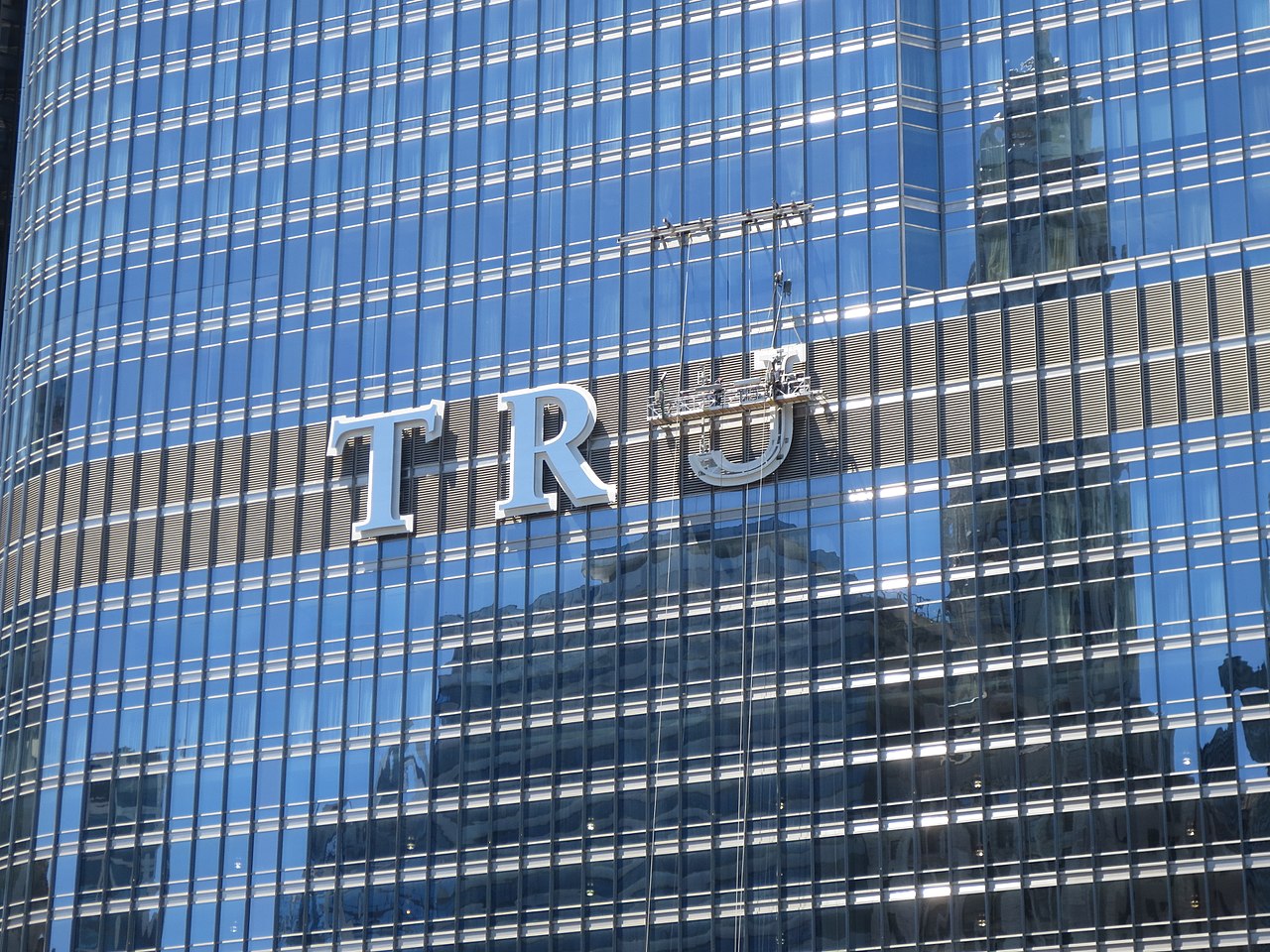
Edward Stojakovic / Wikimedia Commons (CC BY 2.0)
Global oil prices climbed past $110 per barrel this week, the surge coming amid escalating tensions in the Middle East and growing fears over supply disruptions, developments that economists warn could ripple through the global economy.
At the same time, former U.S. President Donald Trump has remained in the spotlight for a very different reason: renewed attention on his long-standing tendency to attach his name to buildings, businesses, and even proposed public landmarks.
The contrast has not gone unnoticed. While markets react to geopolitical instability and rising costs, critics argue that political focus appears increasingly tilted toward symbolism rather than substance.
Oil Prices Break $110 as Tensions Escalate
Brent crude, the international benchmark for oil, rose above $110 per barrel on March 27, driven largely by instability surrounding key energy routes in the Middle East.
The Guardian reported that traders are increasingly concerned about the security of the Strait of Hormuz, a narrow waterway through which roughly one-fifth of the world’s oil supply passes. Any disruption in this region has immediate and far-reaching consequences.
According to the same report, even temporary diplomatic efforts have failed to calm markets. Prices remained elevated despite announcements aimed at easing tensions, suggesting that traders are no longer easily reassured by political messaging alone.
The Wall Street Journal reported that earlier in the week, oil prices briefly dropped below $100 per barrel after Trump announced a delay in potential military action. However, those gains were quickly reversed as uncertainty returned, highlighting just how volatile the market has become.
Analysts say this pattern, sharp drops followed by rapid rebounds, reflects a deeper issue. Markets are reacting less to words and more to underlying risks.
A Market Driven by Fear, Not Statements
Experts widely agree that the current surge in oil prices is rooted in structural concerns rather than political rhetoric.
Supply chains remain fragile, and the possibility of conflict affecting major oil-producing regions has introduced what traders call a “risk premium”, an added cost driven by uncertainty.
Reuters reported that trading activity has intensified dramatically, with large sums being moved in response to even minor developments. In one instance, hundreds of millions of dollars were reportedly placed on oil price movements just minutes before a major political announcement.
This kind of behavior underscores a key reality: markets are no longer waiting for confirmation, they are anticipating disruption.
According to analysts cited by multiple outlets, even if tensions ease temporarily, the broader risk environment is likely to keep prices elevated.
Trump’s Messaging Struggles to Sway Markets
Throughout the recent volatility, Trump has attempted to shape the narrative around rising oil prices.
Newsweek reported that he described the increase as a “very small price to pay” in the context of broader geopolitical goals. The comment drew mixed reactions, with some supporters framing it as a necessary trade-off, while critics pointed to the real economic burden on consumers.
At various points, Trump has also signaled de-escalation, announcing pauses or extensions in potential military action. These statements have occasionally triggered short-term market reactions.
However, as The Guardian reported, those effects have been short-lived. Prices tend to rebound quickly once traders reassess the underlying risks.
This has led to growing skepticism among investors. Many now view political statements as temporary signals rather than reliable indicators of long-term direction.
A Long History of Putting His Name on Everything
While oil markets grapple with real-world pressures, Trump’s public image continues to be closely tied to branding, something that has defined his career for decades.
Long before entering politics, Trump built a business empire centered on licensing his name. From luxury skyscrapers to golf resorts, the “Trump” brand became a global symbol of wealth and status.
Some of the most notable examples include:
- Trump Tower in New York;
- Trump International Hotel & Tower in multiple cities;
- Trump National Golf Clubs across the United States;
- A wide range of Trump-branded residential developments.
According to business analysts, this strategy allowed Trump to expand his reach far beyond traditional real estate, turning his name into a commercial asset.
During and after his presidency, discussions have periodically surfaced about naming public infrastructure or landmarks after him. While many of these proposals have been informal or politically driven, they have reinforced the perception of a leader deeply invested in personal branding.
Critics argue that this focus on naming and recognition stands in stark contrast to the scale of current economic challenges.
Rising Oil Prices – the Real Economy
While political narratives unfold, the impact of rising oil prices is already being felt on the ground. Higher crude prices translate directly into increased fuel costs, which in turn drive up transportation expenses, manufacturing costs, and ultimately consumer prices.
The Guardian reported that consumer confidence in parts of Europe has already begun to decline, with households bracing for higher energy bills and broader inflation.
Businesses are also feeling the strain. Industries that rely heavily on transportation, such as logistics, aviation, and manufacturing, are facing mounting cost pressures.
Economists warn that if oil prices remain above $100 for an extended period, the effects could slow economic growth and complicate efforts by central banks to manage inflation.
Volatility Becomes the New Normal
Beyond the price increase itself, what stands out most is the level of volatility in the oil market. Prices have swung dramatically within days, sometimes moving by double-digit percentages based on new developments.
According to Reuters, this environment has attracted aggressive trading behavior, with investors seeking to capitalize on rapid price movements. However, volatility also brings risk. Sudden shifts can lead to significant losses, particularly for those caught on the wrong side of a trade.
For policymakers, the challenge is even greater. Rapid changes in energy costs make it difficult to plan and respond effectively.
The Bigger Issue: Energy Security
At its core, the current situation highlights a longstanding issue: the world’s dependence on stable energy supplies. Geopolitical tensions in key regions continue to have an outsized impact on global markets. Even the threat of disruption can send prices soaring.
Analysts warn that if the situation in the Middle East deteriorates further, oil prices could climb even higher, potentially reaching levels that would have serious consequences for the global economy.
This raises broader questions about energy security, diversification, and the need for more resilient supply chains.
A Growing Disconnect
The juxtaposition of rising oil prices and ongoing political narratives points to a growing disconnect.
On one hand, markets are reacting to tangible risks, conflict, supply disruption, and economic uncertainty. On the other, public discourse often shifts toward symbolism and personality-driven stories.
For critics, this gap is increasingly difficult to ignore. At a time when energy costs are rising and economic pressures are mounting, they argue that the focus should be on solutions rather than branding.
Conclusion
According to multiple reports, the current surge is not driven by speculation or rhetoric, but by real and persistent risks to supply. Political statements may influence short-term movements, but they cannot override the fundamentals shaping the market.
Meanwhile, the continued emphasis on naming, branding, and symbolic gestures serves as a reminder of the complex and sometimes conflicting priorities in modern politics. For consumers and businesses alike, the consequences are very real.
Continue Reading:
Iran Says Trump Is Lying – Full Report
Trump Pays $1 Billion of Taxpayers’ Money to Cancel Wind Project
Suspicious Bets on US–Iran Ceasefire Raise Insider Trading Concerns

Ethan R. Brooks is a journalist with over 11 years of experience, specializing in finance, politics, and breaking news. He delivers timely, accurate reporting on market trends, economic developments, and major political events, helping readers stay informed on the stories that matter most.

