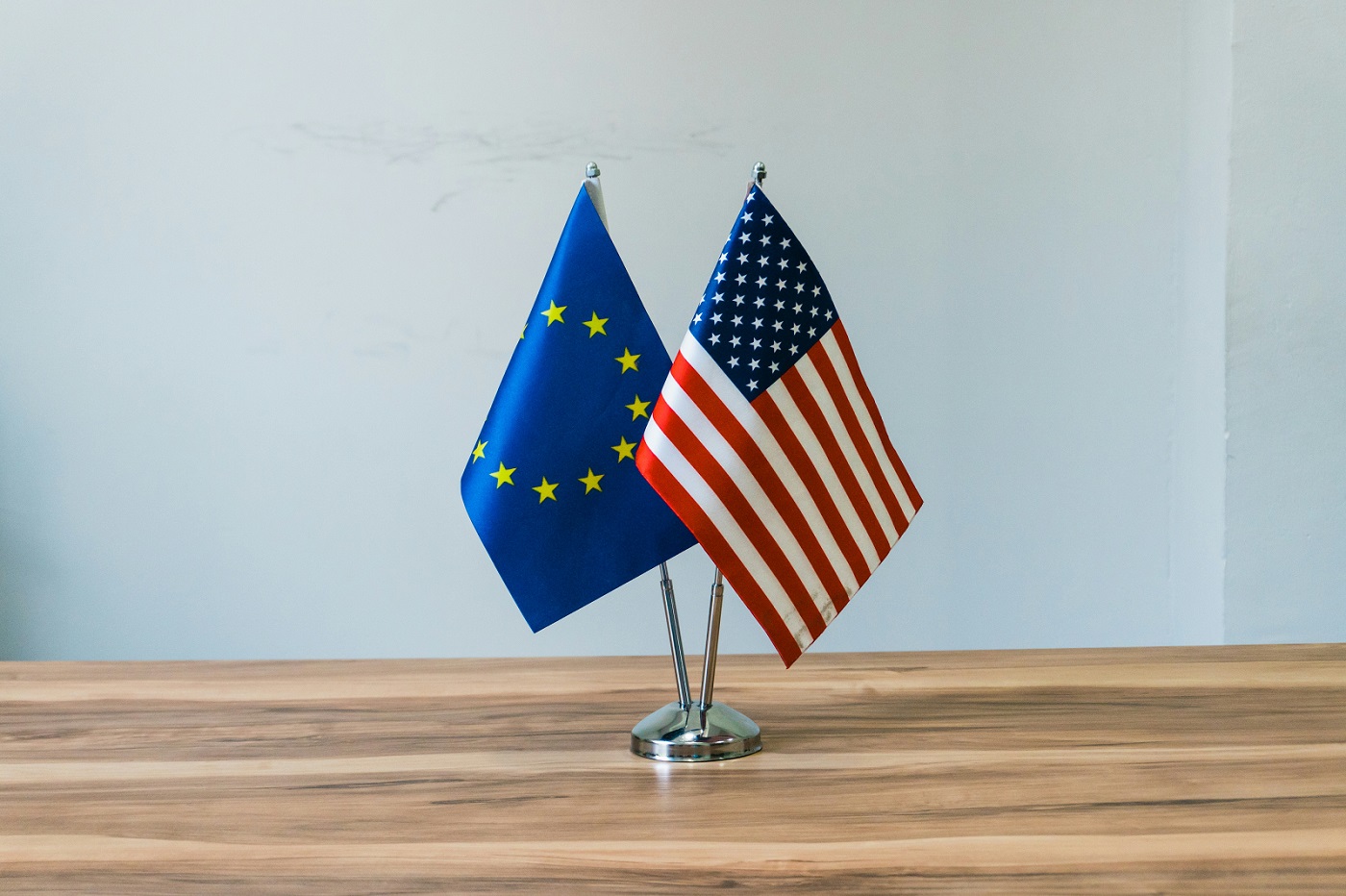
The European Union has issued increasingly stark warnings that recent decisions by the United States are contributing to a rising global security risk, signaling a potential shift in one of the world’s most important geopolitical alliances.
From military actions in the Middle East to economic threats and shifting security commitments, European leaders are now openly questioning whether US policy is destabilizing the global order rather than reinforcing it.
A Changing Transatlantic Relationship
For decades, the EU–US alliance has been the backbone of Western security. However, recent developments suggest that relationship is undergoing a significant transformation.
According to reporting highlighted by El País, Europe is entering a “new state of alert” as Washington appears less willing to guarantee European security and increasingly willing to act unilaterally in global affairs.
This shift has raised alarms among EU officials, who fear that unpredictability in US decision-making could expose Europe to new strategic vulnerabilities.
The situation has been further strained by political rhetoric and policy proposals from Washington that European leaders have described as hostile or destabilizing. Earlier tensions over US security doctrine drew strong criticism from senior EU officials, underscoring what analysts describe as a “changed relationship” between the two powers.
Middle East Escalation Raises Alarm
One of the most immediate concerns stems from US military actions in the Middle East, particularly involving Iran.
EU foreign ministers have warned that escalating conflict in the region could have “unpredictable economic consequences” and pose a direct threat to European citizens and global stability.
The bloc has stopped short of fully endorsing US strategic objectives in the region, signaling a divergence in approach. Instead, European leaders have emphasized:
- De-escalation
- Protection of civilians
- Stability in critical energy corridors
The Strait of Hormuz, a key global oil route, has become a focal point of concern. Disruption there could trigger worldwide economic shockwaves, further amplifying the risks tied to military escalation.
Tripartite Social Summit, 18 March 2026
Security concerns are not limited to military actions. Economic decisions by the US have also raised red flags in Brussels.
In early 2026, EU leaders warned that proposed US tariffs and geopolitical pressure tactics could trigger a “dangerous downward spiral” in transatlantic relations.
European officials stressed that such measures would:
- Undermine shared prosperity;
- Distract from key security priorities like Ukraine;
- Benefit geopolitical rivals such as China and Russia.
This growing economic friction is increasingly viewed as a security issue, not just a trade dispute.
(Tripartite Social Summit, Main Messages, 18 March 2026)
Fear of Strategic Dependence on the US
Underlying many of these concerns is a deeper fear: that Europe remains too dependent on the United States for its security.
A 2026 global risk assessment conducted by the European University Institute identified potential US withdrawal from security guarantees as one of the most serious threats facing Europe.
This reflects a broader anxiety that American policy shifts, whether driven by domestic politics or strategic recalibration, could leave Europe exposed.
At the same time, the Munich Security Conference has highlighted a growing realization among European policymakers that reliance on Washington may no longer be sustainable. Analysts cited in recent reporting argue that Europe must become more militarily and politically independent as US policy becomes more unpredictable.
Internal Divisions Within Europe
US decisions are not only affecting external relations, they are also creating divisions within Europe itself.
Following US-led military actions, European governments have taken differing positions on how closely to align with Washington. According to analysis published in Le Monde, this has exposed a “worrying crack” within the EU, with some countries emphasizing international law while others adopt a more pragmatic stance.
This internal fragmentation risks weakening the EU’s ability to respond cohesively to global crises.
Hybrid Threats and a More Dangerous World
At the same time, the EU is facing a broader spectrum of security challenges, many of which are intensified by global instability linked to major power competition.
The European Council has warned of increasing hybrid threats, including cyberattacks, infrastructure sabotage, and foreign interference campaigns aimed at destabilizing democratic systems.
Officials argue that a fragmented Western alliance only makes these threats harder to counter effectively.
Push for European Strategic Autonomy
In response, the EU is accelerating efforts to strengthen its own defense capabilities.
Initiatives such as “Readiness 2030” aim to mobilize hundreds of billions of euros for defense investment and reduce reliance on external partners.
There is also a growing push toward:
- Independent military capabilities;
- Stronger internal security coordination;
- Reduced reliance on US technology and infrastructure.
Recent discussions about “technological sovereignty” reflect concerns that dependence on US systems could create vulnerabilities during geopolitical crises.
A Global Order in Transition
The broader context is a shifting global order in which traditional alliances are being tested.
Former European Central Bank President Mario Draghi has warned that the current global system is effectively “dead,” urging Europe to adapt quickly to a world shaped by great-power competition.
In this environment, US decisions carry enormous weight, not just for Europe, but for global stability.
A Critical Turning Point
The European Union’s warning about global security risks tied to US decisions reflects more than short-term concern, it signals a structural shift in international relations.
Key takeaways:
- The EU sees US unpredictability as a growing risk factor;
- Military and economic decisions are increasingly intertwined;
- Europe is moving toward greater independence;
- Internal EU unity is under pressure.
What comes next will depend on whether transatlantic relations stabilize, or continue to drift apart.
The era of unquestioned alignment between Europe and the United States is over, replaced by a more complex and uncertain partnership.
Continue Reading:
Why France Is a Superpower: The Strategic Lands Powering Its Global Influence
UK Economy Struggles in 2026: Inflation, Rising Costs, and Weak Growth
Poland: Europe’s New Great Power

Ethan R. Brooks is a journalist with over 11 years of experience, specializing in finance, politics, and breaking news. He delivers timely, accurate reporting on market trends, economic developments, and major political events, helping readers stay informed on the stories that matter most.