
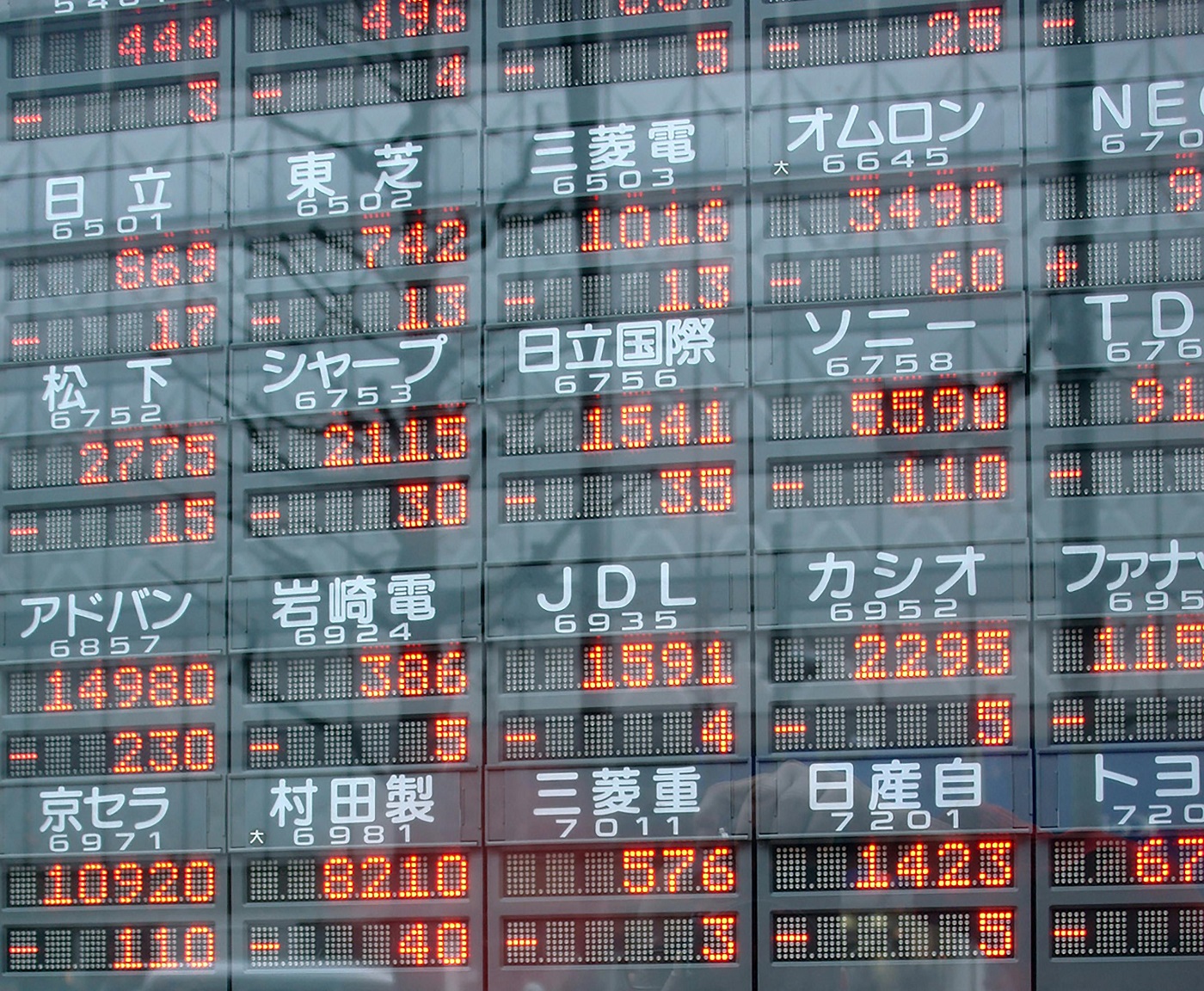
There was a moment on Wednesday night, somewhere between Trump’s vow to hit Iran “extremely hard” and his promise to bring the country “back to the Stone Ages,” when traders across Asia started selling. By the time asian stock markets opened on Thursday morning, the damage was already done.
Japan’s Nikkei 225 fell 2.4%. South Korea’s Kospi lost 4.5%. Taiwan’s Taiex dropped 1.8%. India’s Sensex slid 1.9%. Australia’s ASX 200 gave up 1.1%. Oil, meanwhile, did the opposite, Brent crude jumped nearly 7% to above $108 per barrel, its highest level in weeks.
What Trump Said – and Why Markets Hated It
The president’s prime-time address on April 1 was widely expected to provide some clarity on the path toward ending the Iran war, now in its 33rd day. Instead, according to CNBC, markets were left with more uncertainty, not less. Trump declared US objectives were “nearing completion” while simultaneously promising fresh, intense strikes for another two to three weeks, a contradiction that investors found impossible to price in.
“The market has shown disappointment because the speech President Trump made was far less than what the market expected.” Takashi Hiroki, chief strategist at Monex in Tokyo, told the Associated Press. “There were no concrete details about the end of the hostilities with Iran.“
Alicia Garcia Herrero, chief economist for Asia Pacific at Natixis, put it even more plainly, reported by CNBC: “Markets reacted negatively because, while Trump says it is nearly over, he is sending the third aircraft carrier and more troops to the region so it is hard to believe his words.“
US futures followed the Asian selloff, with the Dow Jones and S&P 500 both sinking in off-hours trading. The war’s economic logic, already difficult to untangle, had just gotten harder.
Why Asia Is Getting Hit the Hardest
To understand why Asian stock markets are bearing the brunt of this crisis, you have to understand one simple fact: Asia is the world’s most oil-dependent region, and almost all of that oil comes through the Strait of Hormuz.
According to the Center for Strategic and International Studies (CSIS), 93% of Japan’s oil imports pass through the strait. Japan imports 87% of its total energy supply, and the Iran war has effectively blocked roughly two-thirds of that supply from reaching the country. South Korea sources approximately 70% of its crude from the Middle East. China, India, Japan and South Korea together account for 75% of all oil exports and 59% of all LNG exports from the Persian Gulf.
This isn’t a passing inconvenience. For Japan and South Korea especially, this is an existential economic threat. A poll conducted by Asahi Shimbun in mid-March found that 90% of Japanese respondents were “somewhat or greatly anxious” about the conflict’s impact on their economy, CSIS reported.
Japan’s energy system is described by senior researchers as “structurally dependent” on imported fossil fuels, making the country “highly vulnerable” to geopolitical shocks of exactly this kind. The Renewable Energy Institute in Tokyo told Carbon Brief that the Iran war has exposed a 50-year failure to reduce Middle Eastern oil dependency, a failure that is now costing Japan dearly.
South Korea’s Kospi has fallen more than 16% since the war began on February 28, according to Fortune magazine. Japan’s Nikkei is down around 10% over the same period. In the early days of the war, South Korea’s Kospi suffered its biggest single-day crash since the 2008 financial crisis, dropping up to 12% in a single session and triggering a trading circuit breaker.
The Inflation Trap Tightening Across the Region
Beyond falling stock prices, the real danger for Asian economies is inflation, specifically the kind that central banks cannot fix by raising interest rates without killing growth at the same time.
According to CNBC’s Japan analysis, Japan has been grappling with headline inflation above its 2% target for 45 straight months. The Iran war is now threatening to push it even higher, but through “cost-push” inflation driven by external energy prices, not the domestic demand-driven inflation the Bank of Japan actually wanted. That distinction matters enormously. Japan needed inflation to come from a strong economy. Instead it is getting it from a war it had no part in starting.
South Korea’s consumer prices rose 2.2% year-on-year in March, according to government data cited by the Associated Press, driven almost entirely by soaring fuel costs. LNG prices in Japan and South Korea are already up 48%. Jet fuel costs are spiralling. Fertiliser prices, which hit food costs within weeks, are climbing rapidly.
The Asian Development Bank, cited by Time magazine, warned specifically that smaller energy-importing economies including the Philippines, Pakistan and Sri Lanka face the sharpest macroeconomic effects: “In these economies, higher oil prices tend to transmit rapidly into inflation and exchange rate pressures through widening current account deficits and increased foreign currency demand.”
Governments Are Already Acting – But It May Not Be Enough
Across Asia, governments are scrambling to soften the blow. Japan released 80 million barrels from its strategic oil stockpile, equivalent to 45 days of domestic demand, in mid-March, according to CSIS. Australia announced a three-month halving of its fuel excise to ease prices at the pump, Prime Minister Anthony Albanese confirmed at a press conference in Canberra.The Philippines has declared a national energy emergency and implemented a four-day working week to reduce fuel consumption.
But economists are sceptical these measures can hold indefinitely. The world may hit an oil cliff in mid-April as strategic reserve releases begin running thin, with no substitute for reopening the strait itself.
The Bigger Picture: A Structural Shock, Not Just a Bad Week
What is happening in Asian markets right now is not simply a short-term reaction to a speech. It is the latest symptom of a structural shock to the global economy that the World Economic Forum has described as arriving “at a moment of geoeconomic fragility“, on top of existing tariff pressures, post-pandemic debt loads and inflation that central banks had only recently begun to contain.
Chatham House’s analysis placed South Korea, Taiwan, Japan, India and China at the top of the list of economies most exposed to this crisis, countries where energy imports account for a large share of GDP and where higher prices transmit rapidly through the entire economy.
Goldman Sachs analysts, while urging a long-term view, have raised US recession odds by 5 percentage points and cut GDP growth forecasts. Oxford Economics has modelled a scenario in which $140 per barrel oil would be enough to push Japan, the UK and the entire eurozone into outright contraction.
For now, Asian markets are absorbing each day of war one painful session at a time. Thursday was another bad one. And with Trump promising weeks more of the same, traders are not betting the next session will be any different.
Continue Reading:
International Energy Agency (IEA) Will Release Hundreds Of Millions Of Barrels Of Emergency Oil Reserves
Best Cashback Credit Cards 2026 – Top Picks for Maximum Rewards
UK Economy Struggles in 2026: Inflation, Rising Costs, and Weak Growth

Ethan R. Brooks is a journalist with over 11 years of experience, specializing in finance, politics, and breaking news. He delivers timely, accurate reporting on market trends, economic developments, and major political events, helping readers stay informed on the stories that matter most.

