The idea of a United States of Europe has been debated for decades. Once considered an ambitious post-war vision, it is now returning to the political spotlight. As global tensions rise and economic competition intensifies, European leaders are once again questioning whether deeper integration is no longer optional, but necessary.
So, can a United States of Europe actually become a reality?
Origins of the Idea of a Unified Europe
The concept of a unified Europe emerged from the ruins of World War II. Leaders at the time wanted to ensure that such a devastating conflict would never happen again.
In 1946, Winston Churchill called for the creation of a “United States of Europe” during a speech in Zurich. He argued that peace in Europe could only be secured through unity and cooperation between nations.
At the same time, Altiero Spinelli, one of the authors of the Ventotene Manifesto, pushed for a federal European state with shared political power. His vision went beyond cooperation, he believed Europe needed a true political union to survive long term.
These early ideas directly influenced the formation of the European Union, which began as a project of economic cooperation but gradually expanded into political integration.
How Unified Is Europe Today?
Today, the European Union already displays some characteristics of a unified system.
The EU operates a single market that allows the free movement of goods, services, capital, and people. The Eurozone shares a common currency, the euro, used by 20 member states. The Schengen Area allows passport-free travel across most EU countries.
European institutions also play a central role. The European Commission proposes legislation, the European Parliament votes on laws, and the European Court of Justice ensures legal consistency across member states.
However, despite this high level of integration, the EU is not a federal state. Member countries still control critical areas such as taxation, national defense, and foreign policy. Decisions on major issues often require unanimous agreement, which can slow down action.
This gap between integration and sovereignty is the core issue in the debate over a United States of Europe.
Why the Debate Is Growing Again
In recent years, several events have pushed the idea back into public discussion.
One major factor is global competition. The EU, while economically powerful, often struggles to act as a single force compared to countries like the United States or China. Fragmented policies and regulations can limit Europe’s ability to respond quickly to global challenges.
Security concerns have also played a key role. The war in Ukraine highlighted Europe’s dependence on external military alliances such as NATO. Many policymakers now argue that Europe needs stronger, unified defense capabilities.
Ursula von der Leyen has repeatedly emphasized the need for a more independent and resilient Europe. In speeches and interviews, she has pointed to defense, technology, and energy as areas where closer integration is essential.
At the same time, pro-integration groups like the Union of European Federalists continue to advocate for a federal Europe with shared sovereignty in key sectors.
What Would a United States of Europe Involve?
A United States of Europe would represent a major shift from the current system. While proposals differ, most include several key elements.
First, a central European government would have stronger authority over major decisions, including foreign policy, defense, and economic strategy.
Second, there would likely be a unified military or at least a fully coordinated defense system, reducing reliance on external alliances.
Third, financial systems could become more integrated, potentially including a shared fiscal policy, common taxation rules, or a centralized budget with greater power.
Finally, decision-making processes would become faster and more streamlined, replacing the need for unanimous agreement with majority voting in many areas.
Some compare this model to the United States of America, where individual states retain local authority but the federal government controls national policy.
Key Challenges and Resistance
Despite the potential benefits, significant obstacles stand in the way.
The most important challenge is national sovereignty. Many EU countries are unwilling to give up control over core areas such as taxation, military forces, and border policies. For smaller or less influential nations, there are also concerns about losing their voice in a larger federal system.
Cultural diversity is another factor. Europe consists of many languages, traditions, and political systems. Unlike the United States, which developed as a single nation over time, Europe is a collection of long-established countries with strong national identities.
Political resistance is also growing in some regions. Eurosceptic and nationalist movements argue that further integration would weaken democracy by moving decision-making further away from citizens.
Economic differences between member states add another layer of complexity. Wealthier countries may be reluctant to share financial responsibility, while less developed economies may seek more support from a unified system.
Comparison with the United States
The idea of a United States of Europe is often compared to the United States of America, but the two situations are very different.
The U.S. was formed through the gradual unification of states with a shared language and emerging identity. Europe, on the other hand, is made up of countries with deep historical roots and distinct national cultures.
Additionally, the US federal government has clear authority over defense, taxation, and lawmaking. In Europe, these powers are still largely controlled at the national level.
This makes the transition to a fully federal Europe far more complex and politically sensitive.
What Happens Next?
The future of European integration is likely to be gradual rather than immediate.
Instead of a sudden transformation into a federal state, Europe may continue to deepen cooperation step by step. This could include stronger defense coordination, more unified economic policies, and expanded powers for EU institutions.
Crises have historically accelerated integration in Europe. Financial instability, security threats, and geopolitical shifts often push member states toward closer cooperation.
As these pressures continue, the idea of a United States of Europe may move from theory to necessity.
Final Outlook
A United States of Europe is still a complex and distant goal, but the forces pushing in that direction are real. Economic pressure, security risks, and global competition are steadily forcing European countries to cooperate more closely.
At the same time, resistance remains strong. National governments are cautious about giving up power, and public opinion across Europe is divided. Any major step toward full unification would require both political will and broad public support.
In reality, the most likely path forward is gradual. Europe will continue to integrate in key areas where cooperation is necessary, especially in defense, technology, and economic policy. Each step may seem small, but over time, these changes could reshape the entire structure of the union.
A United States of Europe may not arrive suddenly or under that exact name. But if integration continues at its current pace, the end result could look very similar, more unified, more centralized, and more capable of acting as a single global power.
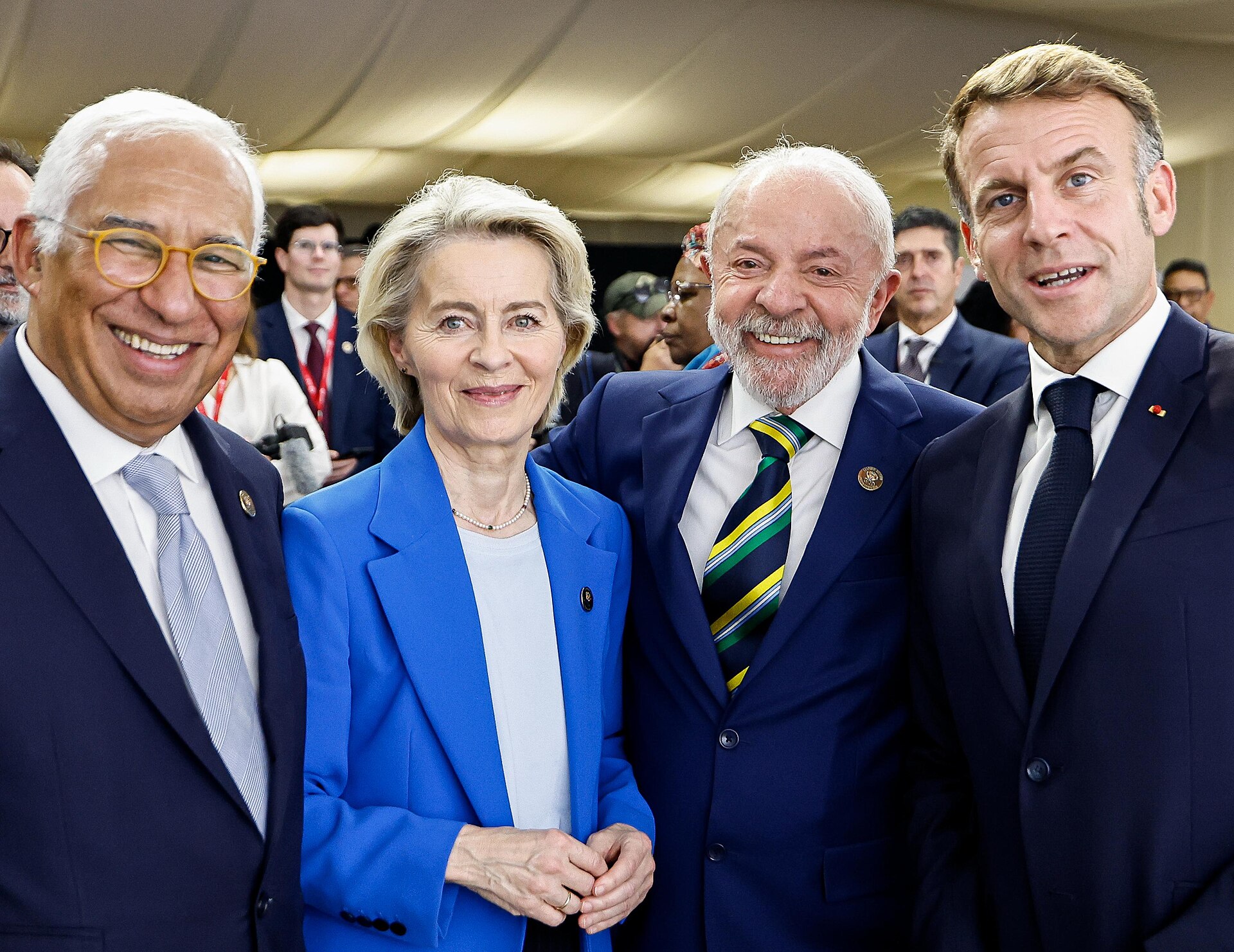
Photo: Ricardo Stuckert / PR, via Wikimedia Commons, licensed under CC BY-SA 4.0
Continue Reading:
35 Nations Meet Without the US to Reopen the Strait of Hormuz
France to U.S.: NATO Exists for Euro‑Atlantic Security, Not Military Missions in the Strait of Hormuz
U.S. Insolvent? Treasury Financials Reveal Massive Liabilities Experts Say

Michaela Reeds is an investigative journalist and reporter with a focus on politics, science, and technology. She brings clarity to complex issues, translating policy developments, scientific breakthroughs, and technological innovations into compelling stories for a broad audience. She is known for her dedication to accuracy, transparency, and in‑depth reporting.