
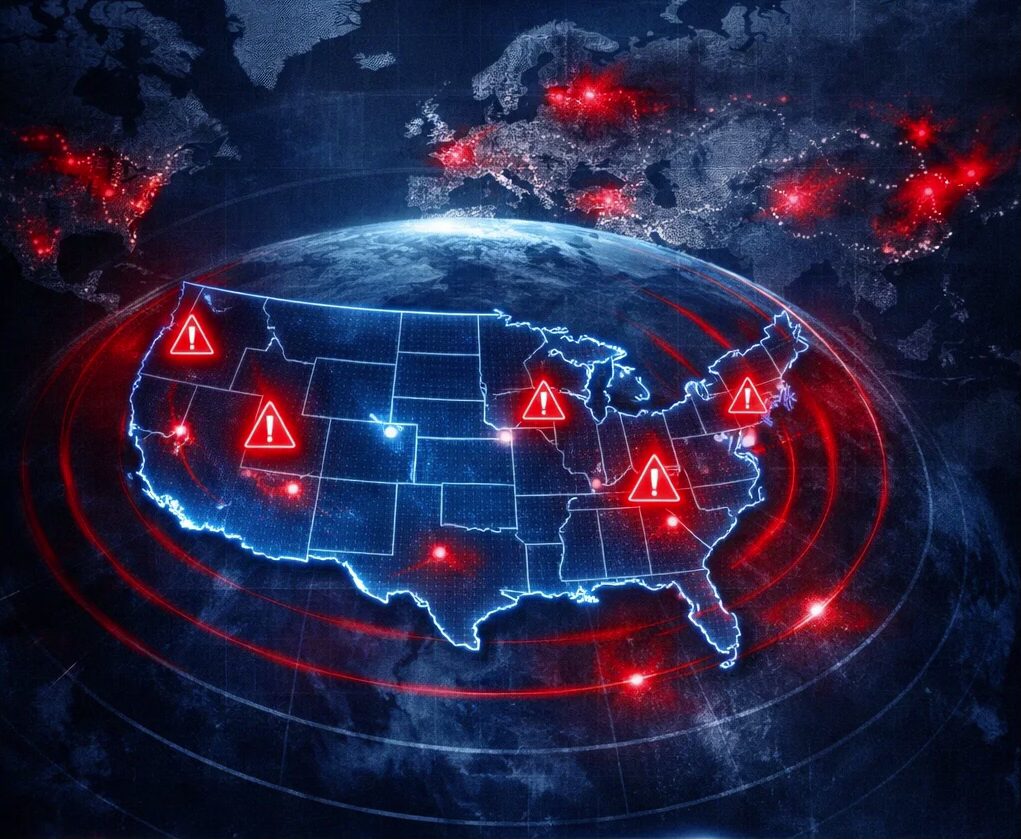
In a move that signals rising global uncertainty, the U.S. Department of State has issued a rare worldwide alert urging American citizens to exercise heightened caution no matter where they are on the planet. While travel advisories are nothing new, a blanket warning of this scale is far less common and it’s raising serious questions about what’s unfolding behind the scenes.
The alert, released in the past hours, does not focus on a single country or region. Instead, it casts a wide net, warning Americans abroad and those planning to travel to remain vigilant in public spaces, avoid large gatherings, and stay updated on local developments. The message is clear: the risk environment has shifted, and not in a predictable way.
A Different Kind of Warning
Typically, the State Department issues country-specific advisories based on local threats such as terrorism, civil unrest, or natural disasters. This time, however, the language is broader and more urgent. Officials are pointing to “increased tensions in multiple regions” and the potential for “unpredictable security incidents.”
That phrasing matters.
It suggests intelligence assessments are not tied to a single event, but rather a convergence of risks, geopolitical, military, and possibly retaliatory actions that could spill across borders quickly. While no direct threat has been publicly confirmed, the timing aligns with escalating tensions in the Middle East and growing instability in several strategic hotspots.
Why Now?
The warning comes amid a rapidly evolving international landscape. Ongoing friction involving Iran, Israel, and U.S. interests in the region has raised fears of wider confrontation. Analysts say that when tensions reach this level, risks extend beyond the battlefield.
“Global advisories like this are often about second-order effects,” said one security expert. “It’s not just where the conflict is, it’s where reactions might occur.”
These reactions can take many forms: protests outside embassies, cyber disruptions, isolated attacks, or sudden outbreaks of violence in places previously considered stable. For everyday travelers, that unpredictability is what makes the situation more dangerous.
What Americans Are Being Told
The guidance issued by the U.S. Department of State is practical, but firm:
- Stay aware of surroundings at all times
- Avoid demonstrations and large crowds
- Monitor local media for breaking developments
- Enroll in government alert systems for real-time updates
- Have contingency plans for sudden travel disruptions
It’s the kind of checklist typically associated with high-risk destinations, now applied globally.
For Americans living abroad, especially in major cities or politically sensitive regions, the advisory serves as a reminder that situations can escalate quickly. For tourists, it’s a signal to rethink itineraries and stay flexible.
Economic and Travel Implications
Beyond safety concerns, the ripple effects of such a warning can be significant. Airlines, tour operators, and insurance companies tend to respond quickly to shifts in government guidance. Even without formal restrictions, traveler behavior often changes overnight.
Markets can react too. Heightened geopolitical tension, especially when tied to energy-producing regions, can push oil prices higher and inject volatility into global financial systems. Investors are already watching closely, particularly as supply routes and diplomatic relations come under pressure.
Reading Between the Lines
Officials have not disclosed specific intelligence driving the alert, which is standard practice. But historically, global warnings have been issued during periods when multiple threat vectors are active at once, terrorism concerns, military escalation, and civil unrest overlapping in unpredictable ways.
The lack of detail doesn’t mean the threat is vague. In fact, it often means the opposite: that the risks are real, but too complex or sensitive to describe publicly.
This puts more responsibility on individuals to interpret the situation and act accordingly.
A Shift in the Global Security Environment
What stands out most about this warning is not just its scope, but what it represents. The world is entering a phase where localized conflicts can trigger global consequences faster than ever before. Social media, rapid information flow, and interconnected economies mean that instability in one region can influence behavior thousands of kilometers away within hours.
For governments, that means preparing citizens for a wider range of scenarios. For individuals, it means adopting a more cautious mindset even in places that feel familiar.
The Bottom Line
This isn’t a call for panic but it is a call for awareness.
When the U.S. Department of State tells its citizens to stay alert worldwide, it reflects a level of concern that goes beyond routine diplomacy. Whether the trigger is geopolitical tension, intelligence signals, or a combination of both, the message is straightforward: the global environment is less stable than it was just weeks ago.
For now, there are no sweeping travel bans or emergency evacuations. But the tone has shifted and in international affairs, tone often comes before action.
Staying informed, cautious, and prepared is no longer just advice for high-risk zones. It’s becoming the new normal.
U.S. Department of State “Worldwide Caution” security alert – official advisory urging American citizens worldwide to exercise increased caution.
https://sv.usembassy.gov/security-alert-worldwide-caution-march-22-2026/