

Every April 12, the United Nations and space agencies worldwide pause to celebrate one of humanity’s greatest achievements: the first crewed space flight. They commemorate the historic journey of Soviet cosmonaut Yuri Gagarin, who became the first human to venture into space on April 12, 1961. This significant milestone has shaped the trajectory of space exploration and continues to inspire millions around the globe.
April 12 reflects the importance of space exploration in advancing scientific knowledge, technological innovation, and human cooperation. Today, as modern space agencies launch missions to the Moon, Mars, and beyond, Gagarin’s legacy remains central to why humanity looks to the stars. Understanding the history of this day and its ongoing significance provides insight into how one courageous astronaut changed the world forever.
The Historic Flight: What Happened on April 12, 1961
On April 12, 1961, Yuri Gagarin climbed aboard the Vostok 1 spacecraft for what would become the most transformative moment in space exploration history. According to historical records maintained by the Russian Federal Space Agency (Roscosmos), Gagarin’s mission lasted 108 minutes and completed one full orbit around Earth. During this brief but pivotal journey, the 27-year-old cosmonaut traveled at speeds exceeding 27,400 kilometers per hour (17,000 miles per hour), reaching altitudes of approximately 327 kilometers above Earth’s surface.
The Soviet space program had been racing against the United States to achieve this historic milestone, driven by Cold War competition and national pride. According to aerospace historians, the Soviet Union’s investment in space technology under Premier Nikita Khrushchev represented a bold statement of technological superiority. Gagarin’s successful flight demonstrated that humans could survive the harsh conditions of space and return safely to Earth, an achievement that fundamentally changed humanity’s relationship with the cosmos.
What made Gagarin’s achievement even more remarkable was the incomplete state of spaceflight knowledge at the time. Engineers were uncertain whether the human body could tolerate the G-forces of launch, the weightlessness of orbit, or the intense heat of atmospheric reentry. Gagarin proved that with proper training and engineering, humans could overcome these challenges. His famous words upon launch, “Poyekhali!” (“Let’s go!”), have become synonymous with the spirit of human space exploration.
The UN Recognition: When and Why April 12 Became an International Observance
The United Nations formally recognized the International Day of Human Space Flight through Resolution 65/271, adopted on April 7, 2011. According to UN documentation, the resolution was proposed to recognize the importance of space science and technology in the sustainable development of countries and to commemorate the anniversary of the first human space flight. The decision to observe this day globally reflected growing international consensus that space exploration transcends national borders and belongs to all humanity.
The timing of the UN resolution was strategic. By 2011, over 50 years had passed since Gagarin’s flight, and space exploration had evolved dramatically. The recognition of this day helped reorient global conversations around space from Cold War competition to shared human achievement. The United Nations Framework for Space Activities emphasizes that space exploration should benefit all nations, particularly developing countries seeking to harness space technology for climate research, disaster management, and economic development.
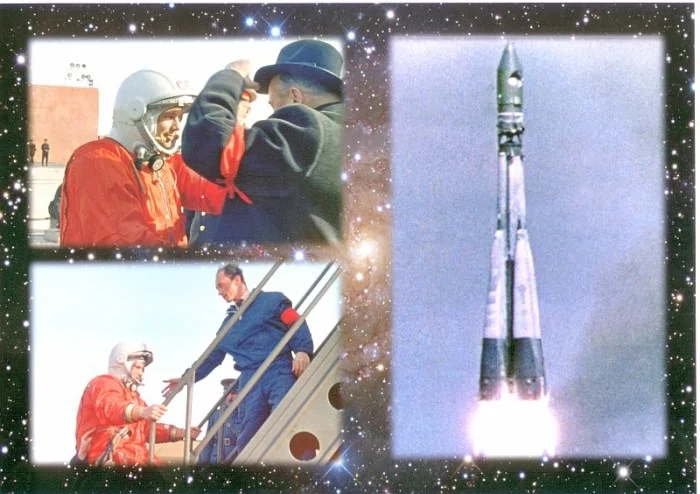
Today, the International Day of Human Space Flight serves multiple purposes. According to UNESCO and UN agencies involved in science education, this observance promotes awareness of space science among young people worldwide. Educational initiatives launched around April 12 inspire students to pursue careers in science, technology, engineering, and mathematics. Space agencies from Russia, the United States, Europe, China, India, Japan, and other nations use this day to highlight their missions, achievements, and future plans for space exploration.
Yuri Gagarin: The Man Behind the Achievement
Yuri Alexeyevich Gagarin was born on March 9, 1934, in the Smolensk Oblast region of the Soviet Union. According to biographical records, Gagarin was the son of a carpenter and a nurse, and he demonstrated exceptional aptitude in mathematics and physics during his school years. He attended military aviation school and became a fighter pilot before being selected for the Soviet space program in 1960, just one year before his historic flight.
Gagarin’s selection as the first human in space was not accidental. Chief Designer Sergei Korolev and his team evaluated dozens of cosmonauts based on physical fitness, psychological resilience, technical knowledge, and personality traits. Gagarin excelled in all categories. His ability to remain calm under pressure, his natural charisma, and his genuine modesty made him the ideal ambassador for Soviet space achievement. Gagarin famously said, “I don’t believe in God. I believe in man, his strength, his possibilities, his reason” reflecting the atheistic communist ideology of the era.
After his historic flight, Gagarin became an international celebrity and cultural icon. He traveled to more than 40 countries as a Soviet ambassador for space exploration. He continued training for additional space missions and maintained his position as a fighter pilot. Tragically, Gagarin died on March 27, 1968, at age 34 in a military aircraft accident near Moscow. The circumstances of his death have been subjects of historical debate, but his legacy remains undisputed: he was the first human in space, and his achievement remains humanity’s gateway to the cosmos.
The Legacy of the Vostok 1 Mission: Impact on Modern Space Exploration
The success of Vostok 1 had immediate and profound consequences for space exploration worldwide. According to space policy analysis from the Brookings Institution and other research organizations, the Soviet achievement galvanized American efforts in space technology. U.S. President John F. Kennedy, facing pressure from the Soviet achievement, announced the Apollo program just three weeks after Gagarin’s flight, committing to landing humans on the Moon. This decision launched the Space Race, which drove technological innovation that shaped the entire second half of the 20th century.

The technological innovations developed during the early space race era have had widespread civilian applications. According to reports from NASA and the European Space Agency, technologies developed for spaceflight have yielded benefits including satellite communications, weather forecasting systems, global positioning technology (GPS), and advanced materials. Many of the tools and techniques used in modern medicine, from digital imaging to telemedicine, trace their origins to space program innovations. The International Space Station, a joint project of Russia, the United States, Europe, Japan, and Canada, represents the evolution of space exploration from Cold War competition to international cooperation, a transformation made possible by the foundation Gagarin helped establish.
Contemporary space exploration continues to build on Gagarin’s legacy. Current missions to the International Space Station, planned lunar landings through NASA’s Artemis program, and upcoming crewed Mars missions all trace their inspiration and technical heritage to the era that Gagarin opened. Private space companies like SpaceX, Blue Origin, and others are democratizing access to space, making the dream of human spaceflight increasingly attainable. Gagarin would likely have marveled at how far human space exploration has advanced in just six decades.
How the World Celebrates the International Day of Human Space Flight
Each year on April 12, space agencies, educational institutions, and organizations around the globe organize events to commemorate human space flight. These celebrations include public lectures, museum exhibitions, educational programs, and media campaigns highlighting the achievements and future goals of space exploration. Schools from elementary to university level incorporate lessons about Gagarin, the space race, and modern missions into their curricula on this special day.
NASA and the Russian Federal Space Agency (Roscosmos) jointly promote the International Day of Human Space Flight as a time to recognize shared accomplishments in space. According to NASA announcements and reports, the American space agency often uses this occasion to release updates about crewed missions, new spacecraft designs, and partnerships with international partners. The European Space Agency (ESA), which operates from multiple countries including Germany, France, Italy, and others, similarly uses April 12 to highlight its research missions and contributions to space science.
In Russia and other former Soviet countries, April 12 remains a particularly significant date. Russia observes Cosmonautics Day, as a national holiday, with ceremonies honoring Gagarin at his monument in Red Square and at the Baikonur Cosmodrome, from which Vostok 1 launched. International delegations often participate in these ceremonies, underscoring how Gagarin’s achievement has transcended national boundaries to become part of human collective memory.
The Scientific and Technological Achievements of the Space Age
The opening of space to human exploration initiated by Gagarin’s flight triggered an explosion of scientific discovery. Within a single decade after Vostok 1, humans had visited the Moon, robotic probes had reached Venus and Mars, and our understanding of Earth’s atmosphere, radiation environment, and place in the cosmos had been revolutionized. The scientific instruments carried aboard early space missions provided data that reshaped disciplines from astronomy to geology to atmospheric science.
Modern space exploration continues this tradition of scientific advancement. According to research published by space agencies and peer-reviewed scientific journals, the International Space Station has become a floating laboratory that conducts experiments impossible to perform on Earth. Microgravity research has produced insights into protein crystal growth, combustion dynamics, materials science, and biological processes that have applications in medicine, manufacturing, and fundamental science. Robotic missions to Mars, Venus, and other destinations in our solar system continue to answer fundamental questions about planetary evolution and the potential for extraterrestrial life.
The technological capabilities developed through space exploration have enhanced human life in countless ways. According to comprehensive analyses from technology researchers, satellite technology enables global communications networks, weather prediction, disaster management, and navigation systems that billions depend upon daily. Remote sensing satellites monitor climate change, track deforestation, predict crop yields, and monitor natural disasters. The spinoff technologies from space programs include water purification systems, insulation materials, medical diagnostic tools, and advanced manufacturing techniques. In many respects, modern civilization rests on technological foundations laid by the space industry that Gagarin helped inspire.
Future Space Exploration: Building on Gagarin’s Foundation
Looking toward the coming decades, space agencies worldwide are planning ambitious missions that would have seemed like science fiction when Gagarin orbited Earth. According to announcements from NASA, the Artemis program ultimate goal is establishing a sustainable lunar presence. This lunar infrastructure is viewed as a stepping stone for crewed missions to Mars, potentially within the 2030s or 2040s.
Other nations are advancing their own space programs with impressive momentum. China has conducted remarkable crewed space missions and has plans for lunar exploration and Mars missions. India‘s space program, despite a lower budget, has achieved remarkable successes in satellite technology and robotic Mars exploration. The United Arab Emirates has joined the ranks of nations conducting Mars missions. Japan, South Korea, and other Asian nations are developing advanced launch capabilities and space technologies.
As humanity stands on the threshold of becoming a multiplanetary species, Gagarin’s achievement from April 12, 1961, remains the symbolic starting point. That 108-minute journey established that humans belong in space and that we have the ingenuity and courage to venture into the unknown. Today, as we celebrate the International Day of Human Space Flight each April 12, we honor not just a historical event but the continuing adventure of human exploration and the enduring spirit of discovery that defines our species.
For more society news and cultural reporting, visit the Society section at bdesk.news.
Continue Reading:
Countries That Changed Their Name
Bank of America Agrees to Pay $72.5 Million to Epstein Victims

Michaela Reeds is an investigative journalist and reporter with a focus on politics, science, and technology. She brings clarity to complex issues, translating policy developments, scientific breakthroughs, and technological innovations into compelling stories for a broad audience. She is known for her dedication to accuracy, transparency, and in‑depth reporting.