The Invisible Shockwave of the Middle East War
The 2026 Middle East war, involving Iran, Israel, and the United States, has become more than a regional confrontation. While headlines focus on military strikes and missile exchanges, the conflict is quietly reshaping global systems, from oil markets to trade routes and international security frameworks.
Unlike conventional wars, the effects are not always immediately visible. Energy traders, shipping companies, and policymakers are responding to risk signals and strategic uncertainty, creating a ripple effect that reaches far beyond the conflict zone.
Understanding these shifts requires a deeper look at the ongoing dynamics and the subtle forces that drive global markets, trade, and security responses.
The Current State of the War: Beyond the Headlines
By March 2026, the conflict has escalated to an extended standoff. Iranian missile and drone attacks continue in response to U.S.–Israeli strikes on critical military and nuclear sites. While both sides maintain that they aim to avoid a full-scale regional war, each day of tension amplifies economic and strategic risks worldwide.
Recent developments include:
- Statements from Iran threatening energy infrastructure in retaliation for military strikes.
- U.S. naval repositioning and air force deployments designed to deter escalation.
- Increased cybersecurity operations targeting communications, financial institutions, and military systems across the region.
The result is a highly volatile environment where markets, governments, and multinational companies must operate under a constant cloud of uncertainty.
Oil Market Impacts: How Prices Are Quietly Inflated
While attention often goes to headlines about “spikes in oil prices,” the real effect is more structural and long-lasting. Analysts are increasingly framing the Middle East war as a permanent risk premium embedded into energy markets.
Key mechanisms include:
- Perceived Supply Risk
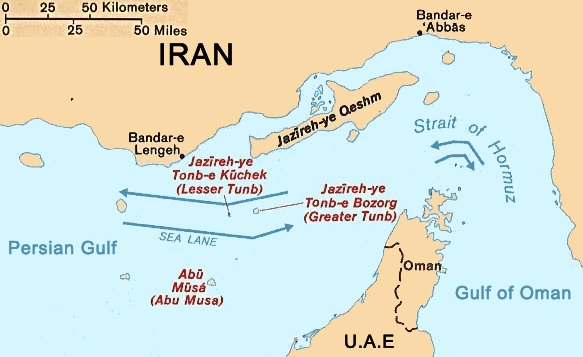
Traders continuously price in the possibility of supply disruption, particularly through the Strait of Hormuz, which handles nearly 20% of global oil exports. Even if the waterway remains open, the mere perceived vulnerability drives price fluctuations. - Rising Shipping and Insurance Costs
Insurance premiums for tankers have surged, increasing the cost of transporting crude. Some shipping routes are being rerouted around Africa’s Cape of Good Hope, adding both time and cost. - Secondary Inflation Effects
The higher cost of oil flows into refined products such as gasoline, diesel, and jet fuel, which in turn raises transportation costs and production expenses globally, contributing to inflation in both emerging and developed markets.
Insight: Even short-lived conflict episodes create long-term pricing patterns, because markets treat these geopolitical tensions as ongoing structural risks rather than isolated events.
Trade Routes in Flux: Beyond Oil
Energy is just one part of the story. The war is straining multiple trade corridors, creating disruptions that affect global commerce, supply chains, and logistics:
- Maritime Chokepoints: The Strait of Hormuz remains open, but shipping companies are factoring in delays and insurance costs, which influence global trade pricing.
- Regional Port Disruptions: Persian Gulf ports are facing slower throughput due to heightened security checks and precautionary measures.
- Airspace Restrictions: Certain flight corridors have been temporarily closed, delaying both passenger travel and air freight shipments, which has knock-on effects on industries reliant on just-in-time delivery systems.
This shows that geopolitical tension no longer stays local. Even countries that import minimal Middle Eastern oil experience cost pressures via shipping, trade insurance, and broader supply chain adjustments.
Strategic Security Repercussions
The Middle East war has also forced a recalibration of regional and global security policies:
- Military Realignment: U.S., Israeli, and allied military forces are strategically positioned, reinforcing deterrence but also raising tensions for potential escalation.
- Regional Power Shifts: Saudi Arabia, UAE, and Turkey are balancing economic interests with political pressure, seeking to avoid entanglement while maintaining influence.
- Cyber and Information Warfare: Beyond traditional military actions, all parties engage in cyber campaigns, targeting critical infrastructure, communications, and global media narratives.
The conflict demonstrates that modern warfare extends beyond physical battlefields, encompassing economics, cyber strategy, and global perceptions.

Economic Consequences: Inflation, Currency Volatility, and Growth
Global markets have responded swiftly to the Middle East conflict. Beyond oil, currencies, stock markets, and commodity prices have all felt the ripple effect:
- Emerging markets are particularly vulnerable, facing currency devaluation, higher borrowing costs, and investor flight to “safe assets.”
- Developed economies face rising energy bills, translating into higher costs for goods and transportation, affecting inflation rates and consumer spending.
- Central banks are forced into difficult policy choices, balancing inflation control against slowing growth.
In essence, the conflict is not just a regional security issue; it’s a global economic risk factor with long-lasting consequences.
Projecting Forward: Scenarios for 2026 and Beyond
Analysts outline several potential trajectories for the conflict:
- Short-lived Resolution: Diplomacy or military stalemate may stabilize the situation, allowing markets to settle, but risk premiums may remain higher than pre-conflict levels.
- Prolonged Low-intensity Conflict: Ongoing uncertainty keeps energy and trade costs elevated, restructuring global economic patterns.
- Wider Regional Escalation: Spillover into neighboring nations could severely disrupt global trade, intensify energy inflation, and create large-scale humanitarian crises.
Understanding these scenarios is essential for businesses, policymakers, and global investors planning for 2026 and beyond.
Long-term Implications for Global Policy
The Middle East war underscores how conflicts in one region reshape global strategic priorities:
- Energy Security: Nations are accelerating diversification of supply sources and investing in strategic reserves.
- Trade Route Redundancy: Countries are exploring alternative shipping and pipeline routes to reduce dependence on chokepoints like the Strait of Hormuz.
- Defense and Cyber Preparedness: Military budgets, cybersecurity infrastructure, and intelligence coordination are being upgraded in response to this new form of “multi-domain” conflict.
Conclusion: The Quiet Global Shift
The 2026 Middle East war is not just a headline event. Its influence quietly but persistently reshapes oil pricing, trade patterns, and international security structures.
For governments, corporations, and investors, recognizing these subtle shifts is as important as responding to the obvious military developments. Markets, policy, and trade today are already reflecting the lessons of this conflict — and will continue to do so long after the battles themselves have subsided.
Next Step for Readers: For a deeper look at how U.S.–Iran policies and the Trump administration’s decisions have influenced global oil markets, check out How the Strait of Hormuz Quietly Inflates Global Oil Prices in 2026