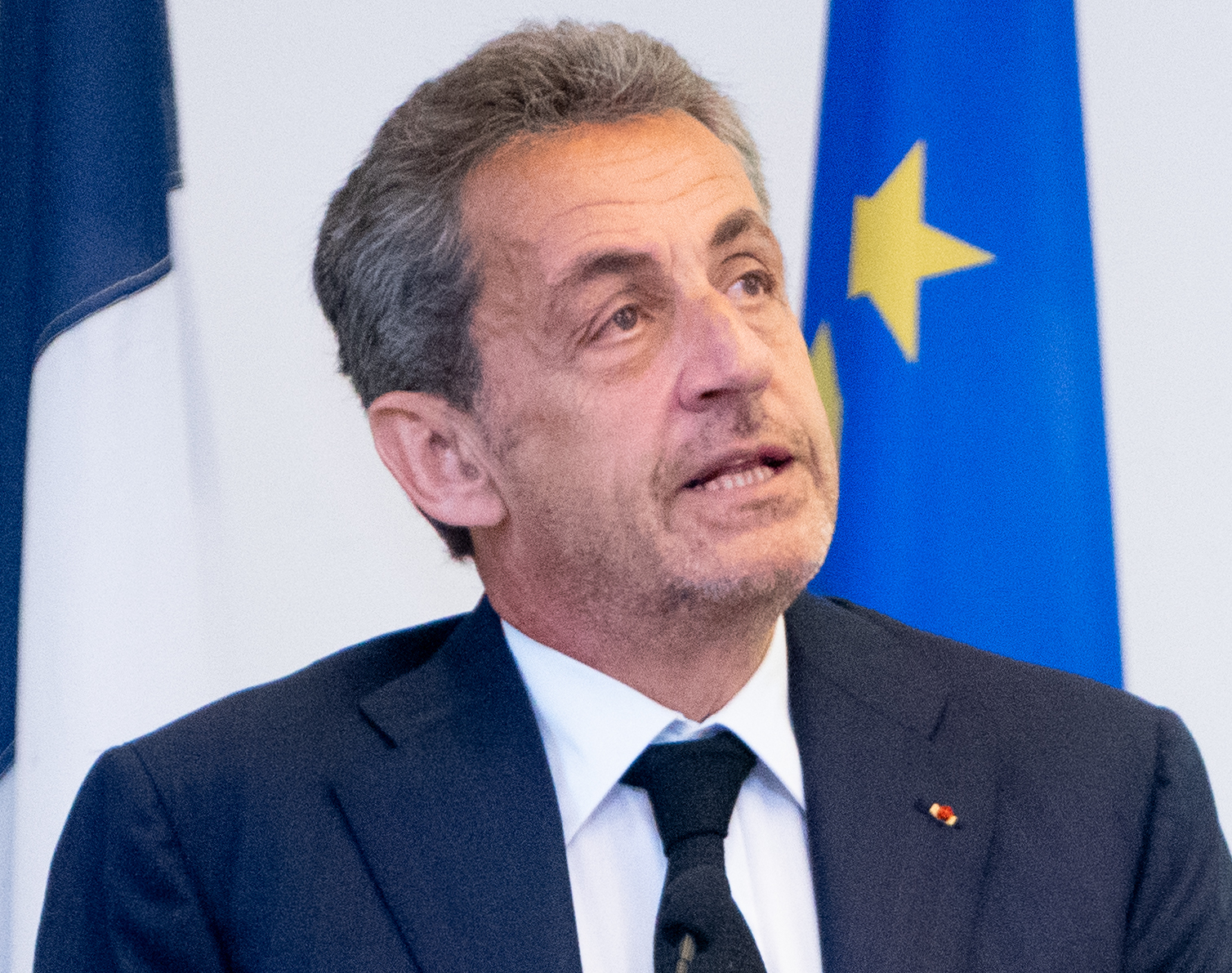
Former French president Nicolas Sarkozy has been sentenced to five years in prison after a French court ruled against him in a major corruption trial tied to alleged illegal campaign financing from the government of former Libyan leader Muammar Gaddafi. The ruling marks one of the most significant legal decisions involving a former head of state in modern French history and adds to a series of legal battles that Sarkozy has faced since leaving office.
According to reporting by Euronews, the court concluded that Sarkozy was involved in a scheme that allegedly allowed funds from Libya to support his 2007 presidential campaign in exchange for diplomatic and political benefits provided to Gaddafi’s regime.
The case has been under investigation for more than a decade and is widely viewed as one of the most consequential corruption trials involving a European political leader.
Long-Running Libya Financing Allegations
The allegations surrounding Sarkozy and Libya first emerged publicly in 2011, shortly after the fall of Gaddafi’s government during the Libyan uprising. At the time, the French investigative outlet Mediapart reported documents suggesting that Sarkozy’s 2007 presidential campaign may have received millions of euros from the Libyan government.
According to Mediapart, the alleged funding arrangement involved a network of intermediaries who helped transfer money from Libya into French political circles. Investigators claimed that the funds were intended to boost Sarkozy’s campaign at a time when he was seeking to become president of France.
French judicial authorities formally launched an investigation in 2013, opening a complex inquiry into financial transactions, diplomatic contacts, and testimony from multiple figures linked to the alleged scheme.
Prosecutors argued that in exchange for the funding, Sarkozy offered political support and diplomatic advantages to Gaddafi’s government. These claims include allegations that the French government provided favorable treatment to Libyan officials and pursued diplomatic policies that benefited the regime.
Sarkozy has consistently denied all allegations, calling them politically motivated and unsupported by credible evidence.
Sarkozy’s Defense and Response
Throughout the investigation and trial, Sarkozy maintained that the accusations were part of a political smear campaign designed to damage his reputation and legacy.
The former president repeatedly rejected claims that he accepted illegal funds from Libya, arguing that the documents cited in early reports were unreliable or fabricated. His legal team has also pointed to inconsistencies in testimony provided by some witnesses involved in the investigation.
Following the verdict, Sarkozy is expected to appeal the ruling, a move that could prolong the legal battle for several more years. Under French law, appeals in complex criminal cases can take significant time to work their way through higher courts.
Because of this process, the immediate consequences of the sentence may not be fully implemented until appeals are exhausted.
A Series of Legal Troubles
The Libya case is the most serious conviction yet in a growing list of legal issues faced by Sarkozy since he left office in 2012.
In 2021, Sarkozy was convicted in a separate corruption case known as the wiretapping scandal, where investigators found that he attempted to obtain confidential legal information from a judge. In that case, Sarkozy was sentenced to three years in prison, with two of those years suspended.
He was also convicted in the Bygmalion campaign financing scandal, which involved allegations that his 2012 presidential campaign exceeded legal spending limits through fraudulent accounting practices.
These convictions have already placed Sarkozy in a unique and controversial position in French history. He became the first former French president in decades to receive criminal convictions after leaving office.
Before Sarkozy, the last French head of state to face criminal conviction was Philippe Pétain following the end of World War II.
Political Impact in France
The conviction is expected to have major political consequences in France, particularly among center-right political movements that once rallied behind Sarkozy’s leadership.
During his presidency from 2007 to 2012, Sarkozy was a dominant figure in French politics and led the conservative party then known as the Union for a Popular Movement (UMP). His influence continued even after leaving office, with many politicians in the French right viewing him as an important strategist and political mentor.
However, the latest conviction could further weaken his political standing and limit any potential future role in public life.
Under French law, certain criminal convictions can lead to temporary bans from holding public office, depending on the final outcome of appeals.
Shifting Landscape of French Politics
The ruling also comes at a time when the political landscape in France is undergoing major changes.
The traditional center-right political bloc that once supported Sarkozy has struggled to maintain influence. Meanwhile, the far-right movement led by Marine Le Pen and her party, the Rassemblement National, has gained significant momentum in national elections.
At the same time, the centrist political movement led by Emmanuel Macron has drawn many moderate conservative voters away from traditional parties.
Political analysts say Sarkozy’s conviction may further accelerate this transformation, weakening the legacy influence of older political leadership while reinforcing the shift toward new political coalitions.
A Major Test for Democratic Accountability
Beyond the political consequences, the Sarkozy case is widely seen as an important example of how democratic institutions handle allegations of corruption at the highest levels of government.
Investigations involving former heads of state are often politically sensitive and legally complex. However, supporters of the judicial process argue that holding powerful figures accountable is essential to maintaining trust in democratic institutions.
According to analysis reported by Euronews, the verdict demonstrates the willingness of French courts to pursue corruption cases even when they involve former national leaders.
Critics of the ruling, however, argue that such cases can become entangled in political rivalries and media pressure.
What Happens Next
Sarkozy’s legal battle is far from over. His defense team is expected to file an appeal, which could result in a new review of the case by a higher court.
If the conviction is upheld after appeals, the five-year sentence could potentially include actual prison time, though French courts sometimes allow alternative arrangements such as house arrest with electronic monitoring for certain sentences.
For now, the verdict represents a historic moment in French politics, one that highlights the long-term consequences of corruption allegations and the evolving role of the judiciary in European democracies.
Whether the sentence ultimately stands or is modified during the appeals process, the case will likely remain a defining chapter in the political legacy of Nicolas Sarkozy and a significant moment in France’s ongoing efforts to address political corruption.
Photo: Jacques Paquier on Wikimedia Commons.
For more political reporting and in-depth analysis, visit the Politics section at bdesk.news.
Continue reading:
Russia’s Law to Register Stolen Cars from EU Countries
The United States of Europe: Can It Become a Reality?

Michaela Reeds is an investigative journalist and reporter with a focus on politics, science, and technology. She brings clarity to complex issues, translating policy developments, scientific breakthroughs, and technological innovations into compelling stories for a broad audience. She is known for her dedication to accuracy, transparency, and in‑depth reporting.