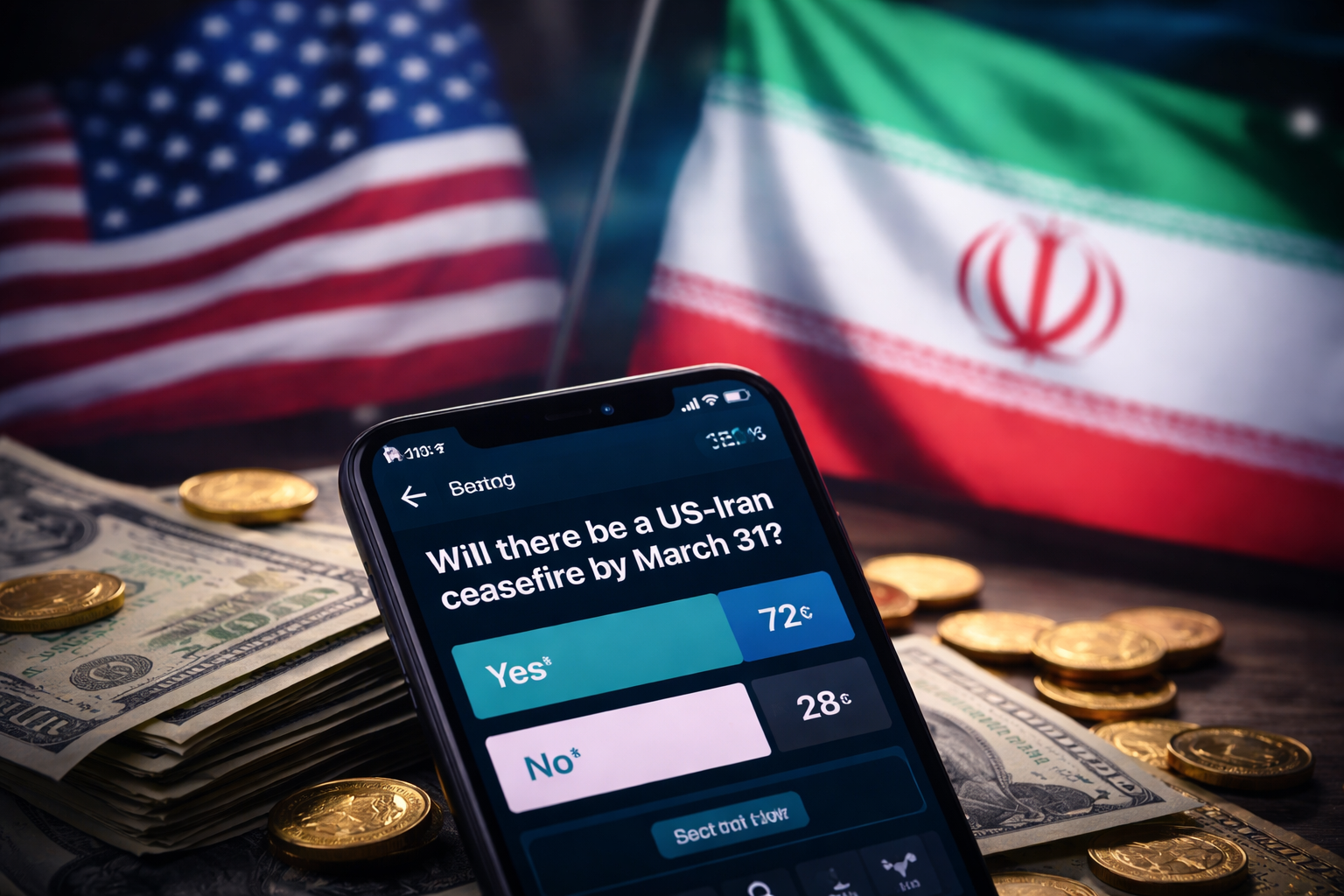
A surge in high-stakes betting on a potential ceasefire between the United States and Iran is drawing scrutiny from analysts and policymakers, as questions grow over whether some traders may be acting on privileged information rather than public signals.
According to The Guardian report on US–Iran ceasefire bets, a cluster of newly created accounts placed tens of thousands of dollars in wagers on a ceasefire outcome within days, timing that experts say is difficult to explain through coincidence alone.
A Sudden Spike That Raised Eyebrows
Prediction markets, particularly crypto-based platforms like Polymarket, allow users to bet on real-world events ranging from elections to geopolitical developments. In theory, these markets aggregate public sentiment. In practice, recent activity suggests something more complicated.
According to The Guardian, at least eight accounts, many of them newly created, collectively wagered close to $70,000 on the likelihood of a US–Iran ceasefire being announced before the end of March. If successful, those bets could yield profits approaching $820,000.
The timing is what caught attention. The bets came shortly after mixed messaging from U.S. leadership about potential military action and diplomatic engagement. For some analysts, that sequence raises the possibility that certain traders acted on early or non-public information.
A Pattern That Repeats
This is not an isolated case. Prediction markets tied to the US–Iran conflict have already generated controversy in recent weeks.
Data shows that hundreds of millions of dollars have flowed into contracts related to potential military actions and diplomatic outcomes. In one earlier case, several accounts placed large bets on a U.S. strike against Iran just hours before it happened, earning significant profits.
More recently, another report highlighted that a trader who successfully predicted earlier developments in the conflict has again taken a large position, this time betting on a ceasefire within a tight timeframe.
When the same patterns repeat, new accounts, large sums, precise timing, it becomes increasingly difficult to dismiss concerns as mere speculation.
How Prediction Markets Work and Where They Break
Platforms like Polymarket operate by allowing users to buy “shares” in outcomes. If the event happens, the shares pay out. If not, they expire worthless.
Supporters argue these markets can be surprisingly accurate, as they reflect real money and real incentives. In some cases, prediction markets have outperformed traditional polling or expert forecasts.
However, critics say that when markets intersect with sensitive geopolitical events, especially wars, the risks multiply.
One major concern is that individuals with access to confidential information, whether from government, military, or diplomatic channels, could exploit that knowledge for profit. Unlike traditional financial markets, many prediction platforms operate with limited regulatory oversight, especially when based offshore.
Signals or Secrets?
To be clear, not all unusual trading activity implies wrongdoing. Markets often move quickly in response to public statements, rumors, or shifts in sentiment.
In this case, public signals did exist. Diplomatic rhetoric has fluctuated, with hints of negotiation alongside threats of escalation. Some traders may simply be interpreting those signals more aggressively than others.
But according to The Guardian, analysts noted specific behaviors that are commonly associated with insider activity, such as splitting large bets across multiple wallets and using newly created accounts to obscure identity.
These tactics don’t prove insider trading, but they do raise legitimate questions.
Political and Regulatory Pressure Builds
The controversy is already spilling into the political arena.
Lawmakers in the United States have begun raising alarms about the broader implications of betting on geopolitical events. Concerns range from ethical issues, profiting from war to national security risks, including the possibility that market movements could indirectly reveal sensitive information.
There are also fears that such platforms could incentivize bad behavior. If traders can profit from conflict escalation or de-escalation, the line between observation and influence becomes blurred.
Some policymakers are now pushing for tighter regulation or even outright bans on certain types of event-based betting.
For now, no formal accusations have been proven, and no enforcement actions have been announced specifically tied to the latest ceasefire bets.
Related Articles
📌 Middle East War 2026: How the Conflict Is Quietly Reshaping Global Oil, Trade, and Security
📌 Americans Told to Stay Alert Worldwide: What Isn’t Being Said?
📌 Trump Ultimatum: 48 Hours to Open Strait of Hormuz or Face “Obliteration”