
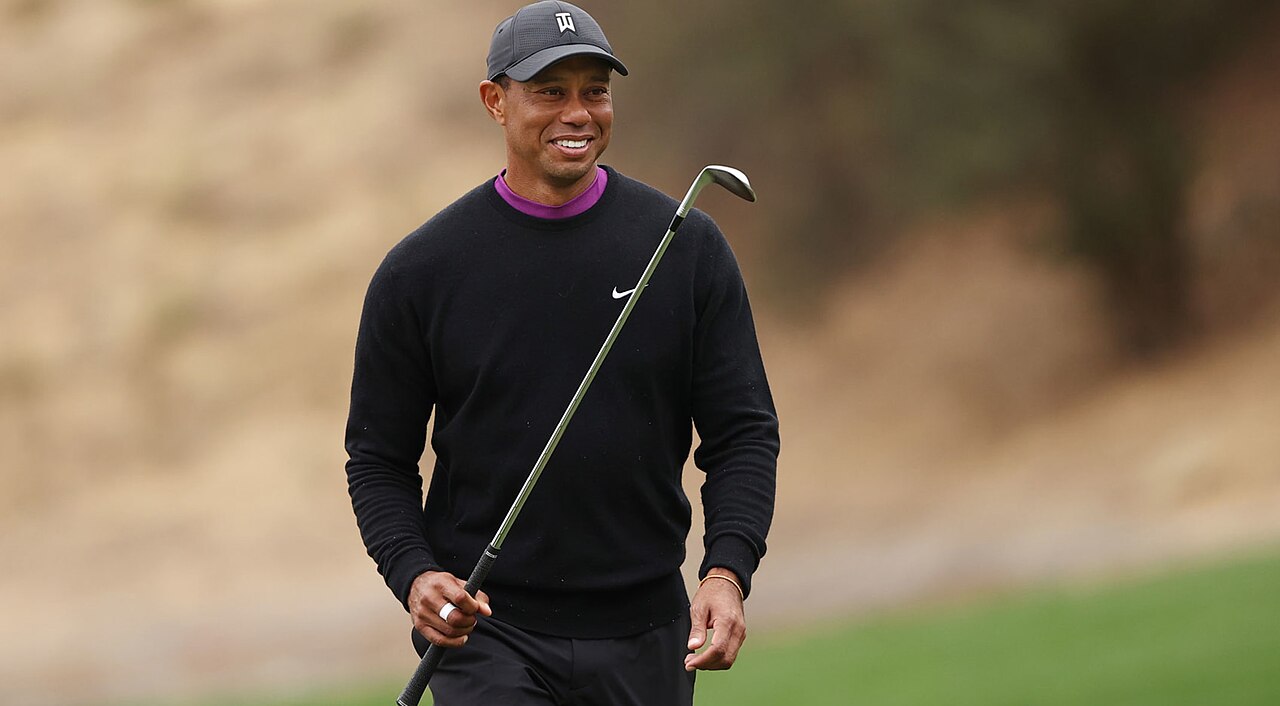
Tiger Woods was arrested in Florida on suspicion of driving under the influence (DUI) following a dramatic rollover crash near his home, reigniting concerns about his health, judgment, and future in professional golf. Authorities say the 15-time major champion showed signs of impairment, The Guardian reports, though alcohol was not detected, pointing instead to possible medication or drug influence.
Timeline of Events
March 27, 2026 – Early Afternoon: Crash Occurs
- Tiger Woods was driving near his residence on Jupiter Island, Florida.
- While attempting to overtake a work truck pulling a trailer on a narrow two-lane road, his vehicle clipped the trailer.
- The collision caused his SUV to roll over onto its side.
Immediately After Crash
- Tiger Woods managed to crawl out of the vehicle through the passenger side.
- No injuries were reported, and no other individuals were harmed.
Law Enforcement Arrival
- Responding officers observed signs of impairment.
- A breathalyzer test showed no alcohol in his system.
- Authorities began suspecting medication or drug-related impairment instead.
Refusal of Urine Test
- Tiger Woods refused to submit to a urine test, which under Florida law constitutes a separate offense.
- This refusal added an additional misdemeanor charge.
Arrest and Charges
- Woods was formally arrested on:
- DUI involving property damage;
- Refusal to comply with lawful testing.
- Officials emphasized he would receive no special treatment.
Detention
- Florida law required Woods to remain in custody for at least eight hours.
- He was held in a controlled environment, separate from the general jail population.
Release
- Woods was released later the same day after fulfilling the mandatory holding period.
- No immediate court date details were publicly confirmed at the time.
What Investigators Believe
According to Reuters, authorities say the absence of alcohol shifts focus toward prescription medication or other substances as the likely cause of impairment.
This detail is significant given Woods’ history of injuries and surgeries, which have required ongoing medical treatment and pain management.
A Pattern: Echoes of 2017
This is not the first time Woods has faced DUI-related trouble.
- In 2017, he was arrested in Florida after being found asleep in his car.
- Toxicology reports later showed multiple prescription drugs in his system.
- He ultimately pleaded guilty to reckless driving and entered a diversion program.
The 2026 incident bears similarities, no alcohol, suspected medication involvement, and impaired driving behavior.
Career and Public Impact
The arrest comes at a delicate moment:
- Woods had recently returned to competitive golf activity after years of injury setbacks.
- His participation in upcoming tournaments, including the Masters, is now uncertain.
Beyond competition, the incident raises broader concerns about:
- Athlete health and medication management;
- Public safety and accountability;
- The legacy of one of golf’s greatest figures.
Legal Outlook
Under Florida law, DUI charges involving property damage and refusal of testing can carry:
- Fines;
- License suspension;
- Mandatory programs or probation.
Given Woods’ prior record, legal scrutiny is expected to be intense.
Who Is Tiger Woods?
Tiger Woods is widely regarded as one of the greatest golfers in the history of the sport. Born Eldrick Tont Woods on December 30, 1975, in California, he showed extraordinary talent from a very young age, quickly becoming a child prodigy in golf. By the time he turned professional in 1996, Woods was already a global sensation, attracting massive media attention and sponsorship deals.
Woods rose to dominance in the late 1990s and early 2000s, revolutionizing golf with his athleticism, precision, and mental toughness. He has won 15 major championships, second only to Jack Nicklaus, and holds numerous records, including weeks ranked world No. 1. His 1997 Masters victory, where he won by a record margin, remains one of the most iconic moments in golf history.
Beyond his achievements on the course, Woods has had a significant cultural impact, helping expand golf’s global popularity and diversity. However, his career has also been marked by personal and physical challenges. Multiple injuries, particularly to his back and legs, required several surgeries and long recovery periods. Despite setbacks, Woods achieved one of sport’s greatest comebacks by winning the Masters again in 2019.
The arrest of Tiger Woods marks another troubling chapter in a career defined by both extraordinary success and personal setbacks. While no one was injured, the incident underscores ongoing concerns about impairment, particularly involving prescription drugs and its consequences.
What happens next will depend on toxicology findings, legal proceedings, and Woods’ response.
Photo: Theflowerbar / Wikimedia Commons / CC BY-SA 4.0
Continue Reading:
Bank of America Agrees to Pay $72.5 Million to Epstein Victims
META Hit With $375 Million Fine in New Mexico Over Child Safety Violations
Elon Musk Offers to Pay TSA Salaries: Bold Solution or Strategic PR Move?

Ethan Brooks is a journalist with over 11 years of experience, specializing in finance, politics, and breaking news. He delivers timely, accurate reporting on market trends, economic developments, and major political events, helping readers stay informed on the stories that matter most.