President Donald Trump has intensified his public criticism of mail‑in voting, labeling it “cheating” in a recent speech, despite having cast a mail‑in ballot himself just days earlier, The Guardian reports. The comments have drawn swift reactions from election experts, political opponents, and voters alike, underscoring how controversy over election procedures continues to shape the national political discourse ahead of the 2026 midterm cycle.
Trump’s Comments in Memphis
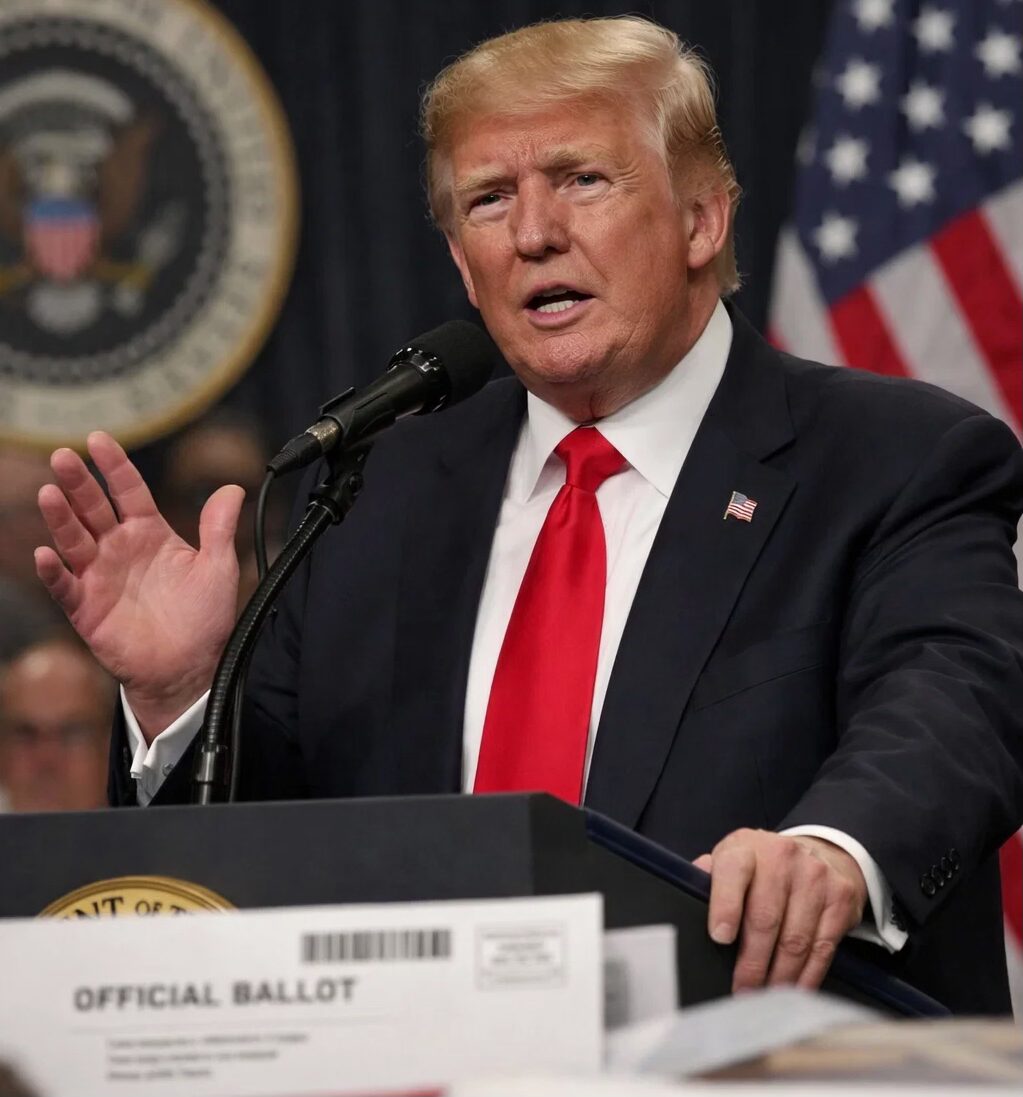
At a roundtable event focused on crime and public safety in Memphis, Tennessee, on Monday, Trump addressed a range of issues, including his longstanding concern about mail‑in ballots. In his remarks, he said:
“Mail‑in voting means mail‑in cheating. I call it mail‑in cheating, and we got to do something about it all.”
The strident language was notable not only for its tone but for what critics called an apparent contradiction, Trump himself had recently used the very voting method he denounced. According to voting records in Palm Beach County, Florida, the president submitted a mail‑in ballot earlier in March for a special election in House District 87, a seat narrowly important in the balance of local political power.
Contradiction or Strategy?
Trump’s vote by mail came as he publicly criticized the practice, despite early voting being available in person in Palm Beach, where he has a residence at the time he sent his ballot. That detail has led political analysts to question whether the president’s statements reflect political strategy more than personal conviction.
The Republican leader has repeatedly argued that mail‑in voting is susceptible to fraud, a claim that is widely disputed by election experts and fact‑checking organizations, who have found that documented cases of fraud with mailed ballots are extremely rare and generally isolated.
“Election officials in several U.S. states report that the safeguards around mailed ballots, including signature verification, tracking, and secure handling protocols, make widespread fraud unlikely.” says one academic analysis of U.S. election data.
Despite this, Trump and his allies have pressed Congress to adopt more restrictive voting rules. Among the legislative proposals is the SAVE America Act, which would tighten requirements for mail ballots and demand proof of citizenship for registration. The bill passed the House narrowly but faces an uncertain future in the Senate.
Reactions From Both Sides
The president’s remarks drew immediate responses from both sides of the political spectrum. Critics argue that dismissing mail‑in voting, a legitimate and legal method used by millions, undermines public confidence in elections.
Democratic Party officials and voting rights advocates said the comments were irresponsible, especially coming from a sitting president. “Mail‑in ballots are a secure and integral part of the U.S. electoral process.” one spokesperson said. “Casting doubt on their legitimacy without evidence is deeply damaging to voter trust.”
Some Republican voters also expressed frustration. In interviews and online discussions, a small but vocal contingent described the remarks as at odds with Trump’s own action of voting by mail, portraying it as “rules for thee, not for me.”
In a statement shared with The Guardian, White House officials characterized the controversy as a misunderstanding of the exceptions included in legislation. They noted that the SAVE America Act provides exemptions for military members, illness, or travel categories that supporters claim justified Trump’s own mail‑in ballot.
Why Mail‑In Voting Is Politically Charged
Mail‑in voting surged in popularity during the COVID‑19 pandemic and has remained an important option for many voters, especially in states like Colorado, Oregon, and Washington where it is used extensively. Election authorities emphasize that ballots cast by mail go through numerous verification steps, including signature comparison and tracking systems, designed to protect integrity.
Nonetheless, debates about mail‑in ballot security have become a flashpoint in U.S. politics. Trump’s early opposition to the method began well before his presidency, and intensified during the 2020 election cycle, when he repeatedly raised unsubstantiated claims that increased mail voting would lead to fraud. Those claims were repeatedly debunked by independent fact‑checkers, who found no evidence of significant mail‑in voting fraud impacting election results.
The current controversy is not just about one election method, but reflects deeper tensions in American democracy. Voting procedures, access, and reforms are central to debates over turnout, representation, and party advantage, especially as midterm elections approach and both parties jockey for influence.
Looking Ahead
The Trump administration’s messaging on mail‑in voting could have implications for future election cycles and legislative priorities. With a Supreme Court showing signs of willingness to consider challenges to vote counting timelines and ballot processing rules, the national conversation about voting access continues to evolve.
For now, the president’s remarks and his own use of mail‑in voting underscore the complex and often contentious nature of election policy in the U.S. Whether skeptics of mail‑in ballots drive reform or opponents defend broader access, the debate is likely to remain a central feature of American politics through 2026 and beyond.
If you found this story insightful, you might also like:
Iran Says Trump Is Lying – Full Report
Trump Pays $1 Billion of Taxpayers’ Money to Cancel Wind Project
Suspicious Bets on US–Iran Ceasefire Raise Insider Trading Concerns

Ethan Brooks is a journalist with over 11 years of experience, specializing in finance, politics, and breaking news. He delivers timely, accurate reporting on market trends, economic developments, and major political events, helping readers stay informed on the stories that matter most.