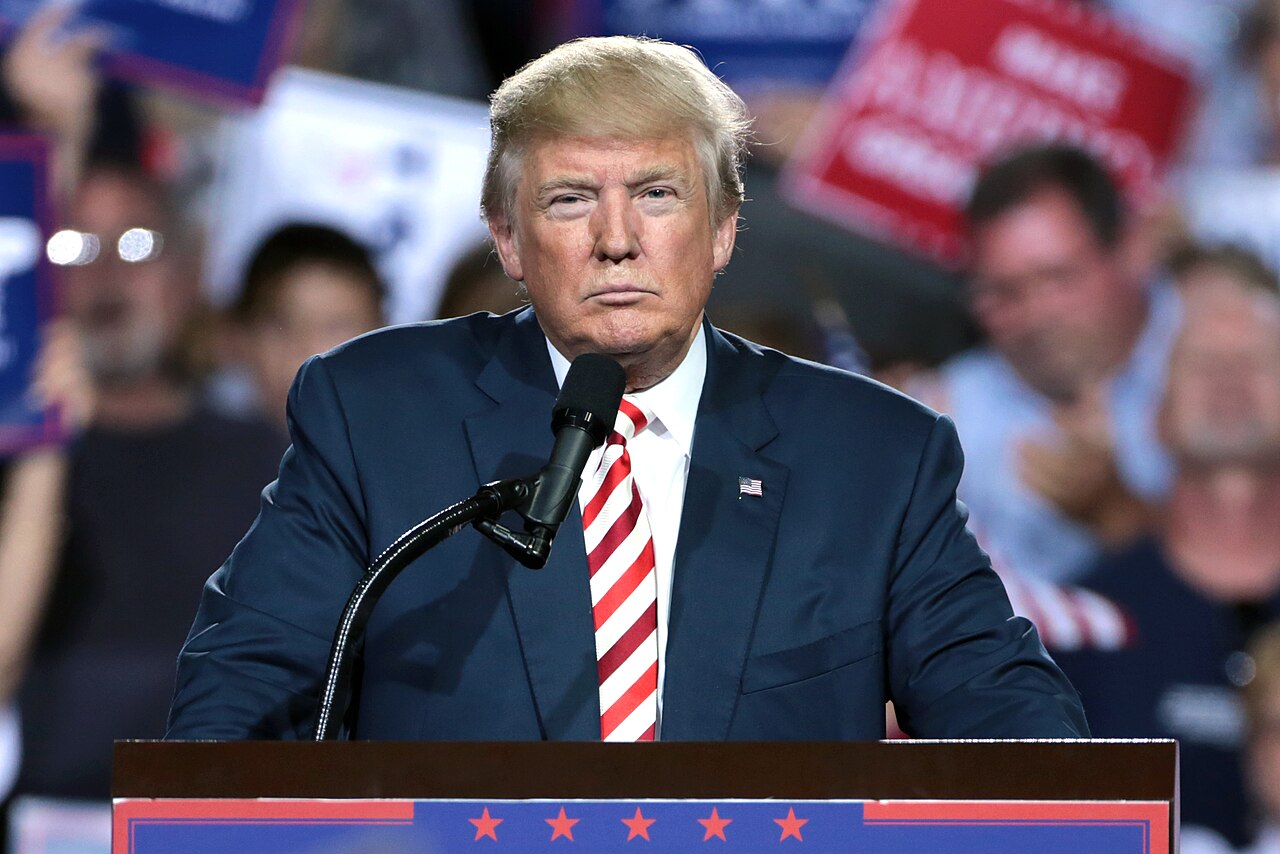
WASHINGTON — Former U.S. President Donald Trump ignited a fresh round of international scrutiny on March 25 when he said, during a Republican fundraising event, that Iran informally proposed making him the Islamic Republic’s next Supreme Leader, an offer he “politely declined.” The remarks, widely reported by outlets including, Business Today, and Moneycontrol, immediately drew both incredulity and concern from fact-checkers and diplomats alike.
“There’s never been a head of a country that wanted that job less than being the head of Iran” Trump said, according to multiple reports. “We hear them very clearly. They say, ‘I don’t want it. We’d like to make you the next Supreme Leader.’ No, thank you, I don’t want it.”
The remarks were delivered at the annual National Republican Congressional Committee dinner, where Trump sought to frame U.S.–Iran tensions as evidence of Tehran’s desperation for a deal. But experts and international officials are casting doubt on the literal truth of the claim, highlighting instead a growing gap between Trump’s rhetoric and verified diplomatic realities.
What Trump Actually Claimed
According to reporting from NDTV, and ABP Live, Trump suggested that Iran’s leadership has been secretly negotiating with Washington to end the ongoing conflict but is “afraid” to acknowledge it publicly.
He told donors that Iranian officials were so eager for peace that they had jokingly offered him the role of Supreme Leader, the Islamic Republic’s highest authority, only for him to refuse. Trump used the anecdote to illustrate, in his telling, Tehran’s fear and instability.
But fact-checking and analysis by journalists and analysts note that there’s no independent evidence to support the claim that Iranian leaders ever seriously offered Trump any position of power in their government.
Why the Claim Is Viewed as Implausible
The idea that Iran would propose a foreign leader for its supreme leadership position, a role deeply enmeshed in the country’s theocratic constitution and clerical hierarchy, is widely regarded as implausible. The Supreme Leader is not merely a political office but also a religious authority whose legitimacy is rooted in Shia Islamic clerical structures and internal councils.
Iran’s government has explicitly denied negotiations with the Trump administration, and no credible Iranian official or state channel has corroborated Trump’s version of events. Analysts point out that his account likely reflects Trump’s rhetorical style, using exaggeration to make a political point, rather than a documented diplomatic interaction.
Debate over how to interpret Trump’s words has also spilled onto public forums. On Reddit, users dissecting the speech argue that his statement was not literally reporting an offer, but rather a humorous mischaracterization of other remarks about Iran’s war fears. (Reddit discussion)
Context: Ongoing Conflict and Leadership Uncertainty in Iran
This claim comes amid a period of profound instability in Tehran.
After joint U.S.–Israeli strikes killed Supreme Leader, Ayatollah Ali Khamenei in late February, a move that precipitated an escalation of war, Iran’s Assembly of Experts selected Mojtaba Khamenei as the new Supreme Leader in early March.
That leadership transition is central to the backdrop against which Trump’s comments were made: Iranian authorities are reeling from intense military pressure, while U.S. officials continue to deny that they are in formal talks with Iranian leaders. Trump has previously asserted that no Iranian leaders remain with whom the U.S. can negotiate.
In related developments, media reports note that Trump’s team has also made statements about ongoing engagements with “senior Iranian officials,” claiming progress in talks, even as Tehran dismisses those talks as unofficial or non-existent.
Political Messaging and Strategic Narrative
Experts say Trump’s comments serve multiple domestic and foreign policy purposes:
- Domestic reinforcement: In Republican circles, portraying Iran as desperate and submissive resonates with Trump’s base, reinforcing narratives of U.S. strength and Iranian weakness.
- Negotiation posture: By publicly framing Iran as eager for a deal, Trump positions the U.S. as holding diplomatic leverage, regardless of whether that leverage exists.
- Communication strategy: Analysts argue that Trump’s rhetoric often blends exaggeration and metaphor to influence perception rather than convey strict factual accounts. His claims about Iran’s supposed overtures fit a broader pattern of overstated assertions about the conflict.
Nevertheless, the absence of corroboration from Iranian sources, Gulf-state intermediaries, or independent diplomatic channels suggests that Trump’s claim is, at best, a political framing rather than an accurate reflection of real negotiations.
International Reactions and Regional Skepticism
Regional actors have expressed skepticism about Trump’s narrative. A Guardian report highlights that Gulf states, particularly Qatar and Oman nations that have historically mediated between Tehran and Washington, are wary of Trump’s portrayal of U.S.–Iran diplomacy. They question both the existence of formal talks and the credibility of Trump’s claims about Iran’s intentions.
The disconnect between Trump’s assertions and reactions from Middle Eastern diplomats underscores a broader mistrust: many Gulf leaders are wary of being drawn into an escalating conflict shaped by inconsistent U.S. messaging.
Expert Commentary: Rhetoric vs. Reality
Foreign policy analysts stress the need to distinguish rhetorical devices from verifiable events when interpreting Trump’s statements. They caution that conflating metaphor with fact can muddy understanding of complex diplomatic landscapes, especially in ongoing military conflicts like the Iran war.
One common critique among commentators is that Trump’s speech blends humor, exaggeration, and ambiguous phrasing that resists straightforward transcription, making it difficult to pin down a precise account of negotiations or offers.
A Claim That Reflects Narrative More Than Negotiation
Trump’s claim that Iran offered him the role of Supreme Leader has made headlines around the world, but scrutiny reveals it lacks substantiation from independent or Iranian sources. Instead, the claim appears to function as a rhetorical tool, one designed to suggest Iranian desperation, assert American leverage, and appeal to a domestic political audience.
As tensions persist and diplomatic narratives continue to evolve, experts emphasize that observers should approach dramatic statements in wartime contexts with caution, distinguishing between strategic messaging and diplomatic reality.
If you found this story insightful, you might also like:
Iran Says Trump Is Lying – Full Report
Trump Pays $1 Billion of Taxpayers’ Money to Cancel Wind Project
Suspicious Bets on US–Iran Ceasefire Raise Insider Trading Concerns

Ethan Brooks is a journalist with over 11 years of experience, specializing in finance, politics, and breaking news. He delivers timely, accurate reporting on market trends, economic developments, and major political events, helping readers stay informed on the stories that matter most.