
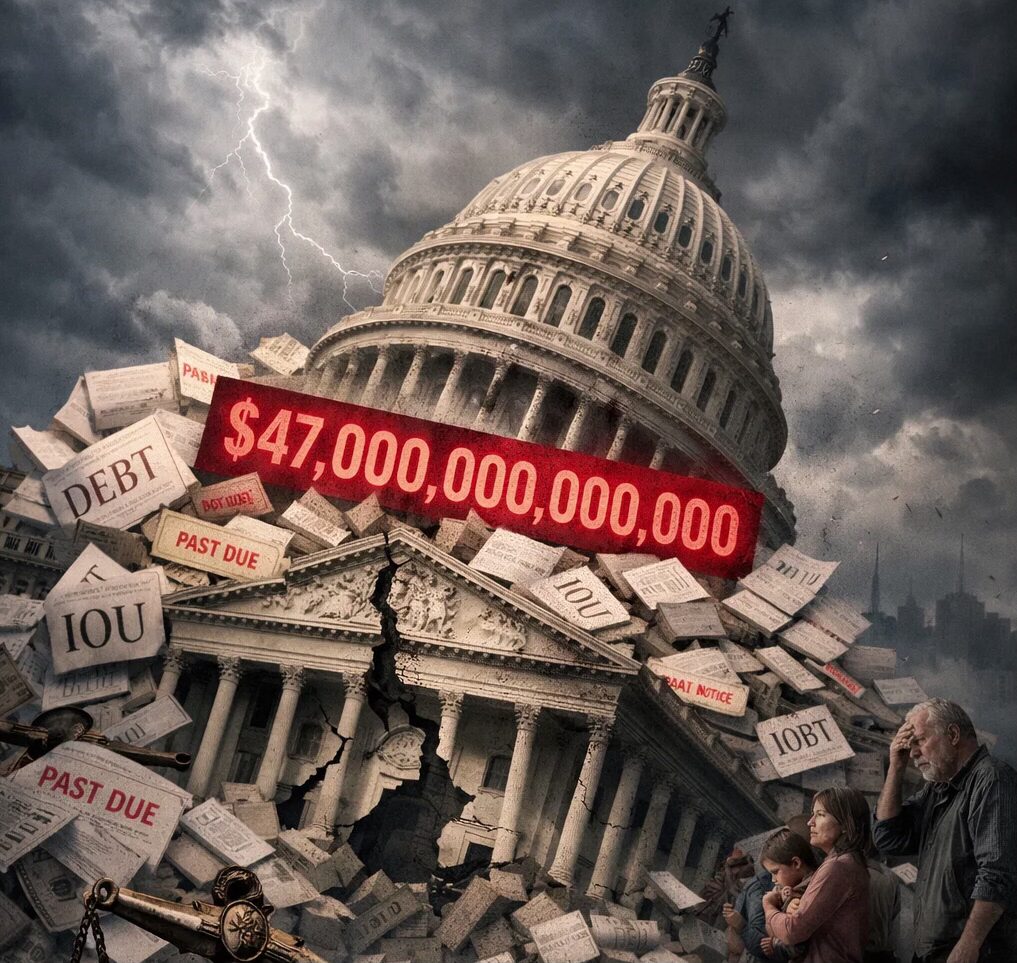
The U.S. Department of the Treasury’s consolidated financial statements for fiscal year 2025 show a striking financial imbalance between federal assets and liabilities, prompting some fiscal experts to describe the nation’s finances as technically insolvent. According to the report, the federal government had about $6.06 trillion in total assets but $47.78 trillion in total liabilities as of September 30, 2025, creating a deeply negative net position on the books.
The Solvency Debate: What the Numbers Say
The fiscal statements released in early 2026 under accrual accounting, which includes long-term obligations rather than just current cash flows, indicate the government’s balance sheet is deeply negative. On a consolidated basis, total liabilities exceed assets by a large margin, a condition that some analysts interpret as insolvency in a traditional accounting sense.
When unfunded long-term obligations for programs like Social Security and Medicare are factored in via the separate Statement of Social Insurance, total federal obligations could exceed $130 trillion over the next several decades, dwarfing total annual U.S. economic output.
But experts are divided on whether this constitutes real insolvency for a sovereign government that issues its own currency.
Expert Opinions: Alarm vs. Caution
Steve H. Hanke & David M. Walker (Fortune)
Economist Steve H. Hanke and former U.S. Comptroller General David M. Walker write that the Treasury’s own numbers “show liabilities far exceeding assets,” and, under standard accounting definitions used for companies, that looks like insolvency. They argue this highlights a fiscal catastrophe that Congress cannot ignore, and they call for legislative action, including a Fiscal Commission Act and a balanced budget amendment to restore financial health.
Maya MacGuineas (Committee for a Responsible Federal Budget)
Maya MacGuineas, president of the nonpartisan Committee for a Responsible Federal Budget, has warned that the U.S. is borrowing at unsustainable rates, tens of billions of dollars per week and urged policymakers from both parties to negotiate deficit reduction strategies. She emphasizes that the nation’s debt is rising faster than the economy and is a structural issue that demands bipartisan solutions.
David Kelly (J.P. Morgan Asset Management)
David Kelly, Chief Global Strategist at J.P. Morgan Asset Management, has described the situation as akin to the U.S. “going broke slowly.” While he notes markets haven’t panicked, Kelly cautions that rising interest costs and a high debt‑to‑GDP ratio could erode fiscal flexibility, urging investors to diversify away from U.S. assets as a hedge against long‑term fiscal deterioration.
Why Some Economists Reject the Insolvency Label
Other economists argue that the concept of insolvency doesn’t apply neatly to sovereign governments like the United States, because Washington can issue its own currency and borrow in dollars. Under this view, government debt and accounting deficits are not immediate signs of collapse, they reflect fiscal policy choices rather than an inability to meet obligations. Critics of the insolvency framing say the focus should instead be on inflation, economic growth, and taxation policy, not an accounting balance sheet.
Long‑Term Trends and Fiscal Risks
Even outside the insolvency debate, federal fiscal fundamentals remain challenging:
- The government continues to run large annual deficits, which add to the national debt.
- Long‑term demographic shifts are projected to increase spending on Social Security and Medicare faster than revenue growth.
- Recent reports show the Government Accountability Office (GAO) has been unable to audit the consolidated federal financial statements for decades due to weaknesses in accounting systems, complicating transparency.
The debt ceiling, the legal limit on how much debt the U.S. can issue, remains a flash point in fiscal policy. While not currently reached, failure to raise it in a timely way could force the Treasury into extraordinary measures or risk default.
What This Means for Policy and Markets
Whether or not the government is technically “insolvent,” there’s broad agreement among many fiscal watchdogs that unchecked debt growth poses long‑term risks. Rising interest costs, potential investor fatigue, and demographic pressures all contribute to a fiscal outlook that many analysts describe as unsustainable without meaningful reform.
For policymakers and markets alike, the challenge is balancing short‑term economic support with long‑term fiscal sustainability, a task critics say has been deferred too long.
Read More on Finance:
🔗 5 Best Dividend Stocks for Passive Income in 2026 (Top Picks) – A timely guide to dividend‑paying stocks that may help investors generate income in today’s market.
🔗 What Is Inflation and How It Affects Your Money in 2026 – A clear explanation of inflation, its causes, and how rising prices impact your savings, investments, and everyday finances.
🔗 The Ultimate Guide to Credit Scores and How to Improve Yours – Practical tips to understand your credit score and strategies to boost it for better loans and financial health.