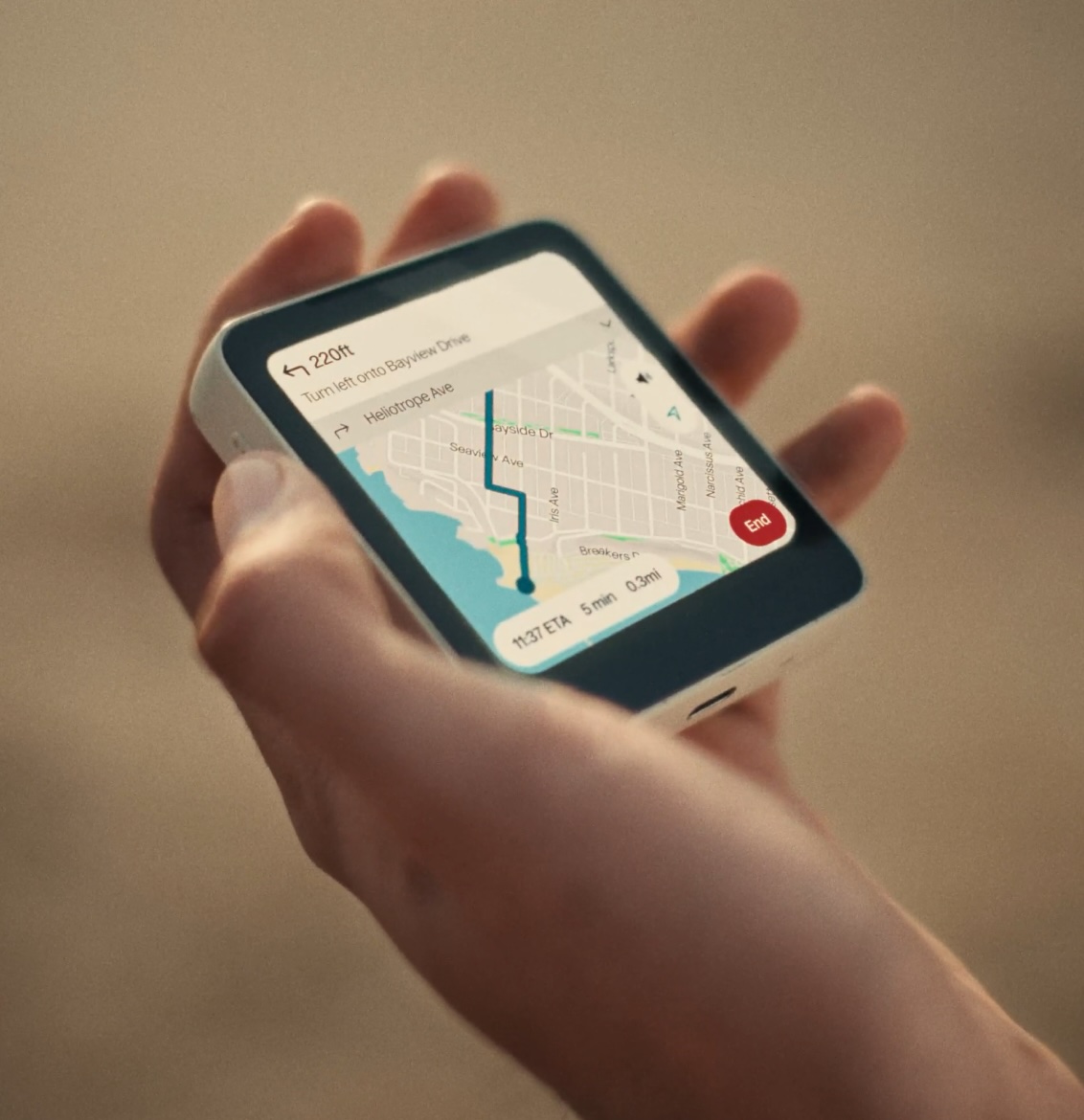
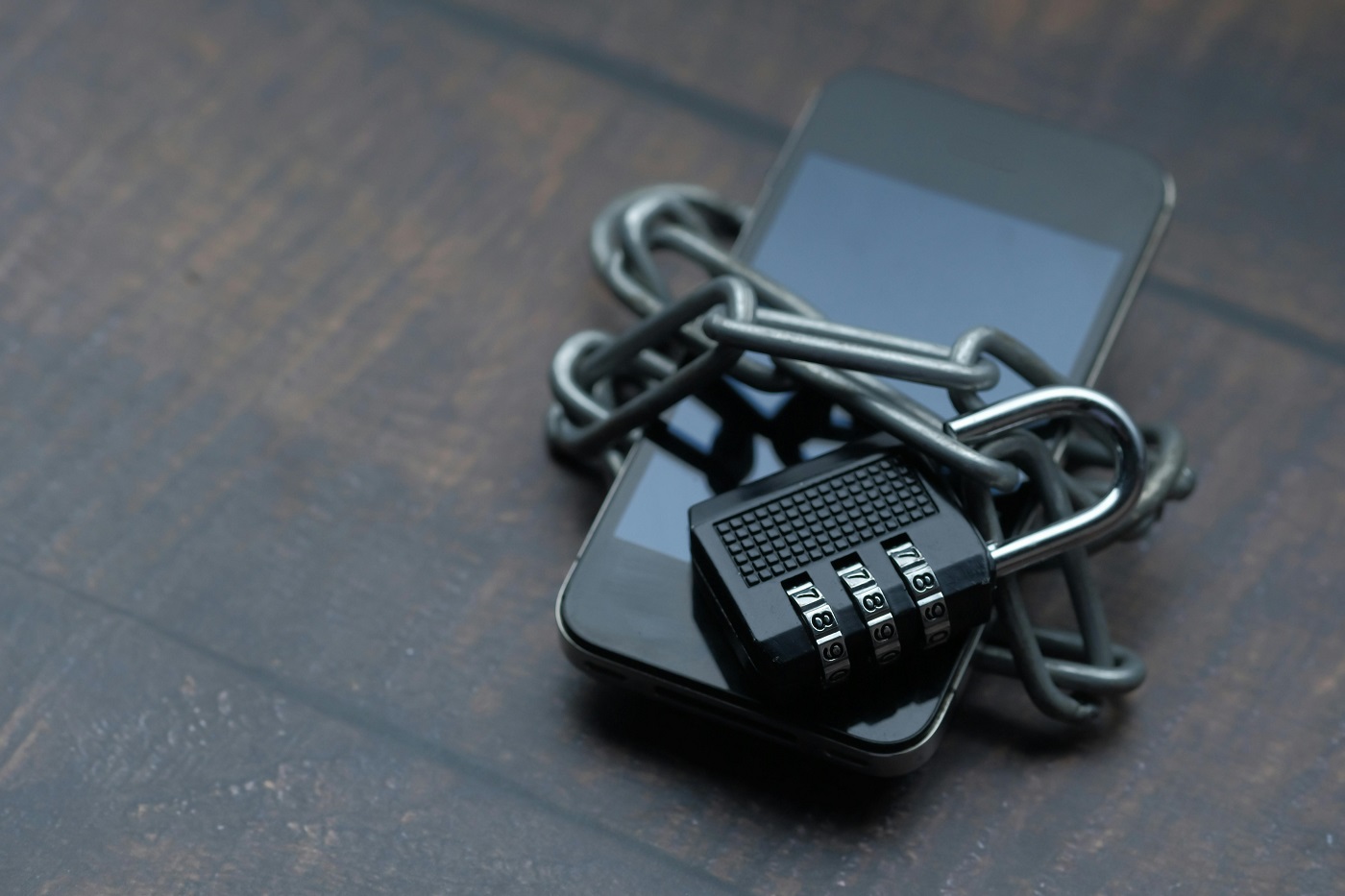
Every time you send a message, make a video call, or store a file in the cloud, that data travels across dozens of servers before it reaches its destination. At any point along that journey, someone, a company, a hacker, or a government agency, could potentially read it. End-to-end encryption exists to prevent exactly that.
But what does end-to-end encryption actually mean? How does it work? And more importantly, do you genuinely need it?
What Is End-to-End Encryption?
End-to-end encryption, often abbreviated as E2EE, is a method of securing communication so that only the two people involved in a conversation can read the messages. No one else, not the app company, not the internet provider, not even a government with a court order, can access the content.
The “end-to-end” part refers to the two endpoints of a conversation: your device and the recipient’s device. The message is encrypted (scrambled into unreadable code) on your device before it ever leaves, and it only gets decrypted (unscrambled) when it arrives on the other person’s device.
According to the Electronic Frontier Foundation (EFF), end-to-end encryption is one of the most powerful tools available to protect digital privacy, precisely because it removes the middleman from the equation entirely.
How Does End-to-End Encryption Work?
To understand E2EE, it helps to understand what encryption is at a basic level.
When you encrypt data, you use a mathematical key to transform readable information into scrambled code. Only someone with the correct key can reverse that process and read the original message.
End-to-end encryption uses what is known as public-key cryptography, sometimes called asymmetric encryption. Here is how it works in practice:
- Each user gets two keys, a public key and a private key. These are generated automatically by the app, so you never have to think about them.
- Your public key is shared openly. Anyone can use it to encrypt a message intended for you.
- Your private key stays only on your device. It is never uploaded to any server and never shared with anyone.
- When someone sends you a message, their app uses your public key to encrypt it. Once encrypted, that message can only be unlocked with your private key, which only exists on your phone or computer.
According to Stanford University’s Internet Observatory, even if an attacker intercepts the encrypted message mid-transit, they would need your private key to decode it, and that key never left your device in the first place.
This is what makes E2EE fundamentally different from standard encryption, where a company encrypts your data but still holds the keys themselves and could technically read your messages if compelled to.
End-to-End Encryption vs. Regular Encryption: What Is the Difference?
Many apps and services advertise that they use encryption. Most of the time, that means encryption in transit, your data is scrambled while it travels between your device and the company’s servers, but the company can read it once it arrives.
Think of it like sending a letter in a locked box. The courier cannot read it while carrying it. But when it arrives at the destination, the company’s office, they have the key and can open it.
End-to-end encryption is different. Only you and the recipient hold keys. The company that built the app cannot read your messages even if they wanted to. According to Meta’s technical documentation, WhatsApp’s implementation means even Meta itself cannot access the content of messages shared between users.
This is a meaningful difference when it comes to:
- Data breaches (hackers who break into company servers cannot read your messages);
- Government surveillance requests (companies cannot hand over data they cannot access);
- Internal misuse (employees at the company cannot read your private communications).
Which Apps Use End-to-End Encryption?
Not every messaging app uses E2EE by default. Some offer it as an optional feature. Others do not offer it at all.
Apps with E2EE on by default:
- Signal – widely considered the gold standard for private communication, according to security researchers at Johns Hopkins University;
- WhatsApp – uses the Signal Protocol for all messages and calls;
- iMessage – end-to-end encrypted when messaging between Apple devices (blue bubbles); not encrypted when texting Android users (green bubbles);
- FaceTime – end-to-end encrypted for audio and video calls;
Apps where E2EE is optional or partial:
- Telegram – only encrypts messages in “Secret Chats” mode; regular chats are stored on Telegram’s servers;
- Google Messages – E2EE is available for one-on-one RCS chats but not group messages or SMS;
- Facebook Messenger – rolled out default E2EE in late 2023, but some features still lack full encryption.
Apps with no E2EE:
- Standard SMS text messages;
- Most email providers, including Gmail and Outlook, unless you use additional tools;
- Slack, Microsoft Teams, and most workplace communication tools.
According to a 2024 report by the nonprofit organisation Access Now, the gap between apps that offer E2EE and those that do not, remains one of the most significant privacy divides in consumer technology.
Does End-to-End Encryption Cover Everything?
This is where many people are surprised.
E2EE protects the content of your messages while they are in transit. It does not protect everything about your communication. There are important limitations to understand:
Metadata is not encrypted.
Even with E2EE, apps can still see who you are talking to, when, how often, and how long your conversations are. According to a widely cited analysis by researchers at MIT, metadata alone can reveal a significant amount about a person’s relationships, habits, and even health conditions, without ever reading the actual message content.
Your device itself is not protected.
If someone has physical access to your phone or it is infected with malware, they can read your messages regardless of encryption, because the messages are decrypted on your device.
Backups may not be encrypted.
By default, WhatsApp backs up messages to Google Drive or iCloud, and those backups historically were not end-to-end encrypted. WhatsApp introduced optional encrypted backups in 2021, but users must enable this manually.
The other person’s device matters too.
If the person you are communicating with has a compromised device or uses a screenshot to share your conversation, encryption cannot protect you from that.
Why Is End-to-End Encryption Controversial?
Despite its benefits for privacy, E2EE is a politically charged topic. Law enforcement agencies in multiple countries have argued that strong encryption makes it impossible to investigate serious crimes including terrorism and child exploitation, because even with a legal warrant, companies cannot access encrypted communications.
According to reporting by Reuters, agencies including the FBI and Europol have repeatedly called on technology companies to build “backdoors”, intentional vulnerabilities that would let authorities access encrypted content with proper authorisation.
Security researchers and privacy advocates strongly oppose this idea. A backdoor designed for law enforcement cannot be built in a way that keeps it exclusively available to authorised users. Once a vulnerability exists, it can potentially be exploited by anyone who discovers it, including malicious hackers and foreign governments.
This tension between privacy and law enforcement access remains unresolved and continues to shape policy debates in the United States, European Union, and United Kingdom as of 2026.
Do You Actually Need End-to-End Encryption?
The honest answer is: probably yes, even if you have “nothing to hide.“
Privacy is not only about hiding wrongdoing. According to a widely referenced 2015 essay by security expert Bruce Schneier, privacy is about maintaining control over your own information and the ability to define yourself on your own terms.
Medical conversations, financial discussions, personal relationships, political views, these are all things people share in private messages, and none of them require wrongdoing to be sensitive. Beyond principle, there are practical reasons to care:
Data breaches are common. The average breach in 2025 exposed millions of records. If a messaging company stores readable copies of your conversations and gets hacked, those messages could be leaked. With E2EE, there is nothing readable to steal from the server.
Third-party access is real. Without E2EE, companies can share your message content with advertisers, data brokers, or in response to legal requests. According to Google’s own transparency report, the company receives hundreds of thousands of government data requests per year globally.
Surveillance is not only a concern in authoritarian countries. Democracies also conduct mass data collection programs. According to documents revealed by Edward Snowden in 2013 and subsequent reporting by The Guardian, the NSA operated large-scale programs that collected communication data on millions of people with no individual suspicion of wrongdoing.
For most people, switching to an app like Signal for sensitive conversations, or at minimum ensuring WhatsApp’s encrypted backup is enabled, is a low-effort step with meaningful privacy benefits.
How to Check If Your Messages Are End-to-End Encrypted
You do not need to be a security expert to check. Here are quick ways to verify:
- WhatsApp: Open any chat, tap the contact name at the top, and look for “Encryption” with a lock icon. You can verify the encryption code with your contact.
- iMessage: If the send button and message bubbles are blue, messages are encrypted. Green means standard SMS, which is not encrypted.
- Signal: All conversations in Signal are encrypted by default. No additional steps needed.
- Telegram: Look for the lock icon in the top bar, which only appears in Secret Chats.
The Bottom Line
End-to-end encryption is not a niche tool for activists or criminals, it is a foundational technology that protects ordinary people from data breaches, corporate surveillance, and unauthorised access to their private lives.
It works by ensuring that only the sender and recipient hold the keys to decrypt a conversation, making the content unreadable to everyone else including the app provider itself.
The good news is that using it requires almost no effort. Switching to Signal, enabling encrypted backups on WhatsApp, and being aware of which apps do and do not offer E2EE by default are simple steps that meaningfully improve your digital privacy.
In a world where data is increasingly valuable and breaches are increasingly common, end-to-end encryption is one of the clearest examples of a technology built to work for users rather than against them.
For more technology news and digital innovation coverage, visit the Technology section at bdesk.news.
Continue Reading:
OpenAI Shuts Down Sora Video Platform
Why Internal Tensions At OpenAI Around Sam Altman Are Raising Concerns

Michaela Reeds is an investigative journalist and reporter with a focus on politics, science, and technology. She brings clarity to complex issues, translating policy developments, scientific breakthroughs, and technological innovations into compelling stories for a broad audience. She is known for her dedication to accuracy, transparency, and in‑depth reporting.