
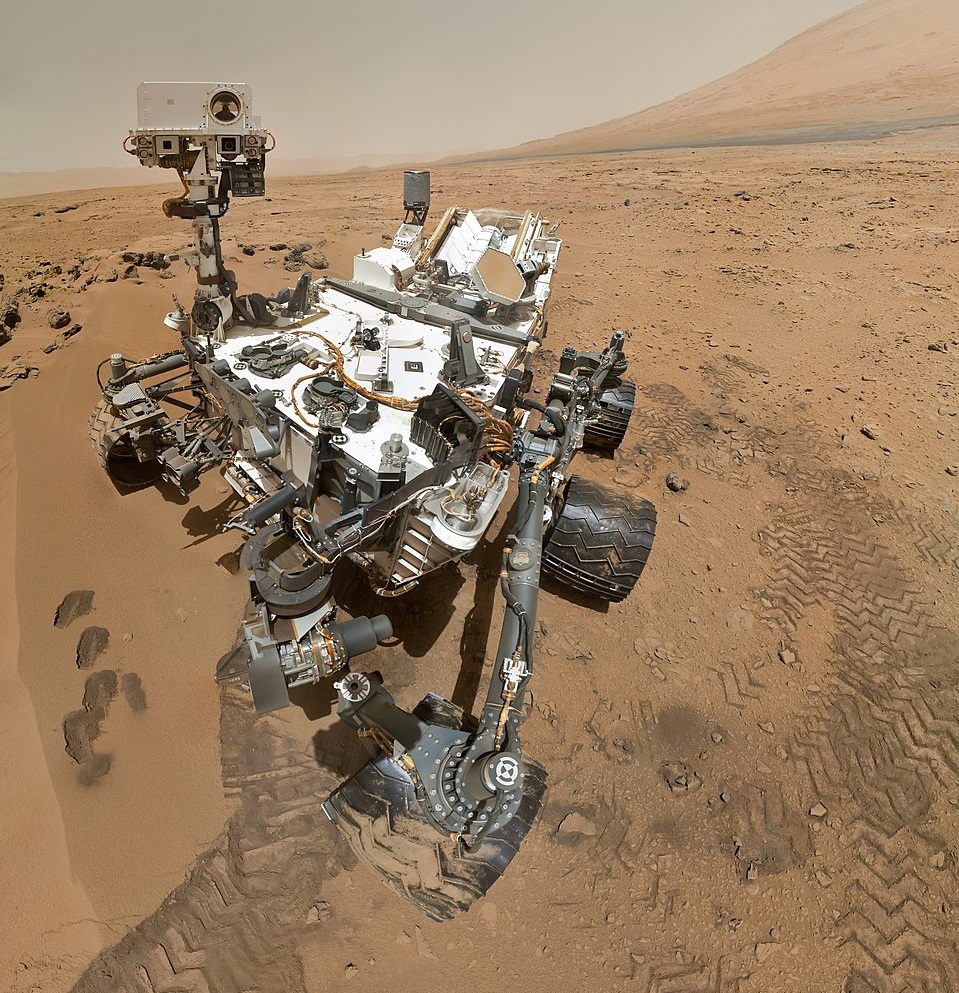
For decades, scientists have searched Mars for one critical answer: Did life ever exist on the Red Planet?
Now, a major discovery made by NASA’s Curiosity rover could become one of the most important breakthroughs in modern space exploration. Scientists have identified the largest and most diverse collection of organic molecules ever discovered on Mars, including several compounds never before detected on the planet.
The discovery is significant because organic molecules are considered the chemical building blocks of life. While the finding does not prove that life once existed on Mars, it strongly suggests that ancient Mars may once have had the environmental conditions necessary to support microbial organisms billions of years ago.
According to NASA, the discovery was made using rock samples collected by the Curiosity rover inside Gale Crater, a region scientists believe once contained lakes, flowing water, and conditions that may have supported life in the distant past.
What Exactly Did NASA Discover on Mars?
The Curiosity rover discovered a complex mixture of carbon-based organic compounds trapped inside ancient Martian rocks.
Scientists say the compounds include molecules linked to prebiotic chemistry, the natural chemical processes that can eventually lead to the formation of life.
Researchers identified several molecules that had never before been detected on Mars. Some of these compounds contain nitrogen, which is considered a critical ingredient for biological processes on Earth.
As reported by Live Science, this is now considered the most chemically diverse set of organic compounds ever identified on the Martian surface.
Scientists believe the molecules were preserved inside clay-rich rocks that protected them from radiation exposure over billions of years.
Why Are Organic Molecules on Mars So Important?
Organic molecules matter because all known life on Earth is built from carbon-based chemistry.
Finding organic compounds on Mars does not automatically mean life existed there. Organic molecules can also form through non-biological processes such as volcanic activity, meteorite impacts, or chemical reactions involving minerals and water.
However, the discovery becomes much more important because of where the molecules were found.
The rock samples came from an ancient environment that scientists believe once contained stable liquid water. Water is considered one of the most important ingredients required for life.
According to NASA’s Mars exploration program, ancient Mars may once have had rivers, lakes, groundwater systems, and a thicker atmosphere capable of supporting warmer temperatures.
This means Mars billions of years ago may have looked dramatically different from the cold and dry world seen today.
Could Ancient Mars Have Been Habitable?
Many scientists now believe ancient Mars may once have been capable of supporting microbial life similar to early organisms that existed on Earth. The latest discovery strengthens that possibility.
Researchers believe the rocks studied by Curiosity formed in an environment that experienced repeated wet-and-dry cycles. On Earth, these cycles are considered extremely important because they help create chemical reactions associated with the origins of life.
The presence of clay minerals inside the rocks is also highly significant.
Clay can preserve organic compounds for extremely long periods by protecting them from oxidation and radiation damage. Scientists believe this may explain why the molecules survived despite Mars being exposed to harsh cosmic radiation for billions of years.
Scientists working on the Curiosity mission explain that the preservation quality of the compounds surprised researchers because organic material on Mars is usually destroyed over time by intense radiation exposure.
How Did the Curiosity Rover Find These Molecules?
The discovery was made using Curiosity’s onboard laboratory system known as SAM, short for Sample Analysis at Mars.
SAM is considered one of the most advanced scientific laboratories ever sent to another planet.
Scientists used specialized heating techniques to break down crushed rock samples collected from the Martian surface. The process released hidden molecules trapped deep inside the rocks.
Researchers also used advanced wet-chemistry methods capable of detecting compounds that previous Mars experiments may not have been able to identify.
According to NASA’s Curiosity mission page, the rover’s instruments were specifically designed to search for signs that ancient Mars may once have supported life.
The new findings suggest scientists may have only scratched the surface of what still remains hidden beneath Mars.
Read More: Politicians Talk About Global Warming While Science Warns the Next Ice Age Is Coming
Why Could This Discovery Change Future Mars Missions?
This discovery may significantly influence future Mars exploration missions.
Scientists now believe there could be many more preserved organic compounds hidden beneath the Martian surface, especially in regions protected from radiation exposure.
Future missions may focus more heavily on underground exploration and deep drilling operations.
Scientists believe Earth-based laboratories could detect even more complex molecules that rover instruments may currently be unable to identify.
This could potentially lead to the strongest evidence yet regarding whether life once existed on Mars.
Read More: Brain Mapping with RNA Barcodes: Understanding the Brain’s Hidden Wiring
Could This Discovery Change Humanity’s Understanding of Life in the Universe?
The search for extraterrestrial life remains one of the biggest scientific questions in human history.
This discovery does not confirm alien life existed on Mars. However, it strengthens the possibility that Mars once had many of the chemical ingredients and environmental conditions necessary for life.
Scientists increasingly believe that if life ever formed on Mars, it was likely microbial.
Even discovering evidence of ancient microbial life would completely transform humanity’s understanding of biology, evolution, and life beyond Earth.
If life formed independently on both Earth and Mars billions of years ago, could that mean life is far more common in the universe than we ever imagined?
For more science news and research coverage, visit the Science section at bdesk.news.

Michaela Reeds is an investigative journalist and reporter with a focus on politics, science, and technology. She brings clarity to complex issues, translating policy developments, scientific breakthroughs, and technological innovations into compelling stories for a broad audience. She is known for her dedication to accuracy, transparency, and in‑depth reporting.