Financial markets can rise or fall in seconds. A single political statement can move billions of dollars across global stock exchanges, oil markets, and currencies.
But in recent weeks, analysts and lawmakers have started asking a troubling question about the market swings surrounding Donald Trump’s announcements regarding the Iran conflict:
Did someone know about these announcements before the public did and trade on that information?
While there is no proof that Trump personally profited from such activity, several unusually timed trades worth hundreds of millions of dollars have raised alarms among financial experts and politicians. Investigations are now being requested to determine whether insiders may have taken advantage of market-moving information tied to U.S. foreign policy.
The Announcements That Moved Global Markets
Since the beginning of 2026, Trump’s statements on tariffs, military threats, and negotiations have repeatedly shaken financial markets.
When political leaders discuss war, sanctions, or trade policy, investors react immediately. Oil prices rise or fall, stock markets move sharply, and defense industry stocks often surge.
During the recent tensions with Iran, Trump issued several dramatic statements warning that the United States could unleash devastating military force. Those warnings were followed days later by announcements suggesting negotiations or pauses in military operations.
Each time, markets reacted strongly.
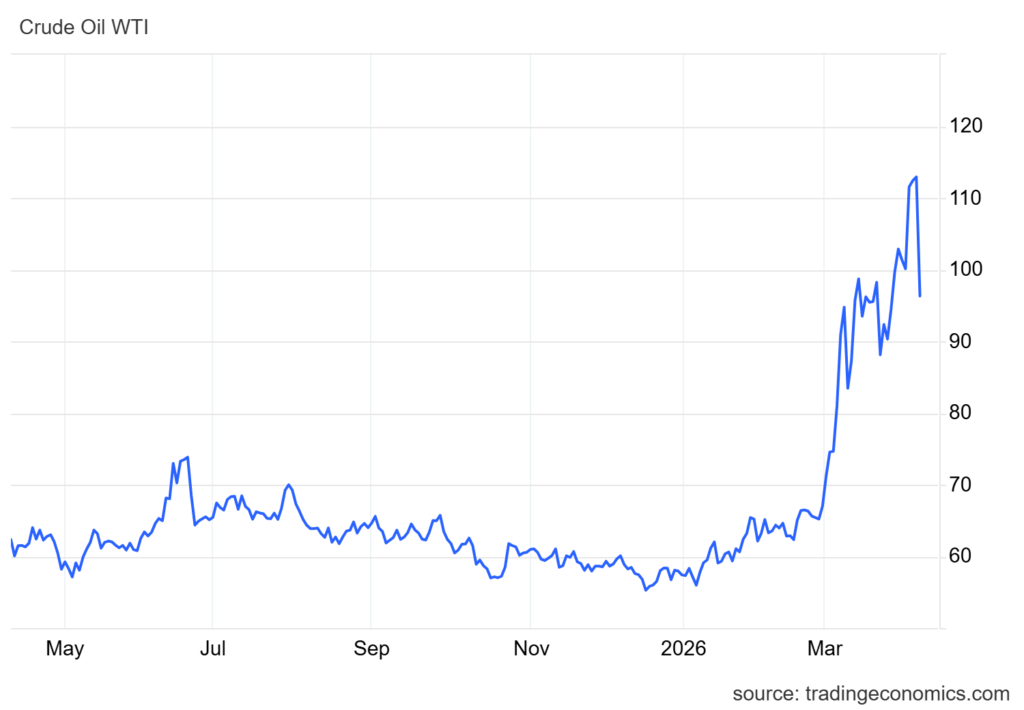
Oil prices jumped during threats of conflict, then dropped sharply when negotiations appeared possible. Stock markets also surged when tensions seemed to ease.
But the biggest concern is not the market reaction itself, it is the timing of some trades that happened just before these announcements.
The $580 Million Oil Trade Minutes Before the News
One of the most controversial moments occurred just before Trump released a statement about developments in the Iran conflict.
According to market analysis cited by journalists, thousands of oil futures contracts were traded moments before the announcement became public.
According to reporting by CBS News, more than 6,200 oil futures contracts were traded between 6:49 a.m. and 6:50 a.m., representing roughly $580 million in market exposure.
Oil markets moved sharply after Trump’s announcement was published, meaning traders who placed those bets could have made enormous profits if they correctly predicted the direction of the market.
For market analysts, the timing raised immediate questions.
Large trades sometimes happen randomly. But trades placed seconds before market-moving news often attract the attention of regulators.
A $1.5 Billion Trade Before Another Announcement
Another example raised even more suspicion.
According to financial reporting cited by Yahoo Finance, a massive $1.5 billion trade in S&P 500 futures occurred shortly before another Trump announcement related to the Iran crisis.
The trade positioned investors to profit if the stock market surged after the news and the market did indeed rise after the announcement.
While such trades could be the result of speculation or luck, lawmakers say the timing is suspicious enough to warrant investigation.
Senators Call for Federal Investigation
The unusual trading activity has already reached Washington.
Two U.S. senators recently asked federal regulators to investigate whether insiders may have used non-public information related to government announcements to profit in financial markets.
According to Reuters, the lawmakers requested that the Securities and Exchange Commission (SEC) and other watchdog agencies examine the trades.
The senators warned that if individuals with access to government information were sharing it with traders, it could represent a serious violation of insider-trading laws.
“Such activity could undermine public confidence in both government decision-making and financial markets,” the lawmakers wrote in their request for an investigation.
Wall Street’s “TACO Trade” Phenomenon
Some traders have noticed a broader pattern in Trump’s policy announcements.
Financial analysts have described a recurring cycle:
- Trump issues aggressive threats about tariffs or military action.
- Markets drop due to fear and uncertainty.
- Trump later softens his position or delays the policy.
- Markets rebound sharply.
This pattern became so common that traders jokingly coined a nickname: “TACO trades.”
The term stands for “Trump Always Chickens Out.”
The strategy involves buying stocks after markets fall following Trump’s threats and selling them once markets recover after he backs down.
While the nickname started as a Wall Street joke, it highlights how strongly markets respond to Trump’s statements.
And when markets move that dramatically, opportunities for profit multiply.
Why the Iran Conflict Created Massive Trading Opportunities
The crisis involving Iran made market movements even more dramatic.
That’s because the conflict threatened the Strait of Hormuz, one of the world’s most important energy chokepoints.
Roughly 20% of global oil shipments pass through the Strait of Hormuz, meaning any disruption can immediately affect global oil prices.
When Trump warned about possible military strikes, oil prices surged. When negotiations appeared possible, oil prices fell.
According to analysis cited by several market commentators, traders placed hundreds of millions of dollars in bets just before some of these announcements.
For critics, that level of precision raises serious questions.
Critics Accuse Trump of Market Manipulation
Some commentators believe Trump’s public statements themselves may function as a powerful tool capable of influencing markets.
After one announcement triggered a sudden stock market rally, critics on television networks and in financial media suggested the situation resembled market manipulation.
Critics argue that if political announcements repeatedly move markets in predictable ways, investors connected to those announcements could potentially exploit the situation.
However, proving such manipulation would require evidence that insiders knowingly shared non-public information with traders.
A Former Insider’s Explosive Claim
Adding to the controversy, a former Trump aide recently alleged that certain financial moves tied to Trump’s announcements may have generated hundreds of millions of dollars in profits.
According to reporting cited by Yahoo Finance, the aide described the activity as resembling “a financial operation.”
The claim has not been independently verified and no formal charges have been filed.
But the allegation has intensified calls for investigators to examine the trades more closely.
Why Proving Insider Trading Is Extremely Difficult
Even if suspicious trades occurred, proving insider trading is notoriously challenging.
Regulators must demonstrate that:
- Someone had access to confidential government information;
- That information was shared with traders;
- The traders used it to place specific bets in financial markets.
Without direct evidence such as emails, recorded conversations, or whistleblowers, cases can be extremely difficult to prove.
Sophisticated traders also use complex financial instruments and offshore accounts that can hide the true owners of trades.
The Stakes for Global Financial Markets
The controversy highlights a larger issue: trust in financial markets. Markets operate on the assumption that all investors have equal access to public information.
If certain traders receive government information before it becomes public, that fairness disappears. And when fairness disappears, confidence in markets begins to collapse.
For now, no regulator has accused Trump or anyone connected to him of wrongdoing. But with billions of dollars moving in seconds after political announcements, pressure is growing for investigators to determine exactly what happened behind the scenes.
For more finance reporting and in-depth analysis, visit the Finance section at bdesk.news.
Continue Reading:
What Actually Happened with Venezuelan Oil – Full Report
France to U.S.: NATO Exists for Euro‑Atlantic Security

Ethan Brooks is a journalist with over 11 years of experience, specializing in finance, politics, and breaking news. He delivers timely, accurate reporting on market trends, economic developments, and major political events, helping readers stay informed on the stories that matter most.