A draft law circulating in Russia’s State Duma would, if passed, allow Russian traffic authorities to register vehicles that appear on international stolen vehicle databases, provided those vehicles were reported stolen by countries Russia classifies as “unfriendly states.”
Critics in Europe and international law enforcement have called the proposal a state-sanctioned car theft laundering scheme. Moscow insists it is protecting the rights of Russian citizens who purchased the vehicles in good faith.
The proposal, submitted by Russia’s Ministry of Internal Affairs, has drawn sharp condemnation from Germany, Poland, and several Baltic states, while raising urgent questions about the future of international law enforcement cooperation with Russia in the post-invasion era.
What the Proposed Law Would Do
Under current Russian law, vehicles listed in international stolen vehicle databases, including Interpol’s FIND system and bilateral databases maintained with EU member states, cannot be registered with Russian authorities. When such a vehicle is identified, Russian police are required to seize it and hold it pending resolution of the international inquiry.
The new draft law, as reported by Ukrainian monitoring outlet United24 Media, would grant Russia’s traffic police the authority to register vehicles on international wanted lists if the report was made by a country designated as “unfriendly” to Russia, a list that includes the United States, all EU member states, the United Kingdom, Canada, Japan, South Korea, Australia, and dozens of others.
The ministry’s explanatory note, cited by Caliber.Az, states that the proposed change would “empower the registering authority to determine specific procedures for vehicles on international wanted lists, allowing lawful owners to operate them without legal risk.” The document frames the measure as a consumer protection initiative, arguing that Russian buyers of these vehicles have no current legal recourse when their cars are seized.
The Context: EU Breakdown in Law Enforcement Cooperation
Russia’s justification rests heavily on the collapse of bilateral law enforcement information-sharing since the full-scale invasion of Ukraine in February 2022. According to Russia’s Interior Ministry, as of January 19, 2026, Germany alone had failed to respond to inquiries about 123 vehicles found in Russia that were listed as internationally wanted by German authorities.
Germany’s position, as reported by Deutsche Welle, is that there is currently no information exchange with Russia on such matters. Berlin and other EU capitals suspended most law enforcement cooperation with Moscow following the invasion, including sharing data through Interpol channels. German authorities also fear that any cooperation could be exploited by Russia to launder stolen property or legitimize seizures in occupied Ukrainian territories.
The Laundering Route Through Occupied Ukraine
Investigative reporting by United24 Media has documented a scheme by which vehicles stolen in Western Europe are transported into Russian-occupied territories in eastern Ukraine, where simplified registration procedures allow them to be re-registered under proxy owners. From there, the vehicles travel deeper into Russia, to cities like Rostov-on-Don, and are re-registered again to their actual buyers, effectively creating a clean paper trail in Russian databases with no trace of the vehicles’ European origin.
Because the vehicles are not physically altered and VIN stamps are not changed, they pass standard Russian inspections without difficulty. The proposed draft law would effectively formalize this laundering pathway by removing the legal barrier that currently makes final registration of such vehicles problematic.
European Reaction: Warning of Encouraged Crime
Benjamin Jendro, spokesman for the Berlin police union GdP, warned that the proposed Russian law could “encourage crime.” Germany has experienced consistently elevated rates of luxury vehicle theft in recent years, with organized criminal networks operating across national borders to move stolen cars eastward.
The proposal has also prompted concerns at the European level, where officials have noted that it represents a broader challenge to international norms around property rights. The Interpol database system for stolen vehicles depends on trust that member state contributions will be treated as legitimate by other members, a trust that Russia’s proposed legislation would fundamentally undermine.
What This Means for International Law
Legal scholars have described the proposed legislation as a significant departure from established norms. Russia’s framing, that the “unfriendly state” designation of the reporting country is sufficient justification to disregard that country’s stolen vehicle report, has no clear precedent in international law. It effectively transforms what is an objective criminal determination (a vehicle was stolen) into a political one.
As of publication, the draft law had not been passed by the State Duma, and no formal timeline for a vote has been announced. But its very existence and the official justifications offered by Russia’s Interior Ministry signal a directional shift in Russian property law that European law enforcement agencies are watching closely.
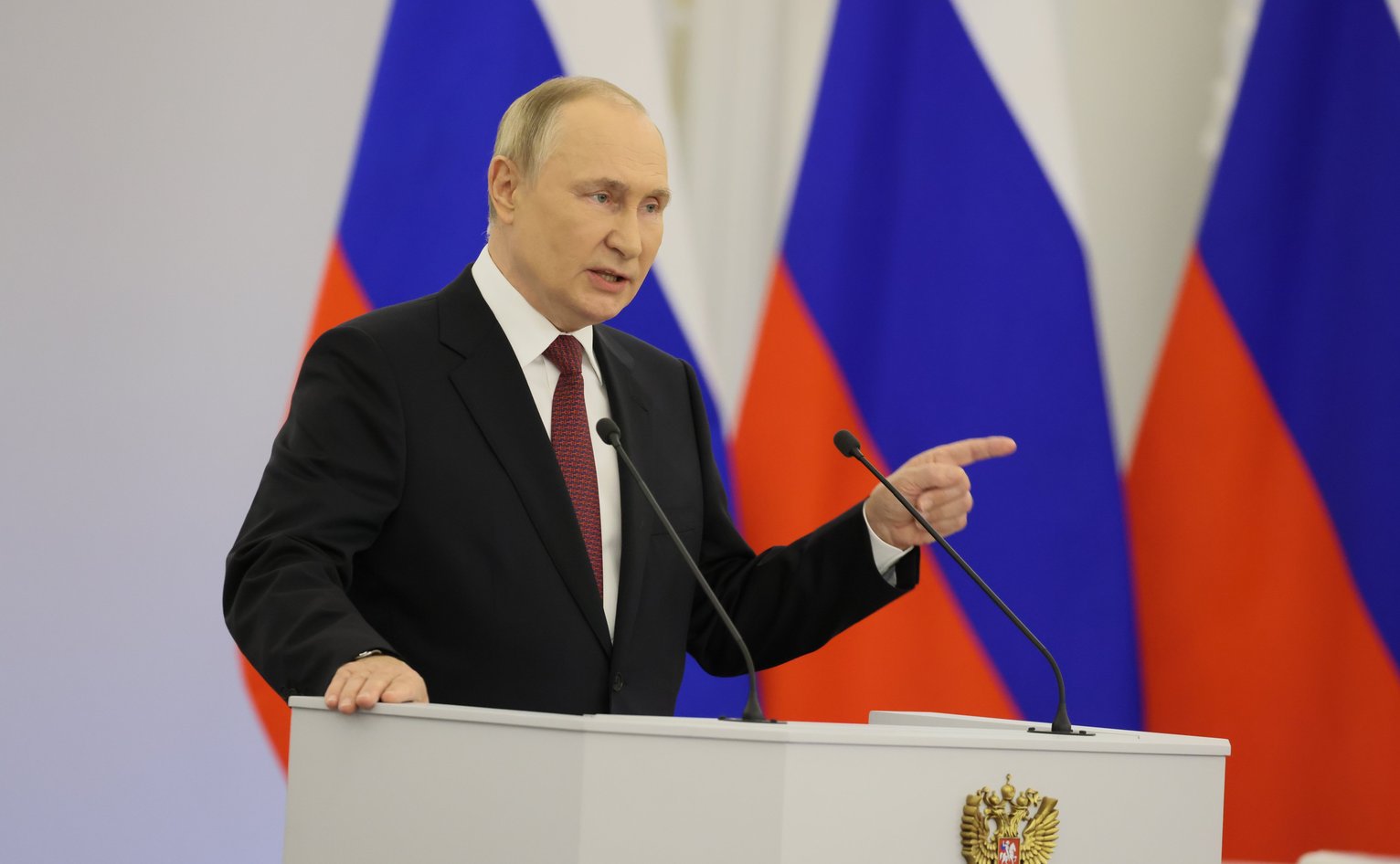
Photo: The Council of the Federation of the Federal Assembly of the Russian Federation on Wikimedia Commons.
For more political reporting and in-depth analysis, visit the Politics section at bdesk.news.
Continue reading:
Why Trump Can’t Own a Gun but Controls Nuclear Weapons
The United States of Europe: Can It Become a Reality?

Ethan R. Brooks is a journalist with over 11 years of experience, specializing in finance, politics, and breaking news. He delivers timely, accurate reporting on market trends, economic developments, and major political events, helping readers stay informed on the stories that matter most.