
Tensions in the Middle East appear to be entering a more volatile and unpredictable phase, as U.S. President Donald Trump has reportedly floated the idea of “taking the oil” in Iran, while Tehran has demonstrated its willingness to strike critical infrastructure across the Gulf region. Recent developments suggest a widening conflict that increasingly targets economic lifelines, energy, water, and transport, raising concerns about both humanitarian consequences and global market disruption.
Trump’s Oil Strategy: Rhetoric or Real Policy?
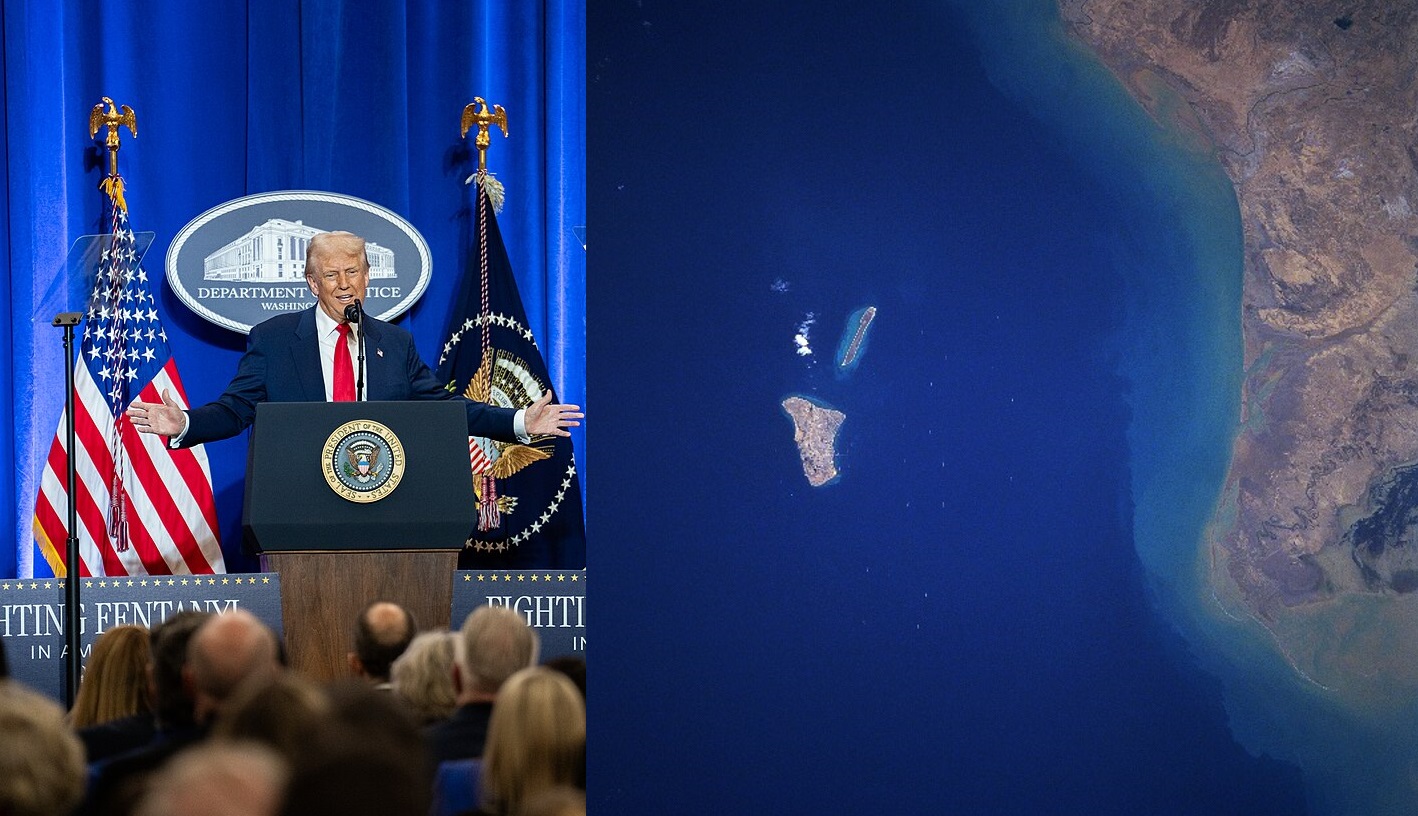
According to The Guardian, Trump said he wants to “take the oil” in Iran and suggested that seizing key assets such as Kharg Island, Tehran’s primary oil export hub, could be done “easily.”
Similarly, others reported that Trump is actively considering seizing Iranian oil resources, drawing comparisons to past U.S. rhetoric about controlling oil assets in Venezuela.
This is not the first time oil infrastructure has been central to U.S. strategic thinking. Kharg Island alone handles a significant share of Iran’s crude exports and is widely seen as a critical economic pressure point.
Trump has discussed potential military moves targeting strategic locations, even as indirect diplomatic talks, reportedly mediated by Pakistan.
The dual-track approach, combining aggressive rhetoric with ongoing diplomacy, has created uncertainty about Washington’s true intentions. Analysts warn that even signaling an intent to seize oil assets could be interpreted by Tehran as an existential threat, prompting escalation.
Iran’s Response: Expanding the Battlefield
Iran has made clear that any direct targeting of its energy infrastructure would trigger retaliation across the region. According to The Guardian, Iranian officials warned they would strike water and energy facilities across the Gulf if U.S. attacks on power plants proceed.
This warning has already begun to materialize. Kuwaiti authorities confirmed that an Iranian strike hit a power generation and water desalination facility, killing at least one worker and causing significant damage.
Other reports, including coverage by Al Jazeera, also confirmed damage to a power and desalination plant in Kuwait, underscoring the vulnerability of civilian infrastructure in the conflict.
These events align with earlier threats from Tehran. Iran had explicitly warned it would target desalination plants and electricity networks if its own infrastructure were attacked.
Given the Gulf region’s reliance on desalination for drinking water, such attacks carry severe humanitarian risks. Experts have warned that targeting water infrastructure in arid regions could affect millions of civilians, not just military operations.
A War Targeting Infrastructure
The current phase of the conflict marks a shift from primarily military targets to economic and civilian infrastructure. Power plants, oil terminals, shipping routes, and water facilities are now central to both sides’ strategies.
Earlier in March, allegations surfaced that a desalination plant in Iran had been struck, disrupting water supplies to multiple villages, though responsibility for the attack was disputed.
Meanwhile, the broader conflict has already seen repeated attacks on energy infrastructure and shipping lanes. The Strait of Hormuz, through which roughly 20% of global oil supply passes, has been heavily disrupted, with tanker traffic dropping dramatically amid security concerns.
This targeting of infrastructure reflects a strategic logic: rather than direct large-scale ground warfare, both sides are attempting to weaken each other economically and logistically. However, the risks of miscalculation are high.
Oil Markets React
Unsurprisingly, global energy markets have responded sharply. Oil prices have surged above $115 per barrel amid fears of prolonged disruption to supply routes and production capacity.
The possibility of U.S. control over Iranian oil, or Iranian retaliation against Gulf energy infrastructure, has injected significant volatility into the market. Analysts warn that further escalation could trigger a broader energy crisis, particularly if shipping through the Strait of Hormuz remains restricted.
Mixed Signals from Washington
One of the most striking features of the current situation is the contrast between aggressive military rhetoric and ongoing diplomatic messaging.
Trump has at times threatened to “obliterate” Iran’s power plants if demands are not met, including reopening key shipping routes.
At other moments, he has suggested that negotiations are progressing and that a ceasefire may be within reach.
This inconsistency complicates strategic calculations for both allies and adversaries. While diplomacy continues behind the scenes, public statements about seizing oil or attacking infrastructure risk escalating tensions beyond the point of easy de-escalation.
Regional Spillover
The conflict is no longer confined to Iran and Israel or the United States. It has expanded into a broader regional confrontation involving multiple actors.
Iranian strikes have targeted not only Israel but also Gulf countries hosting U.S. bases, including Kuwait.
At the same time, Iran-aligned groups, including the Houthis in Yemen, have entered the conflict, targeting shipping routes and increasing instability across the Red Sea and beyond.
Israel has expanded operations into Lebanon, while cross-border strikes continue across multiple fronts. This widening scope raises the risk of a prolonged regional war, rather than a contained bilateral conflict.
Humanitarian and Legal Concerns
The targeting of civilian infrastructure has drawn sharp criticism from international organizations.
According to Amnesty International, threats to attack power plants could constitute violations of international humanitarian law, as such facilities are essential for civilian survival.
Similarly, experts warn that attacks on water infrastructure in the Gulf, where desalination is critical, could have catastrophic humanitarian consequences.
Even limited strikes can have cascading effects, disrupting electricity, healthcare systems, and access to clean water.
What Comes Next?
The coming days are likely to be decisive. On one hand, diplomatic efforts, reportedly involving intermediaries like Pakistan, offer a potential off-ramp.
On the other, the continued exchange of threats and strikes suggests escalation remains a real possibility.
Trump’s remarks about “taking the oil” in Iran may be intended as strategic pressure. Meanwhile, Tehran’s willingness to strike civilian-linked infrastructure signals that it is prepared to broaden the conflict’s scope.
A Dangerous Shift in the Middle East Conflict
The latest events, highlight a dangerous shift in the Middle East conflict, from military confrontation to economic warfare targeting vital infrastructure.
With oil facilities, power plants, and water systems now in the crosshairs, the stakes extend far beyond the battlefield. The consequences could ripple through global energy markets, regional stability, and civilian life across multiple countries.
Whether the situation moves toward de-escalation or deeper conflict will depend largely on the balance between diplomatic efforts and the increasingly aggressive rhetoric shaping decisions on both sides.
Continue Reading:
US Sends 3,500 More Troops to Middle East Amid Rising Iran Conflict
Pentagon Looks at Potential Weeks‑Long Ground Operations in Iran
U.S. Insolvent? Treasury Financials Reveal Massive Liabilities Experts Say

Ethan R. Brooks is a journalist with over 11 years of experience, specializing in finance, politics, and breaking news. He delivers timely, accurate reporting on market trends, economic developments, and major political events, helping readers stay informed on the stories that matter most.

