
Since 2023, a series of unexplained cases involving scientists linked to sensitive U.S. research institutions has begun to form a pattern. According to reports from Fox News, at least ten scientists and government officials with access to classified nuclear and aerospace materials have either vanished or died under circumstances that range from natural causes to unexplained disappearances. The pattern has grown so pronounced that the White House has launched an official investigation, with President Donald Trump acknowledging the gravity of the situation during a press conference this week.
“I hope it’s random, but we’re going to know in the next week and a half” Trump told reporters Thursday. “Some of them were very important people, and we’re going to look at it over the next short period.“
The cluster of cases has prompted heightened scrutiny from federal agencies, including the National Nuclear Security Administration (NNSA) and the Department of Energy. Yet despite the scale of the situation, law enforcement officials have maintained that no conclusive connection has been established between the cases. This investigation examines what these missing scientists actually have in common and whether their disappearances represent coincidence or something more deliberate.
The Geographic Concentration: New Mexico’s Defense Hub
One of the most striking commonalities among the missing scientists is their concentration in New Mexico’s northern region, an area that serves as the epicenter of America’s nuclear weapons research. According to CBS News, four individuals connected to Los Alamos National Laboratory and related defense facilities have disappeared within the past year.
Steven Garcia, a 48-year-old government contractor at the Kansas City National Security Campus, has been missing since August 28, 2025. Anthony Chavez, 79, a retired Los Alamos employee with decades of experience in nuclear research, disappeared on May 8, 2025. Melissa Casias, 53, an administrative worker with high-level security clearance at Los Alamos, vanished on June 26, 2025. And most prominently, Retired Air Force Major General William Neil McCasland, 68, disappeared February 27, 2026, from his Albuquerque residence.
The McCasland case stands out for its unusual circumstances. According to Albuquerque police reports, McCasland left his phone, prescription glasses, and wearable devices at home, items most people would not abandon voluntarily. He took only his wallet, hiking boots, and a .38-caliber revolver. A gray U.S. Air Force sweatshirt was discovered approximately 1.25 miles from his residence, yet no additional trace of him has been found despite extensive searches involving drones and K9 units.
The geographic clustering is significant. Both Garcia and McCasland lived in the same section of Albuquerque. Los Alamos National Laboratory remains one of the most important nuclear weapons facilities in the United States, responsible for designing and maintaining America’s nuclear arsenal. The concentration of disappearances in this region cannot be dismissed as random.
Access to Classified Materials: The Common Denominator
Perhaps the most compelling connection uniting these cases is access to classified or highly sensitive information. This access to sensitive material defines nearly every individual in the cluster:
Monica Jacinto Reza, 60, was Director of Materials Processing at NASA’s Jet Propulsion Laboratory. According to Fox News reporting, her work focused on “developing new materials and advanced manufacturing technologies for spacecraft, specializing in bulk metallic glass alloys and metal additive manufacturing.” She disappeared on June 22, 2025, while hiking in the Angeles National Forest in California. Notably, she had worked on a government-funded rocket materials project overseen by McCasland.
Carl Grillmair, a 67-year-old astrophysicist at the California Institute of Technology, was killed outside his California home on February 16, 2026. According to NASA records cited by Fox News, Grillmair had spent decades working on major NASA-backed missions, including the Hubble and Spitzer space telescopes, contributing to research on galactic structure and dark matter.
Michael David Hicks, a physicist with NASA’s Jet Propulsion Laboratory, died in July 2023 at age 59. Hicks had worked on the DART Project (Double Asteroid Redirection Test) and deep space exploration initiatives, programs central to NASA’s most advanced research.
Frank Maiwald, 61, a longtime engineer at NASA’s Jet Propulsion Laboratory, died in Los Angeles on July 4, 2024. While his cause of death has not been widely disclosed, his position placed him within the circle of scientists with access to advanced aerospace information.
Nuno Loureiro, an MIT professor and Director of the MIT Plasma Science and Fusion Center, was shot and killed at his home in the Boston area in December 2025. According to CBS News reporting, Loureiro was an expert in fusion and plasma physics, working on technologies aimed at harnessing near-limitless clean energy. The killing was later linked to a suspect who had previously attended university with Loureiro and was connected to a separate mass shooting at Brown University days earlier. While this case appears to have a personal motive, Loureiro’s expertise in fusion energy research still places him within the circle of scientists working on sensitive national security projects.
The Pattern of Unusual Departures
A second significant commonality involves the manner in which these individuals disappeared. Los Alamos Today documents a striking pattern: “Many of the missing scientists reportedly left their homes on foot, often abandoning essential belongings such as phones, wallets, and keys.“
This behavior defies conventional logic. When someone leaves home without a phone, wallet, or identification documents, items essential for basic functioning in modern society, it suggests either an abrupt departure under duress or a deliberate act to leave no digital trail. The consistent nature of this pattern across multiple cases is noteworthy.
Jason Thomas, 45, an associate director of chemical biology at Novartis pharmaceutical company, vanished on December 11, 2025. According to Albuquerque officials, surveillance footage captured Thomas walking near train tracks at midnight shortly after leaving his home in Wakefield, Massachusetts. He left his phone and wallet behind. Three months later, on March 17, 2026, his body was recovered from Lake Quannapowitt after ice thawed. Officials stated no foul play was suspected, though the cause and manner of death remain undisclosed.
While Thomas’s work at Novartis involved pharmaceutical research rather than defense work, his education and professional background still placed him within circles of advanced scientific knowledge. His disappearance and the manner in which he left his home mirror the pattern seen in other cases.
Escalating Concern Among the Scientific Community
The pattern has not gone unnoticed by prominent voices within the scientific establishment. Dr. Michio Kaku, a renowned theoretical physicist and bestselling author, has expressed alarm at what he calls an “unheard of” cluster. Kaku stated: “If a scientist disappears, it’s a matter of some concern. But if 10 scientists suddenly die or vanish, who all have advanced security clearance with access to sensitive research, this is cause for national concern.“
Kaku emphasized the analytical path forward: “The next step is to determine if there is a single, common thread to their research that ties them to a specific aspect of national security.” This methodical approach, identifying whether a single research area or project connects the victims represents the most productive avenue for investigation.
What Authorities Say And What They’re Not Saying
The official response from law enforcement has been notably circumspect. CBS News reported that “a well-placed government source told CBS News the FBI was not investigating the disappearances and deaths as part of a suspicious pattern. Rather, the Department of Energy, which oversees NASA’s Jet Propulsion Laboratory and Los Alamos National Laboratory, is looking into it.“
This jurisdictional distinction is significant. The Department of Energy oversees civilian nuclear research and defense applications, while the FBI typically handles criminal investigations. The DOE’s involvement suggests the focus is on potential national security implications rather than criminal conspiracy.
However, FBI spokesman Ben Williamson stated, “The FBI is aware and providing all assistance requested. Usually what happens is we are not the lead in cases like this unless local authorities request.“
When asked directly about the cases, White House Press Secretary Karoline Leavitt said: “I haven’t spoken to our relevant agencies about it. I will certainly do that, and we’ll get you an answer. If true, of course, that’s definitely something I think this government and administration would deem worth looking into.“
The cautious language and initial lack of direct engagement from the highest levels of government, before Trump’s recent acknowledgment, suggests authorities were initially reluctant to connect disparate cases. Yet the mounting public pressure and undeniable patterns have forced a reassessment.
The Skepticism Factor: Why Some Dismiss the Pattern
Despite the connections outlined above, skeptics offer legitimate counterarguments. CBS News conducted a thorough review of obituaries, statements from family members, and law enforcement findings and concluded they found “no links between any of the deaths.“
Furthermore, the cases themselves present fundamentally different scenarios. Some involve confirmed homicides with identified perpetrators, such as the killing of Loureiro by a former classmate. Others involve unexplained deaths in unusual locations, like Thomas’s recovery from a lake. Still others involve missing persons with no body recovered. These variations in circumstance make a unified explanation difficult.
According to Fox News, “Investigators have not identified any evidence of a broader pattern, and the cases themselves, ranging from confirmed homicides to disappearances and natural deaths, point in different directions.“
The absence of confirmed evidence of coordination does not, however, disprove the possibility of connection. Each case can be investigated individually while simultaneously examining whether a common thread exists.
What the Evidence Actually Shows
When examined objectively, the evidence reveals five significant commonalities:
1. Concentration of cases among scientists with access to classified materials related to nuclear weapons, advanced aerospace, or fusion energy research.
2. Geographic clustering in New Mexico’s defense research hub, with multiple disappearances and deaths centered near Los Alamos National Laboratory and associated facilities.
3. A consistent pattern of unusual departures, with individuals leaving homes without essential modern-day items such as phones and identification.
4. The timeframe compression, the majority of cases occurring since 2023, with dramatic acceleration in 2025 and 2026.
5. High professional achievement across all cases, suggesting access to sensitive material and involvement in projects of national security significance.
These commonalities warrant systematic investigation, even if no single explanation connects all cases.
The National Security Implications
The implications of this cluster extend beyond the individual cases themselves. If even a portion of these disappearances or deaths result from targeting by foreign intelligence services, industrial espionage, or other coordinated efforts, it represents a profound vulnerability in America’s scientific infrastructure.
Los Alamos Today reported security experts’ concerns: “Experts warn that individuals with access to classified or sensitive information could be targets, and former FBI official Chris Swecker has suggested that espionage or targeted abductions cannot be ruled out.“
Former FBI officials have noted that espionage operations targeting sensitive research have historically employed sophisticated methods, including psychological pressure, financial inducement, and in extreme cases, targeted elimination of researchers who refused cooperation.
Yet attributing all cases to coordinated action stretches credibility. More likely, if a pattern exists, it involves some cases connected to intentional targeting while others represent coincidental natural deaths or suicides. Distinguishing between these scenarios requires rigorous investigation.
The Path Forward
The White House investigation promised by Trump offers an opportunity for systematic review. Such an investigation should focus on:
Identifying research overlap: Determining whether the scientists worked on common projects, shared research initiatives, or collaborated on specific technologies or theories.
Mapping financial transactions: Examining bank records and financial histories for unusual activity that might indicate coercion or payment for information.
Analyzing security protocols: Reviewing whether any breaches in security clearance procedures or access controls preceded the disappearances.
International connections: Investigating whether any suspects or deceased individuals had foreign contacts or unusual international travel.
Psychological evaluations: Reviewing mental health records and witness statements to distinguish between cases of suicide or voluntary disappearance versus potential foul play.
Coincidence or Conspiracy?
The disappearance and death of ten scientists connected to America’s most sensitive research programs within a three-year period cannot be dismissed as purely coincidental. Yet declaring coordinated conspiracy without evidence would be premature.
What remains clear is that the scientists in question share fundamental characteristics: access to classified information, involvement in cutting-edge research in nuclear, aerospace, or fusion energy fields, and in many cases, geographic proximity to major national security research installations.
Whether these connections indicate targeted action or statistical clustering in a population of highly stressed, high-level scientists remains to be determined. The stakes of that determination, for national security, scientific integrity, and justice for the victims and their families, could scarcely be higher.
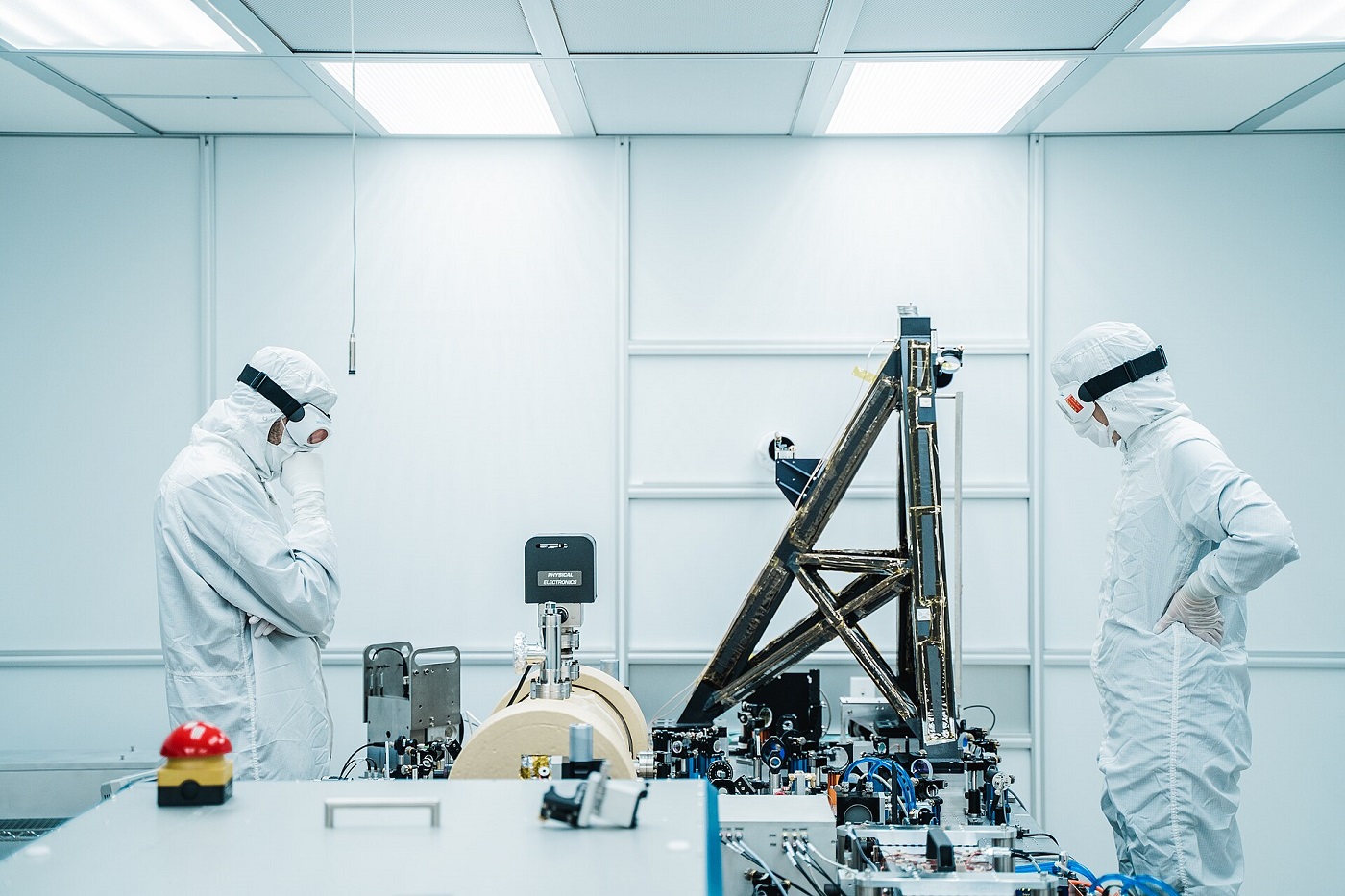
Image by Nkij on Wikimedia Commons, License: CC BY-SA 4.0 International
For more society news and cultural reporting, visit the Society section at bdesk.news.
Continue Reading:
Florida Doctor Removed Liver Instead of Spleen in Fatal Surgery
International Day of Human Space Flight: Celebrating Yuri Gagarin’s Historic Milestone on April 12
Ethan R. Brooks is a journalist with over 11 years of experience, specializing in finance, politics, and breaking news. He delivers timely, accurate reporting on market trends, economic developments, and major political events, helping readers stay informed on the stories that matter most.

