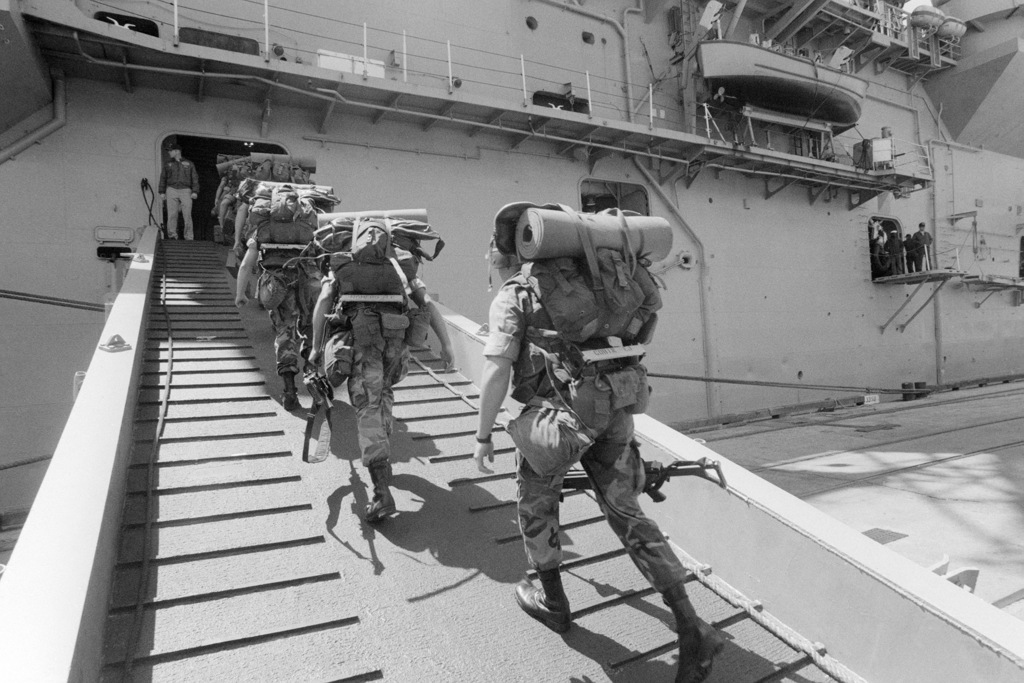
More than 3,500 U.S. troops have arrived in the Middle East amid escalating tensions with Iran, according to U.S. Central Command. The deployment, which includes Marines and sailors aboard the amphibious assault ship USS Tripoli, is part of a broader military buildup designed to strengthen regional defense and maintain strategic flexibility, CBS News reported.
“This deployment ensures that we can respond quickly to threats while supporting our partners and allies in the region.” a Pentagon official told CBS News. Officials emphasized that the troops are not intended for immediate offensive operations inside Iran but rather to protect U.S. personnel, bases, and interests in the volatile Gulf region.
Troop Surge and Strategic Importance
According to CBS News, the newly arrived forces are part of a rapid buildup of U.S. military power that has seen thousands of additional personnel deployed in recent weeks. This surge is intended to enhance readiness, maintain operational flexibility, and deter further Iranian aggression.
The Associated Press reported that the forces include Marine expeditionary units capable of rapid response, along with support personnel for logistical, intelligence, and command operations. The Pentagon emphasized that the units are strategically positioned to respond to regional crises, protect critical infrastructure, and provide contingency options should Iran continue to escalate attacks.
The deployment follows a series of attacks on U.S. bases in the Gulf and surrounding countries, highlighting the fragile security environment in the region. The military buildup is also intended to reassure U.S. allies such as Saudi Arabia, Kuwait, and Bahrain, who have expressed concern over Iran’s increasing missile and drone capabilities.
Escalating Conflict with Iran
The U.S.-Iran confrontation began in late February when U.S. and Israeli forces launched coordinated strikes targeting Iranian military and nuclear infrastructure, CBS News reported. Since then, Iran has retaliated with missile and drone strikes against American forces and allied targets across the region.
Analysts told CBS News that Iran’s strategy includes pressuring the United States while signaling to regional allies that Tehran remains capable of influencing security in the Gulf. Iran has also issued warnings that further escalation could include threats to maritime traffic through the Strait of Hormuz, a critical passage for global oil shipments.
According to the Washington Post, the conflict has intensified fears of a broader regional war, drawing in Iran-aligned groups in Iraq, Yemen, and Syria, which have launched sporadic attacks on U.S. interests. The Pentagon has described these threats as part of a complex security environment requiring constant monitoring and rapid response capabilities.
Casualties and Regional Impact
At least 13 U.S. service members have died in recent weeks due to Iranian missile and drone attacks, with hundreds more injured. Iranian strikes have targeted U.S. bases in Saudi Arabia, Kuwait, Bahrain, and other countries, forcing military personnel to relocate and implement emergency defensive measures.
The Associated Press reported that these attacks have damaged key installations and temporarily disrupted military operations, underscoring the vulnerability of U.S. forces in the region. Military analysts note that the troop surge is partially aimed at mitigating these risks and ensuring that U.S. forces can respond effectively to emerging threats.
Iranian officials, meanwhile, have warned that continued U.S. military buildup will be met with expanded retaliation, heightening the risk of miscalculation and unintended escalation. Tehran has hinted at further attacks targeting strategic infrastructure and commercial shipping routes, raising concerns about global energy markets.
International and Domestic Reactions
Globally, the increased U.S. military presence has drawn mixed reactions. Some regional allies support America’s actions as a necessary deterrent against Iranian aggression, while others have urged diplomatic engagement to prevent further escalation. Analysts warn that the situation could destabilize the Gulf and impact international trade and energy prices if the conflict continues.
Domestically, U.S. lawmakers are divided on the scope of involvement. Some members of Congress are pushing for a more restrained approach, emphasizing diplomatic solutions, while others advocate for readiness to expand U.S. operations if Iranian attacks persist. The Pentagon reportedly maintains contingency plans for potential ground operations inside Iran, though officials stress that such options remain defensive and precautionary.
Looking Ahead
As the war enters a critical phase, U.S. defense officials insist that troop deployments are primarily protective and strategic. However, analysts warn that the additional forces could serve as a platform for escalation if Iran continues attacks or strategic opportunities arise.
The military buildup underscores the high stakes of U.S.-Iran relations and the fragile balance of power in the Middle East. Experts say that sustained vigilance, allied cooperation, and readiness to respond to Iranian threats are likely to remain priorities for U.S. commanders in the region over the coming weeks and months.
Continue Reading:
Pentagon Looks at Potential Weeks‑Long Ground Operations in Iran
Why France Is a Superpower: The Strategic Lands Powering Its Global Influence
U.S. Insolvent? Treasury Financials Reveal Massive Liabilities Experts Say

Ethan Brooks is a journalist with over 11 years of experience, specializing in finance, politics, and breaking news. He delivers timely, accurate reporting on market trends, economic developments, and major political events, helping readers stay informed on the stories that matter most.