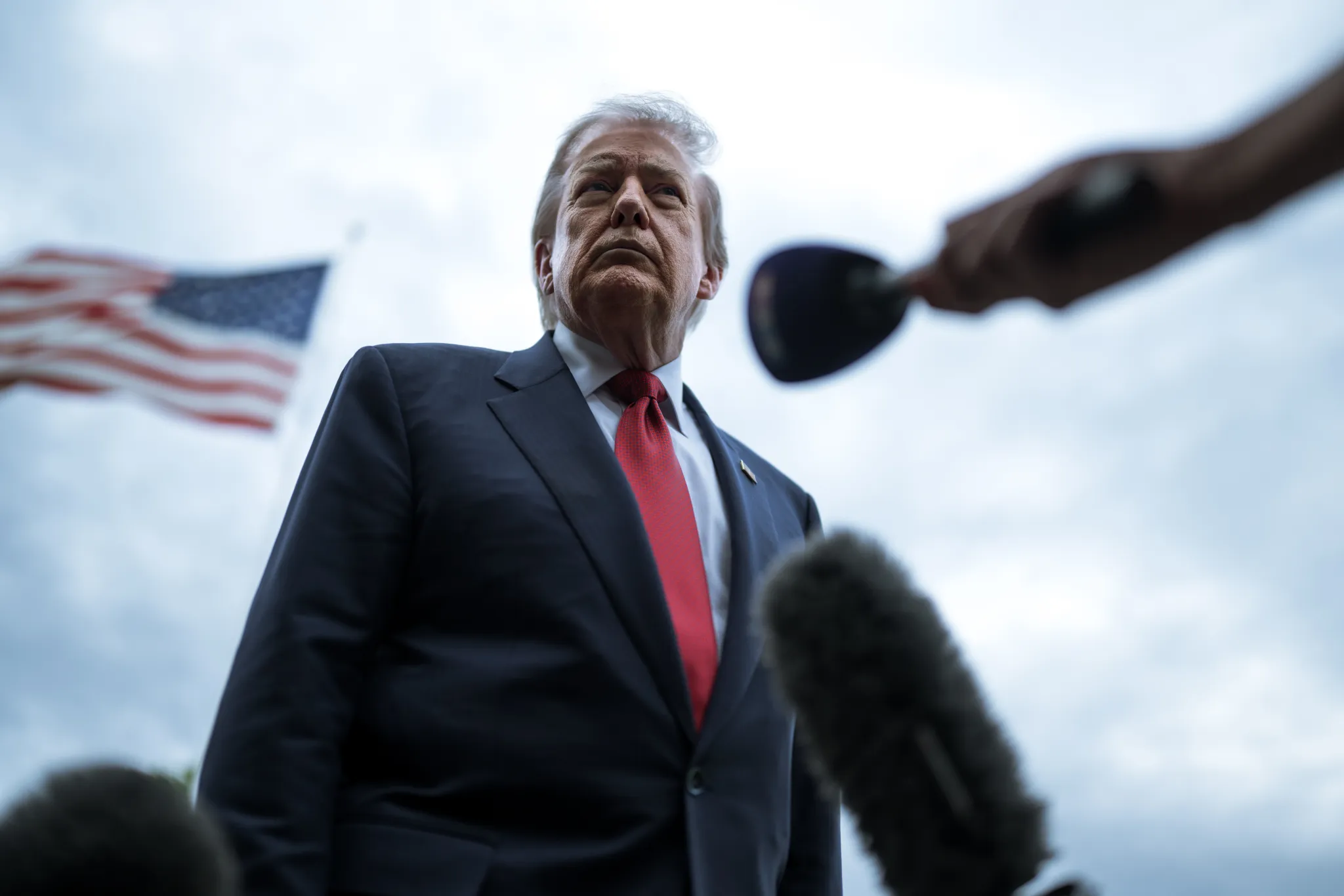

As the United States enters the second month of its military confrontation with Iran, a prominent ally of President Donald Trump has issued one of the starkest warnings yet about where the conflict could lead, suggesting that an escalation of the war might spell a “total disaster” for the United States.
The comments, made at a major conservative gathering, underscore a rising concern among not just critics of the war but also figures traditionally aligned with hawkish Republican foreign policy. Their cautionary message could reverberate through Washington as lawmakers, military officials and the White House wrestle with how to balance military objectives, diplomatic efforts, and the risk of drawing the U.S. into a far broader conflict.
A Trump Ally Sounds the Alarm
Erik Prince, the founder of the private military contractor Blackwater and a well‑known supporter within Trump‑aligned political circles, delivered the warning during remarks at the Conservative Political Action Conference (CPAC) near Dallas, The Daily Beast reports.
Prince predicted that if the war with Iran deepens, especially into a ground campaign or prolonged naval battles, the U.S. could face devastating consequences. Among his specific concerns were the potential for American warships to be lost and for broader military setbacks that could undermine national security and morale.
Prince accused the administration of misjudging the conflict’s trajectory and suggested that the U.S. lacked a coherent exit strategy. His remarks were notable not only because of his close ties to Republican circles but also because they came at a moment when other conservative voices expressed unease about the direction of the war.
What “Total Disaster” Could Mean
The phrase “total disaster”, repeated in social media and analyses as a defining characterization of the risk, resonates across several domains: military, economic, political and diplomatic.
Military Risks
The most immediate danger cited by Prince and some analysts is the possibility of a major escalation of hostilities, particularly if U.S. forces are drawn into extended ground operations or intense naval engagements in the Persian Gulf. Reports indicate that the Pentagon is considering deploying thousands of Marines and other ground forces to the region, though no formal order has been issued.
Complicating matters, Iran has publicly warned that any ground offensive by U.S. forces would trigger significant retaliation, broadening the conflict beyond air and missile strikes.
The Strait of Hormuz, through which about 20% of the world’s crude oil passes, has already been effectively closed due to Iranian operations, severely disrupting global maritime traffic. If this chokepoint becomes a battlefield, the United States could see substantial naval losses or strategic setbacks. A high-visibility failure there would carry huge symbolic and practical repercussions.
Economic Fallout
Economic disruption is another dimension of the escalating conflict. Global oil markets have reacted sharply: oil prices surged above $115 per barrel amid disruptions to exports and fears that the Strait of Hormuz could remain blocked for weeks. That has contributed to inflationary pressures on energy and transportation costs worldwide.
U.S. financial markets have not been immune. Futures contracts on major U.S. indices plunged as geopolitical fears persisted, and some analysts warn that sustained high energy prices could tip the U.S. economy toward recession.
Should the war broaden, the cost in military spending, in ammunition, logistics and force deployments, could balloon into the tens of billions of dollars. Historical analogies from prolonged conflicts suggest that unchecked defense spending can crowd out domestic priorities and deepens budget deficits, intensifying political discord at home.
Domestic Political Consequences
The war’s impact on U.S. domestic politics is already evident. President Trump’s approval ratings have shown signs of erosion, particularly among moderate voters troubled by rising fuel costs and uncertainty about the war’s endgame.
Within the Republican Party, fissures are emerging. At CPAC, delegates expressed anxiety over Trump’s absence, widely attributed to his involvement in overseeing the war effort and attempts to govern from afar. Conservatives have traditionally valued strong national defense, but the possibility of a long, drawn‑out conflict has triggered debates about priorities and strategy.
Internationally, U.S. allies are also signaling unease. Some European and Middle Eastern partners have cautioned against escalation, while others push for negotiated solutions that would avoid expanding the conflict. Putin’s Russia, China and other global powers could find opportunities to exploit U.S. focus on the war, complicating diplomatic relations and strategic alliances.
Attempts at Diplomacy Amidst Escalation
Despite tensions, diplomatic avenues have not been completely closed. President Trump recently stated that negotiations with Iran were ongoing and described progress as positive, although he acknowledged that an agreement was not guaranteed. Pakistani officials have indicated plans to host further talks aimed at ending the hostilities.
These talks come amid divergent public statements from each side about their intentions and conditions. Iranian leaders have denied accepting humiliation and warned against a U.S. ground offensive, even as they review potential ceasefire proposals.
The conflicting signals, diplomatic efforts on one hand and military buildup on the other, leave the U.S. government with a complex puzzle: how to balance pressure on Tehran with the imperative to avoid a broader conflict.
Broader Regional Dynamics
An escalation between the U.S. and Iran also risks drawing in other regional actors. Israel has reported strikes from Yemen’s Iran‑aligned Houthi militia, and in response has carried out extensive strikes on Iranian targets. Such multipronged hostilities could rapidly entangle the U.S. in a wider Middle Eastern war.
Iran’s strategy, emphasizing asymmetric warfare through drones, missiles, and proxy groups, mirrors approaches used in past conflicts where superior conventional forces faced resilient resistance. Critics cite this as a reason why the U.S. might incur disproportionate costs for uncertain strategic gains.
What Comes Next?
The warning from Prince and others reflects an anxiety that many in Washington share: that without clear strategic objectives and a viable diplomatic track, the United States could be drawn into a conflict that expands far beyond its original scope and causes significant damage, militarily, economically and politically.
Whether the current diplomatic engagements will yield a ceasefire or a negotiated withdrawal remains uncertain. What is clear is that the war’s escalation, or even the perception that Washington is preparing for a broader push, continues to unsettle markets, strain alliances and amplify domestic political tensions.
In the coming weeks, policymakers will confront difficult decisions: escalate further in pursuit of military objectives, which critics argue risks exactly the “total disaster” envisioned by Prince; or pivot decisively toward de‑escalation in hopes of curtailing further harm.
Photo by Gage Skidmore, CC BY-SA 2.0
Continue Reading:
US Sends 3,500 More Troops to Middle East Amid Rising Iran Conflict
Pentagon Looks at Potential Weeks‑Long Ground Operations in Iran
U.S. Insolvent? Treasury Financials Reveal Massive Liabilities Experts Say

Ethan R. Brooks is a journalist with over 11 years of experience, specializing in finance, politics, and breaking news. He delivers timely, accurate reporting on market trends, economic developments, and major political events, helping readers stay informed on the stories that matter most.