
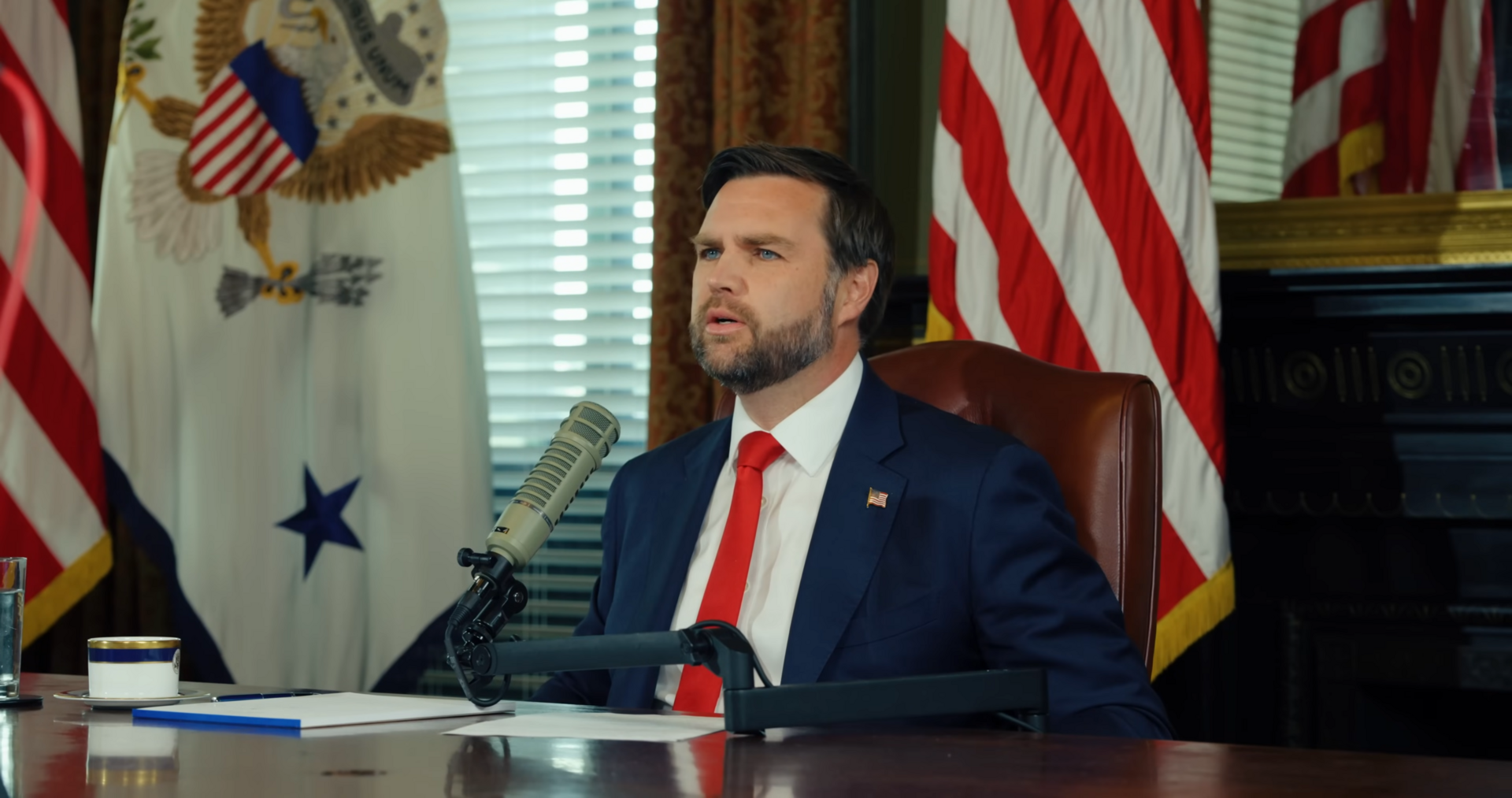
Tensions between the White House and the Vatican have escalated into a rare public diplomatic clash after U.S. Vice President JD Vance urged Pope Leo XIV to avoid commenting on American political affairs, while the pontiff doubled down on his warnings about U.S. military actions in Iran.
The exchange highlights a growing global dispute over the role of religious leadership in geopolitical crises, particularly as the war involving the United States, Israel, and Iran continues to intensify.
JD Vance: Vatican Should Avoid U.S. Political Debate
The controversy began after Vice President JD Vance criticized Pope Leo XIV’s repeated statements on U.S. foreign policy.
Speaking on Fox News, Vance said the Vatican should “stick to matters of morality” and avoid intervening in American political decisions, particularly those related to national security and military strategy.
Vance argued that the Pope should focus on spiritual leadership rather than commenting on U.S. governance, stating that when religious institutions and governments conflict, “each should stay in its lane”.
Vance’s remarks come at a time when Pope Leo has become one of the most outspoken global critics of the ongoing Iran war, frequently condemning military escalation and calling for immediate peace negotiations.
His position reflects a broader argument within parts of the U.S. administration: that foreign religious leaders should not influence or publicly challenge American foreign policy decisions.
Pope Leo Responds: “I Don’t Want to Get Into a Debate”
Pope Leo XIV responded indirectly but firmly to criticism from U.S. officials.
Speaking aboard the papal plane during a recent international tour, the pontiff said he did not intend to engage in political confrontation with Washington.
According to Al Jazeera, the Pope stated: “I don’t want to get into a debate with him.” referring to political criticism from U.S. leadership, while reaffirming his commitment to speak out against war and injustice.
He emphasized that his role is not political but moral, adding that silence in the face of war would be inconsistent with his religious duty.
At the same time, he reiterated his opposition to the U.S.-Israeli campaign in Iran, warning that escalation risks further destabilizing the Middle East.
Pope Leo’s Position on Iran: A Moral Line Against War
Pope Leo XIV has been increasingly vocal in his criticism of the ongoing conflict involving Iran, repeatedly urging restraint from world powers.
In a widely reported statement, he condemned what he called the “delusion of omnipotence” behind modern warfare and warned against religious justification for violence.
According to The Guardian, the Pope declared that “God does not bless any conflict” stressing that peace can only be achieved through dialogue, not military force.
He also condemned threats of mass destruction linked to the conflict, calling such rhetoric “truly unacceptable” and warning that civilians are bearing the heaviest cost of escalation.
In a recent prayer vigil, the Pope intensified his message:
- “Enough of war”;
- “Enough of the idolatry of power”;
- “Sit at the table of dialogue”.
These statements have positioned him as one of the most prominent global religious critics of the current U.S. military approach toward Iran.
Rising Friction Between Washington and the Vatican
The dispute is part of a broader deterioration in relations between the Trump administration and Pope Leo XIV.
According to Reuters and Associated Press-linked coverage, the Pope has repeatedly criticized U.S. military strikes in Iran, calling early operations “illegal and immoral” in private Vatican discussions and public addresses.
The Vatican has also expressed concern about the humanitarian consequences of the war, particularly for civilians caught in conflict zones across Iran, Iraq, and neighboring states.
Meanwhile, President Donald Trump has responded sharply, accusing the Pope of political bias and even labeling him “weak on crime” in social media posts.
This exchange has turned what was once a diplomatic relationship into a public ideological conflict.
The Role of Religion in Global Politics
At the center of the dispute is a broader question: should religious leaders intervene in geopolitical conflicts?
Supporters of JD Vance’s position argue that the Vatican risks overstepping its moral authority by directly criticizing national security policy. They believe such commentary blurs the line between spiritual leadership and political interference.
Critics, however, argue that Pope Leo’s statements are consistent with a long tradition of papal advocacy for peace and human rights.
Historically, the Vatican has often spoken out against war, from Iraq to Syria, and has framed such interventions as moral obligations rather than political interference.
In this context, Pope Leo’s comments on Iran are not unusual. What is different is the intensity of the current conflict and the directness of the response from U.S. leadership.
Iran War Becomes a Global Moral Flashpoint
The ongoing war involving Iran has evolved into more than a regional conflict, it has become a global moral and political flashpoint.
According to Washington Post, the war has already caused significant civilian casualties and triggered widespread diplomatic concern about escalation into a broader regional confrontation.
Pope Leo has consistently warned that the humanitarian toll is growing, particularly among vulnerable populations such as children, the elderly, and religious minorities in affected areas.
His stance has been echoed by several international humanitarian organizations calling for immediate de-escalation and renewed negotiations.
A Clash of Authority: Moral vs Political Power
The Vance–Pope exchange reflects a deeper structural tension in global politics: who has the authority to define moral boundaries in war?
On one side, the U.S. administration insists that elected governments, not religious institutions, make decisions on national security.
On the other, the Vatican maintains that moral leadership must challenge actions that lead to mass civilian suffering, regardless of political boundaries.
This ideological divide is becoming increasingly visible as the Iran conflict intensifies and global actors take clearer positions.
For more political reporting and in-depth analysis, visit the Politics section at bdesk.news.
Continue reading:
Trump Reports Daily to Netanyahu on Iran, but Not to Congress or the American People
California Governor Race in Chaos as Eric Swalwell Faces Multiple Sexual Assault Allegations

Michaela Reeds is an investigative journalist and reporter with a focus on politics, science, and technology. She brings clarity to complex issues, translating policy developments, scientific breakthroughs, and technological innovations into compelling stories for a broad audience. She is known for her dedication to accuracy, transparency, and in‑depth reporting.

