
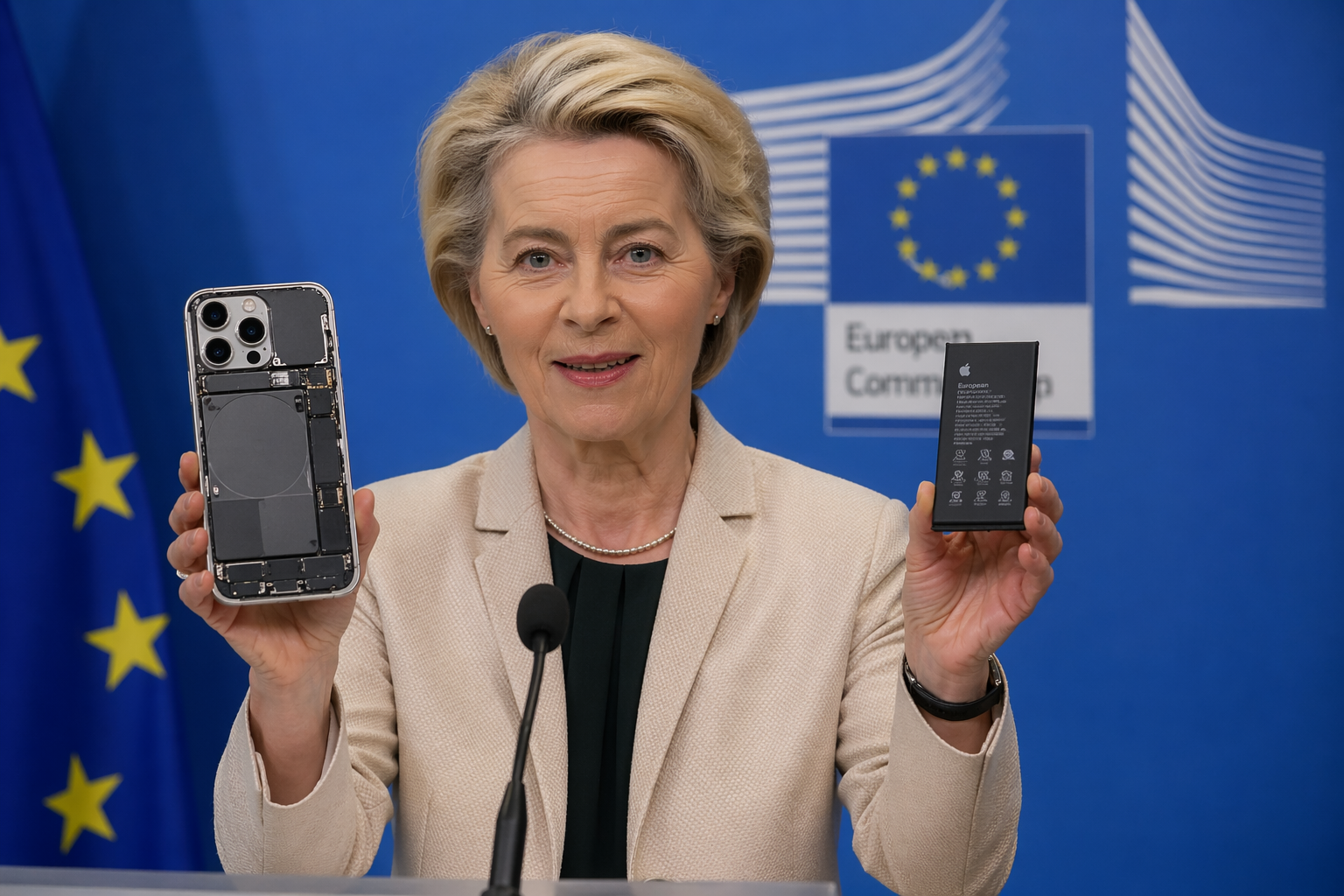
What Is the EU Replaceable Battery Law?
The European Union will require all smartphones sold in the EU to have user-replaceable batteries by 2027, according to the European Commission.
The rule is part of a wider battery regulation aimed at reducing electronic waste, extending device lifespan, and strengthening consumer rights.
Key Facts
- Law takes effect: 2027;
- Region: European Union;
- Applies to: Smartphones, tablets, portable electronics;
- Main requirement: Batteries must be easily replaceable by users;
- Goal: Reduce e-waste and increase product lifespan;
- Approved by: European Parliament and EU member states.
The European Union is preparing to reshape the global smartphone industry. By 2027, all phones sold within the bloc must allow users to easily remove and replace their batteries.
The regulation challenges a decade-long trend toward sealed devices. For years, manufacturers focused on thin designs and glued components. Now, EU lawmakers are forcing a shift toward repairability.
What the Law Requires
Under the new rules, manufacturers must design devices that allow battery replacement without technical expertise.
According to the European Commission, this means:
- No specialized tools required;
- Batteries must be accessible and purchasable;
- Clear replacement instructions must be provided;
- Batteries must meet durability standards over time.
The regulation is part of a broader sustainability push backed by the European Parliament.
Why Europe Is Introducing This Law
Tackling E-Waste
Electronic waste is one of the fastest-growing waste streams.
According to the European Environment Agency, millions of tonnes of e-waste are generated annually in Europe. Smartphones are a major contributor due to short replacement cycles.
Battery degradation is a key reason users replace devices. The EU aims to change that.
Strengthening Consumer Rights
The regulation is part of Europe’s broader right-to-repair strategy.
Officials from the European Commission say consumers should be able to repair devices without being forced to buy new ones.
Sealed smartphones have made simple repairs difficult. This law reverses that trend.
Reducing Environmental Impact
Producing new smartphones requires rare materials and energy. Extending device lifespan reduces:
- Resource extraction;
- Manufacturing emissions;
- Overall environmental impact.
Read More: The United States of Europe: Can It Become a Reality?
Impact on Smartphone Manufacturers
Design Changes
Manufacturers will need to rethink device construction. Possible changes include:
- Slightly thicker devices;
- New approaches to water resistance;
- Modular internal designs.
Cost and Engineering Challenges
Companies may face higher short-term costs due to redesigns. However, according to analysis, longer product lifecycles could offset costs over time.
Shift in Competitive Strategy
Brands that promote durability and repairability may gain an advantage in Europe. Sustainability is becoming a selling point, not just a regulation.
What This Means for Consumers
Longer Device Lifespan
Users will be able to replace batteries instead of replacing phones. This could extend device life to 5 years or more.
Lower Costs
Battery replacements are far cheaper than buying new smartphones. Consumers could save hundreds of euros over time.
More Repair Freedom
Users will have more options:
- DIY battery replacement;
- Independent repair shops;
- Less reliance on official service centers.
Global Impact
Although the law applies to Europe, its effects will likely be global. In the past, EU regulations have influenced worldwide standards. Most manufacturers avoid creating region-specific designs.
As a result:
- Replaceable batteries may become global standard;
- Other countries may adopt similar laws;
- Repairability could become a core feature in smartphones.
Read More: What Is End-to-End Encryption and Do You Actually Need It?
Challenges and Risks
Engineering Trade-Offs
Balancing water resistance with easy battery access is difficult. Manufacturers will need new design solutions.
Risk of Minimal Compliance
Some companies may follow the rules technically while still making replacement difficult. Strict enforcement will be critical.
Battery Supply Requirements
Manufacturers must ensure batteries remain available for years. This adds pressure to supply chains and logistics.
The Bigger Picture: Right to Repair
This law is part of a wider global movement. Governments are increasingly pushing for:
- Longer-lasting products;
- Access to spare parts;
- Reduced planned obsolescence;
- Greater transparency.
FAQ
Will all phones have replaceable batteries in 2027?
Yes. All smartphones sold in the European Union must comply with the regulation by 2027, according to the European Commission.
Does this law apply outside Europe?
No, the law applies only to the EU. However, global manufacturers may adopt the same designs worldwide.
Will smartphones become thicker?
Possibly slightly thicker, but manufacturers are expected to innovate and minimize design impact.
Can I replace the battery myself?
Yes. The regulation requires that users can replace batteries without specialized tools.
Why is the EU doing this?
To reduce e-waste, extend device lifespan, and improve consumer rights, according to EU regulators.
Conclusion
Europe’s decision to mandate replaceable batteries by 2027 marks a major shift in the tech industry.
The move prioritizes sustainability and consumer control over design convenience. It forces manufacturers to rethink how devices are built.
For consumers, the benefits are clear: longer-lasting phones, lower costs, and more control.
For the global market, this could be the beginning of a new standard, where repairability is no longer optional, but expected.
For more technology news and digital innovation coverage, visit the Technology section at bdesk.news.

Ethan R. Brooks is a journalist with over 11 years of experience, specializing in finance, politics, and breaking news. He delivers timely, accurate reporting on market trends, economic developments, and major political events, helping readers stay informed on the stories that matter most.