
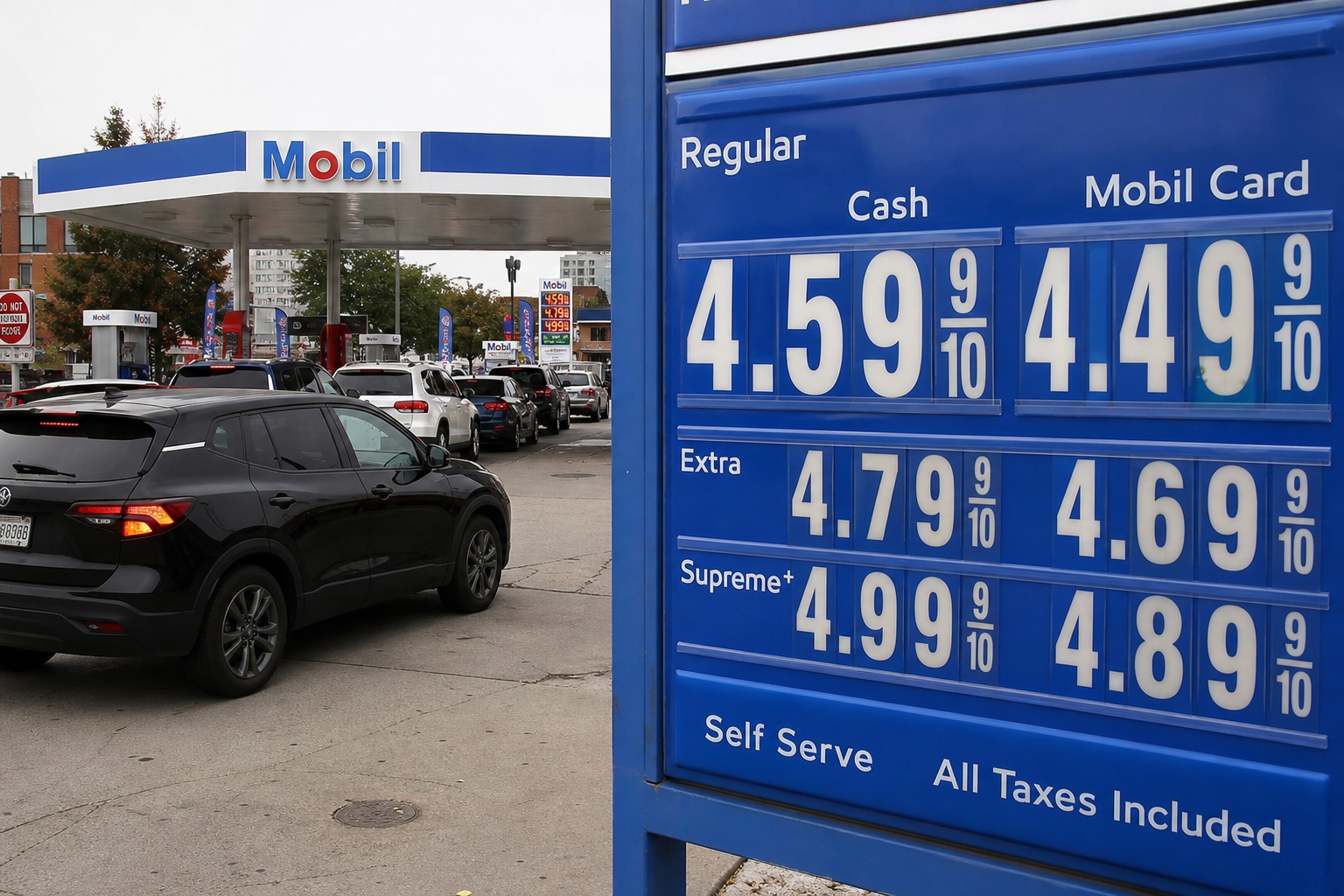
Gasoline prices have climbed to their highest level in four years, driven by geopolitical tensions, tightening supply, and a sharp rise in crude oil costs that is rippling through the global economy.
In the United States, the national average has moved above $4.20 per gallon, a significant increase compared to roughly $3.15 a year ago. According to Reuters, the surge reflects tightening fuel inventories and renewed volatility in energy markets, as both domestic and global pressures converge.
Oil Prices Break Above $120 per Barrel
The rise in gasoline prices is closely tied to a sharp increase in crude oil benchmarks. Brent crude has climbed above $120 per barrel, reaching its highest level in four years.
The Guardian reports that escalating tensions in the Middle East, particularly involving Iran, have played a central role in pushing prices higher. The region remains critical to global energy supply, and even limited disruptions can have an outsized impact on pricing.
A key concern is the Strait of Hormuz, a vital shipping route through which roughly 20% of the world’s oil supply passes. Any threat to this corridor immediately affects global oil flows and market stability.
Supply Risks and Market Volatility
Shipping activity through key oil routes has become more uncertain, with increased insurance costs and security risks affecting tanker movements. Some operators are delaying shipments or rerouting vessels, adding friction to global supply chains.
Markets are reacting not only to actual disruptions but also to the growing risk premium associated with potential supply interruptions. Even the possibility of escalation is enough to push prices higher.
This uncertainty has made oil markets significantly more volatile, with rapid price swings becoming more common.
Refinery Outages Tighten Supply
In addition to global tensions, refinery constraints, especially in the United States, are further tightening gasoline supply.
Several major refineries have undergone maintenance or experienced unexpected outages, reducing the ability to process crude oil into usable fuel. These disruptions have removed substantial production capacity from the market.
This creates a bottleneck effect: even when crude oil is available, limited refining capacity restricts how much gasoline reaches consumers.
Seasonal Demand Adds Pressure
The timing of the price surge is also critical. The approach of the summer travel season typically leads to increased fuel consumption, particularly in countries like the United States where road travel dominates.
This seasonal increase in demand is now colliding with constrained supply, accelerating price gains. When inventories are already tight, even moderate demand increases can have a strong impact on retail prices.
Analysts warn that continued demand growth could push prices even higher in the coming months.
Inflation Impact Spreads Across the Economy
Rising fuel prices are feeding directly into broader inflation, increasing costs across multiple sectors including transportation, manufacturing, and food.
Data cited by LiveNOW from FOX shows that gasoline prices were a major contributor to recent inflation increases, pushing consumer prices higher than expected.
Higher diesel costs are also driving up shipping expenses, which are then passed on to consumers through higher prices for everyday goods. Airlines are facing similar pressures, with fuel costs contributing to rising ticket prices.
Read More: One of America’s Most Powerful Nonprofits Is Facing Fraud Charges
Regional Price Differences
Gasoline prices vary widely depending on location due to differences in taxes, infrastructure, and supply logistics.
In the United States, some states report averages below $4 per gallon, while others, such as California, are approaching or exceeding $6 per gallon. These differences reflect structural factors including environmental regulations and distribution networks.
Globally, countries that rely heavily on oil imports are experiencing even greater price pressure, particularly where currencies have weakened against the U.S. dollar.
Outlook Remains Uncertain
Energy markets remain highly sensitive to geopolitical developments and supply chain disruptions. Analysts describe the current environment as one of elevated uncertainty, with prices likely to remain volatile.
Barron’s reports that gasoline prices could approach $5 per gallon if supply disruptions worsen or demand continues to rise during peak travel season.
While increased production or easing tensions could stabilize prices, such changes typically take time to affect the market.
Read More: Budget Airlines Ask Washington for $2.5 Billion Fuel Lifeline as Costs Surge
Structural Pressure on Energy Markets
Beyond immediate factors, the current surge highlights deeper structural challenges in global energy markets.
Years of underinvestment in refining capacity, combined with supply chain vulnerabilities, have reduced the system’s ability to absorb shocks. As a result, prices are becoming more sensitive to disruptions, even relatively small ones.
This has increased the likelihood of sharp price spikes and prolonged periods of volatility, with broader implications for the global economy.
For more society news and cultural reporting, visit the Society section at bdesk.news.

Ethan R. Brooks is a journalist with over 11 years of experience, specializing in finance, politics, and breaking news. He delivers timely, accurate reporting on market trends, economic developments, and major political events, helping readers stay informed on the stories that matter most.